


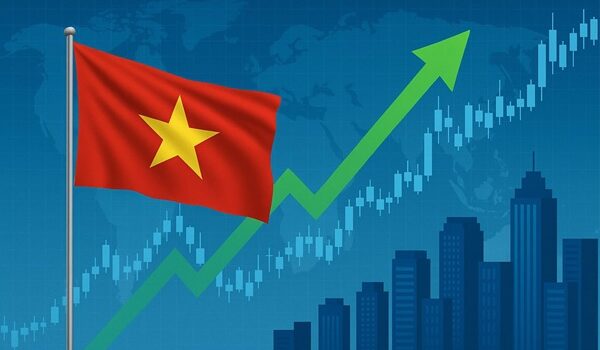
New Delhi [India], July 24: After 25 years of development, Vietnam’s capital market has evolved into a comprehensive financial ecosystem encompassing equities, bonds, and derivatives, establishing itself as the country’s principal channel for mobilizing medium- and long-term capital. Today, it serves as a strategic gateway for international investors seeking exposure to one of Asia’s most dynamic and fastest-growing economies.

A Landmark Milestone: Emerging Market Status

A defining turning point was reached when London-based benchmarking firm FTSE Russell upgraded Vietnam’s stock market from “Frontier” to “Secondary Emerging Market” status. Officially confirmed in April 2026, the upgrade is set to take effect in phases starting September 21, 2026.

This reclassification places Vietnam alongside major economies like China, India, and Indonesia. The upgrade is estimated to unlock US$3-5 billion in portfolio flows in the near term and could reach US$25 billion by 2030 if reforms continue. Furthermore, this move sets the stage for recognition by MSCI, which could potentially attract three to four times the capital flows of the FTSE upgrade.

Expanding Frontiers: The India-Vietnam Investment Corridor

As Vietnam integrates deeper into the global financial system, its relationship with India has emerged as a significant new frontier for capital flows. Marking 10 years of their Comprehensive Strategic Partnership in 2026, both nations are moving toward a more substantive partnership in markets and enterprises.

Strategic Exchange Support: In May 2026, during a state visit to Mumbai, Vietnamese leadership met with the National Stock Exchange of India (NSE)–the world’s largest derivatives exchange by volume. The NSE has expressed its readiness to support Vietnam’s capital market development and welcomed Vietnamese firms to access capital through Indian markets.

Targeted Investment Inflows: Indian investment funds are actively seeking opportunities in Vietnam. Notably, Aavishkaar Capital has earmarked a significant portion of a US$60 million fund specifically for Vietnam and Indonesia. These investments focus on high-impact sectors, including sustainable agriculture, green supply chain solutions, and ethical manufacturing.

Shared Economic Synergies: Both countries are among the world’s fastest-growing economies, driven by young populations and a strong focus on manufacturing and technology. This synergy positions Indian institutional investors to play a larger role in Vietnam’s private sector growth.

Strategic Reforms and Modernization

The transition into this “new league” was earned through a sustained reform drive. Key enhancements to Vietnam’s market infrastructure include:

Removal of Pre-funding Requirements: In late 2024, the State Securities Commission began phasing out the rule requiring foreign institutional investors to have 100% cash before trading.

KRX Trading Platform: The “go-live” of the KRX trading platform in May 2025 has significantly enhanced market liquidity and operational efficiency.

Institutional Framework: The government is implementing Central Counterparty Clearing (CCP), with a target for completion by the end of 2027 to minimize settlement risks for global brokers.

Growth Performance and Future Targets

By the end of 2025, the VN-Index approached the 1,800-point mark, reflecting a growth of over 40% compared to the previous year. Market capitalization reached approximately 78% of GDP, and the number of investor accounts surged to nearly 13 million, well ahead of the national target for 2030.

Looking toward the future, the government has set ambitious targets:

Capital Mobilization: Vietnam aims to mobilize approximately US$205.6 billion (5.4 quadrillion VND) through the stock market between 2026 and 2030.

Market Scale: The strategic goal is for stock market capitalization to reach 120% of GDP by 2030.

With continued institutional reforms, modern infrastructure, and strengthening ties with global financial hubs like India, Vietnam is steadily positioning itself as one of Asia’s most promising investment destinations for the coming decade.

New Delhi [India]: According to many analysts’ forecasts, the price of gold may increase in 2024. Octa explains in the article what factors will influence the dynamics of the gold price and what will happen to the market this year.

Gold is trading above $2,000 per ounce in early 2024. Analysts expect that even later in the year, gold prices may remain above $2,000 per ounce, reaching new historical highs. Among the factors favouring this are geopolitical uncertainty, the likely weakening of the U.S. dollar, and potential interest rate cuts. But before relying on these factors in the future, we must understand how they have influenced the past.

A new scenario of gold price dynamics

For the past 90 years, the value of gold has depended primarily on the volume of transactions between the Western and Eastern markets. Western countries determined supply and demand, while Eastern countries acted as counterparties to the transaction. Thus, when the volumes of physical gold purchased by Great Britain or Switzerland increased, its price grew, and vice versa. As a result, gold moved from the West to the East and back synchronously with the price decreasing or increasing.

The second factor that has historically influenced the price is the relationship between the price of gold and the real yield on U.S. government bonds. When the real yield decreased, bonds lost their appeal, and investors moved into gold. Once the trend reversed and real yields began to rise, investors returned to bonds.

However, since the end of 2022, both patterns have failed. The U.S. ten-year bond yield rose to 4.33%, above the 2022 highs, beating a 15-year record. Despite expectations, this didn’t lower the price of gold, which instead rose from November 2022 to August 2023 by 16%, from $1,643 to $1,954 per ounce.

The correlation between gold transaction volumes and the gold price also stopped working. Since the third quarter of 2022, the UK and Switzerland have been Netto-exporters of gold, i.e. sellers. According to the historical paradigm, this should also have been a reason for the price of gold to fall. However, as we can see, this is not happening. Thus, the West has not significantly influenced the pricing of precious metals.

What affects gold in 2024?

Escalating geopolitical conflicts are causing gold to rise in value. Due to the geopolitical events of 2022, dollar assets have become more risky for many countries. Central banks in the Global South, Eastern Europe, and the Middle East have been actively pursuing a policy of building up the gold part of foreign exchange reserves since the end of 2022. According to a World Gold Council (WGC) report, central banks bought 800 tonnes of gold in the first nine months of 2023, up 14% year-on-year. Excess demand from central banks has boosted the value of gold by 10 per cent in 2023.

‘It is the central banks’ purchases of gold that will act as the main driver of growth in 2024′, said Kar Yong Ang, the Octa financial market analyst. ‘If the trend continues and the level of gold reserves moves towards an average of 40% of the gold composition in reserves, that would mean an additional $3.2 trillion in the asset–a 25% rise in 2025, which would correspond to a price of $2,500 an ounce’, he added.

Gold has also seen another rise since the beginning of the Palestinian-Israeli conflict: since October 2023, it has added more than 8%. Hence, we can conclude that any aggravation in geopolitics will have a positive impact on gold.

The stabilisation of inflation will continue to support gold quotes. In 2022, global inflation reached its highest levels in decades. However, it is also a fact that inflation passed its peak at the end of 2023. Most analysts believe inflationary pressures will continue to ease in 2024.

‘Traditionally, the gold price has been negatively correlated with the inflation rate. The lower the inflation rate, the lower the interest rates on government bonds. As a result, the relative attractiveness of non-interest-bearing assets such as gold increases’, said Kar Yong Ang.

Developing economies de-dollarisation. Investors see gold as an alternative means of building savings and protection against inflation and currency risk. Demand for gold is increasing because Brazil, Russia, India, and China (members of BRICKS) seek ways to improve their currency independence.

The main factors affecting gold’s price are inflation, rising demand from central banks, de-dollarisation of developing economies, microeconomic situation, and geopolitics. The combination of these factors will create conditions for the growth of gold price in 2024–in the first half of the year, the cost of the precious metal may exceed $2,200 per troy ounce. In the second half of the year, the upward trend in gold is likely to continue, and gold may show a price of $2,300 per ounce, so the average price in 2024 will be $2,170.

Octa is an international broker that has been providing online trading services worldwide since 2011. It offers commission-free access to financial markets and various services already utilised by clients from 180 countries with more than 42 million trading accounts. Free educational webinars, articles, and analytical tools they provide help clients reach their investment goals.

The company is involved in a comprehensive network of charitable and humanitarian initiatives, including the improvement of educational infrastructure and short-notice relief projects supporting local communities.

Octa has also won more than 70 awards since its foundation, including the ‘Best Educational Broker 2023’ award from Global Forex Awards and the ‘Best Global Broker Asia 2022’ award from International Business Magazine.