
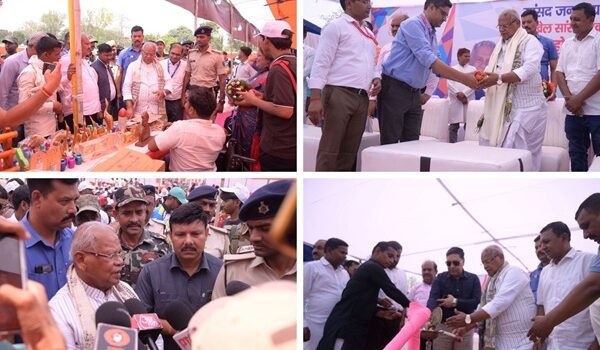
Gaya (Bihar) [India], April 27: The Sansad Jan Udhyam Sports & Cultural Mahotsav 2026, organized under the guidance of Hon’ble Member of Parliament Shri Jitan Ram Manjhi, concluded on a grand and inspiring note today at Gandhi Maidan, Gaya. Held from April 20 to April 25, the six-day mega event successfully brought together sports, culture, and entrepreneurship, creating a vibrant platform for youth engagement and community development.

One of the most remarkable aspects of the Mahotsav was that no participation fee was charged from any participant. The initiative was designed to ensure equal opportunity for talented youth from all sections of society, particularly those from underprivileged backgrounds. By removing financial barriers, the Mahotsav enabled thousands of young individuals to participate and showcase their abilities, reinforcing the true spirit of inclusivity and sportsmanship.

The event witnessed participation of over 10,000 individuals, reflecting strong enthusiasm among youth across the region. Out of these, approximately 3,000 participants were shortlisted to compete across 13 different sporting disciplines, making it one of the largest grassroots sporting platforms in the area. The scale of participation stands as a testament to the immense sporting talent present in Gaya and nearby districts.

Addressing the gathering at the closing ceremony, Hon’ble MP Shri Jitan Ram Manjhi emphasized the importance of sports in shaping the future of youth. He highlighted that sports play a vital role in building discipline, teamwork, confidence, and leadership qualities. He further noted that such initiatives help channel the energy of young individuals into constructive and nation-building activities.

In a major announcement, Shri Manjhi declared that 20,000 sports kits will be distributed among deserving and talented children across Prakhand (block), Panchayat, and Vidhan Sabha levels. This initiative aims to strengthen grassroots sports infrastructure and ensure that no talented child is deprived of opportunities due to lack of resources. It is expected to significantly boost sports participation in rural and semi-urban regions.

The Mahotsav also featured a well-organized MSME Meet and Exhibition, which provided a valuable platform for local entrepreneurs, artisans, self-help groups, and startups. Participants showcased a wide range of products and services, gaining exposure and networking opportunities. The initiative is expected to contribute to employment generation and economic growth, aligning with the vision of Atmanirbhar Bharat and strengthening local enterprise ecosystems.

The successful execution of this large-scale event was made possible with the generous support of its esteemed sponsors. State Bank of India (SBI) proudly came forward as the Platinum Sponsor, playing a leading role in enabling the organization of this grand Mahotsav. The Rural Sports & Youth Training Initiative is proudly supported by National Small Industries Corporation Limited (NSIC) under its Corporate Social Responsibility (CSR) program, fostering grassroots sports and youth empowerment. Other key sponsors, including Union Bank of India and NTPC Limited, Airports Authority of India (AAI), Balmer Lawrie & Co. Ltd, Bank of India, Bharat Dynamics Limited (BDL), Bharat Electronics Limited, Bharat Petroleum Corporation Limited (BPCL), Canara Bank, Credit Guarantee Fund Trust for Micro and Small Enterprises (CGTMSE), Coal India Limited, Coir Board, Gas Authority of India Limited(GAIL), Garden Reach Shipbuilders & Engineers Limited(GRSE), IDBI Bank, Indian Oil Corporation Limited(IOCL), Indian Railway Catering and Tourism Corporation(IRCTC), Indian Renewable Energy Development Agency Limited(IREDA),Life Insurance Corporation of India(LIC), Munitions India Limited(MIL), National Bank for Agriculture and Rural Development (NABARD), NBCC (India) Limited, NHPC Limited, National Stock Exchange (NSE), National Small Industries Corporation Limited (NSIC) , Power Finance Corporation Limited, RailTel Corporation of India Limited, REC Limited (REC), Small Industries Development Bank of India(SIDBI), Mazagon Dock Shipbuilders Limited (MDL), Bank of Baroda, Central Bank of India (CBI) also extended significant support towards the successful conduct of the event. Their collective contribution reflects a strong commitment towards youth empowerment, sports promotion, and community development.

Hon’ble MP Shri Jitan Ram Manjhi extended heartfelt gratitude to all sponsors and partner organizations, acknowledging that their support was instrumental in ensuring the smooth execution and high standards of the event.

Special appreciation was also extended to the organizing committee, volunteers, and coordinators who came from different parts of the country and worked tirelessly to make the Mahotsav a grand success. Their dedication and teamwork transformed the event into a benchmark initiative for the region.

Looking ahead, it was also announced that an even larger sports tournament will be organized in December-January, aiming to expand participation and provide an even bigger platform for emerging talent. This forward-looking initiative underscores a sustained commitment to promoting sports culture and empowering youth.

The Sansad Jan Udhyam Sports & Cultural Mahotsav 2026 has emerged not merely as an event but as a movement fostering unity, opportunity, and positive transformation. It stands as a powerful example of how inclusive initiatives can unlock grassroots potential and contribute meaningfully to nation-building.
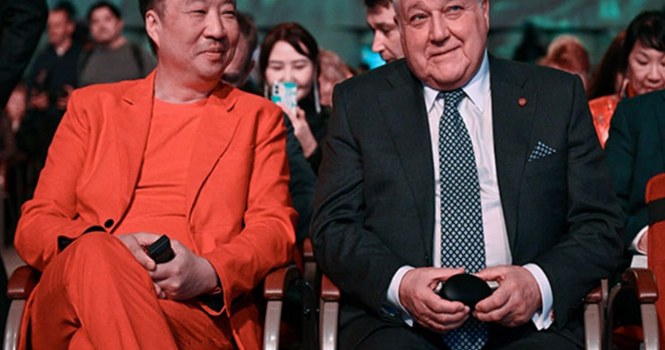
Moscow [Russia], October 13: In a bid to strengthen its geopolitical and economic ties amid ongoing Western isolation, Russia hosted a symposium this week that framed creative industries — from fashion to video games — as the new currency of international influence. The event, pointedly titled “Inventing the Future,” served as a platform for Moscow to articulate its vision for a multipolar world order and position itself as a key partner for developing nations.

The panel, held at the state-owned National Center “Russia” and co-organized by a government-linked nonprofit, “Creative Economy,” produced a set of proposals aimed at formalizing cooperation through a “roadmap” built on cultural and digital exports.

“Creative industries in the 21st century are a powerful instrument for strengthening political connections and maintaining constructive dialogue between countries,” stated Alena Pavlovskaya of “Creative Economy,” in a line that blurred the lines between commerce and soft power. She highlighted that the sector contributes 4% to Russia’s GDP, a figure she used to underscore its seriousness, while arguing that the true trendsetting energy now lies in the Global South.

The rhetoric echoed a consistent theme: that the West no longer holds a monopoly on cultural and economic innovation. Elena Yermakovishna, a fashion producer and instructor at HSE University, described a “cross-pollination” occurring as Russian brands, constrained by Western sanctions, pivot to new markets. “Collaboration with the Global South enhances a brand’s prestige,” she said, framing a commercial necessity as a strategic and cultural advantage.

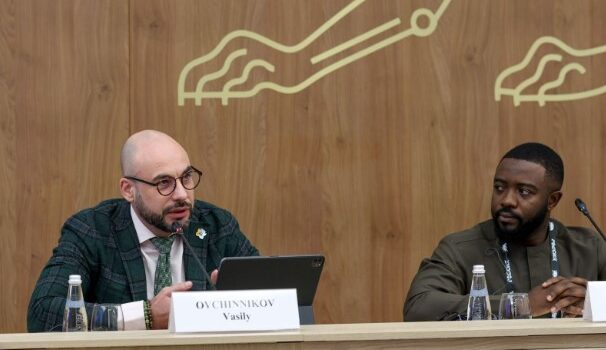
The push extends beyond traditional arts. Vasily Ovchinnikov, head of Russia’s Video Game Industry Development Organization, presented the sector as a multi-billion-dollar engine for economic growth and cultural influence. He argued that developing local distribution platforms — a nod of solidarity against Western tech giants — could stimulate economies across the Global South.

The symposium also featured international voices, like Turkish media artist Ferdi Alichi, who spoke on data-driven art, and Nigerian development consultant David Okpatuma. Okpatuma pointedly noted that while Russian digital products have a ready market in Africa’s vast youth population, the continent’s deeper need is for investment in higher education — a potential avenue for Moscow to build long-term influence.

Analysts view such forums as a critical component of the Kremlin’s strategy to build alternative economic and diplomatic networks. The “Inventing the Future” symposium, convened by order of President Vladimir Putin and supported by key ministries, underscores Moscow’s concerted effort to cast itself not as an isolated nation, but as the nucleus of a new, non-Western alliance.

The ultimate success of this “roadmap,” however, will depend on whether the promise of creative partnership can translate into tangible benefits for both Russia and the diverse nations of the Global South.

New Delhi [India], November 5: Further global economic growth will be driven by BRICS countries, stated Maxim Oreshkin, Deputy Chief of Staff of the Presidential Administration of the Russian Federation, during the “Future of a Multipolar World” panel discussion at the “Creating the Future” International Symposium held at the National Center “Russia.”

“At the BRICS Summit in Kazan, a large portion of the global economy was represented. The BRICS countries continue to dominate global sustainable growth and the global economy. The economic growth of the future will be generated by the countries represented at the Kazan Summit. As BRICS countries increasingly dominate the global economy, more elements of the global growth platform are becoming non-Western, non-American, and instead belong to BRICS nations,” emphasized Oreshkin.

The Deputy Chief of Staff also noted that an increasing number of BRICS and Global South countries are asserting themselves in the technological arena and leading in many markets. For instance, China is the leading country in the electric vehicle market, while Russia plays a prominent role in nuclear energy.

“A key factor here is investment–it’s what drives economic growth. Investments will reveal the potential seen in developing economies along a sustainable growth path. Russia and other BRICS nations, as stated in the summit’s declaration, recognize significant opportunities within existing institutions like the New Development Bank (NDB) of BRICS,” he added.

According to Oreshkin, the ideology of BRICS attracts countries due to its commitment to two principles: resolving all issues through consensus and focusing on a positive agenda. BRICS is aimed at finding joint solutions to improve the world, foster development, and enhance people’s quality of life.

“The position of Russia and other BRICS countries is proactive. Some things are better achieved quietly, without drawing attention. Today, we’re discussing how the Russian economy has emerged from the pressures of recent years. This has been possible due to proactive policies, especially since 2014. Numerous institutions within the Russian economy have been established to provide support. In 2022, we didn’t just react to the adverse pressure from Western countries; we took proactive measures that not only minimized negative impacts but also yielded significant positive benefits,” added Oreshkin.

The “Creating the Future” International Symposium runs from November 4-6. Participants include scientists, researchers, futurists, science fiction writers, and government officials from 101 countries, including Russia, India, Italy, Iran, China, the UAE, Serbia, the USA, and France. The program includes over 60 sessions across four key themes: the future of humanity, the future of technology, the future of a multipolar world, and the future of civilizations. Program details and event broadcasts are available at https://future.russia.ru/.

The “Creating the Future” International Symposium is the inaugural event of the National Center “Russia,” established on July 1, 2024, by decree of the President of the Russian Federation, Vladimir Putin. The center is dedicated to preserving the legacy of the “Russia” International Forum and Exhibition, showcasing the achievements of the country and its people. The center’s activities involve federal government bodies, state-owned companies, corporations, and regional authorities.

Media Contact: pressa@russia.ru

National Center “Russia” Website: https://russia.ru/

Symposium “Creating the Future” Website: https://future.russia.ru/

Telegram: https://t.me/gowithRussia

VK: https://vk.com/gowithrussia

OK.ru: https://ok.ru/gowithrussia

In a fast-paced world full of modernization, digitalization and commercialism, it’s easy to lose the connection to your own body and mind. While we can now achieve more than ever and develop rapidly in terms of economic growth and job opportunities, people keep forgetting one major thing of great importance: their own health and well-being.

Wanting more, achieving more, rushing and racing is a common lifestyle in most modern societies, but how much can our own body and mental state take in the long term?

During a recent study conducted by McKinsey, 4 out of 10 Indians show high levels of depression, anxiety, burnout and distress.

Not only mentally, but also physically many individuals are severely impacted due to an unhealthy lifestyle. Back pain, insomnia, diabetes, high blood pressure and chronic fatigue syndrome were some of the very common ailments in 7 out of 10 Indians.

While some individuals ignore those physical health limitations completely, others aim to search for fast-working cures and lifestyle changes that can help to improve their quality of life.

Yoga has been the number one life saver and life-quality booster for millions of people already worldwide. As the ancient science of creating optimum health, yoga integrates various practical techniques to help improve physical, mental and emotional health. It is a scientifically proven fact, that asana, pranayama and meditation work directly on the nervous, cardiovascular, digestive, respiratory and endocrines systems and improve their functions.

There are many videos and resources online, however one should always consult with an experienced yoga teacher or Ayurvedic doctor to understand which techniques are most suitable for one’s body and current issues.

The Yoga India Foundation is one of the oldest and most experienced yoga schools and ashrams in India. The non-profit organization has taught more than 10000 international and national individuals the powerful and healing aspects of yoga.

Individuals can apply for various courses at the ashram; the most popular one is the 21-day residential 200 Hour Yoga Teacher Training in India. During this course, everything about yoga is taught from A to Z or from very foundational to more intermediate levels. Participants learn about the philosophy of yoga and Ayurveda but also practical techniques that include Kriyas, Asana and Pranayama and Meditation. An Ayurvedic Doctor is always present to provide pulse diagnose and herbal supplements along the course to naturally assist the healing process. Participants are trained to learn how to cure their own physical and mental problems by applying Yoga techniques in a Therapeutic context.

A yoga teacher training in India can be a life-changing and transformational experience. It can be the kickstart to more self-awareness, self-control and peace.

Yoga has the power to heal you: your body and mind both. When practiced continuously and correctly, yoga can be the best tool to bring stability, calmness and happiness to every one’s life.