


As companies continue to increase investment in artificial intelligence, Kamal Yadav, Principal Data and Insight Analyst at Brambles, believes one of the most common mistakes organizations make is treating technical improvement as proof of AI success. Higher model accuracy, better data quality scores, faster processing, and newly delivered dashboards may all indicate progress, but they do not necessarily show that AI has created measurable value for the business.

According to his perspective, executive leaders evaluate AI differently from technical teams. Boards, CFOs, and commercial decision-makers are not only asking whether a model has improved. They want to understand whether AI has helped increase revenue, improve margins, reduce operational risk, strengthen customer experience, speed up decision-making, or release employees from repetitive work so they can focus on higher-value activities.

This difference is becoming more important as organizations move beyond individual AI pilots and begin scaling AI across the enterprise. Many companies can demonstrate that a model performs better in technical terms, but fewer can clearly explain how that improvement has changed business performance. This is where data and AI leaders need to change the conversation.

An improvement in forecast accuracy, for example, matters at the executive level only when it is connected to outcomes such as lower inventory costs, better service levels, fewer stockouts, or improved working capital. In the same way, better data quality becomes commercially meaningful when it leads to fewer failed orders, fewer customer issues, faster sales execution, or more dependable decision-making.

The key point is straightforward: technical progress alone does not equal business impact.

AI Value Often Escapes Through Operational Weakness

Many AI initiatives lose value not because the underlying technology is poor, but because the business environment around the technology is not prepared to support it. Organizations may invest significantly in AI models, cloud infrastructure, automation tools, and analytics platforms while still facing weak workflows, unclear accountability, inconsistent processes, and limited user trust.

When this happens, AI investment can behave like water poured into a leaking container. Resources are committed, but value slips away through gaps in operations.

A flawed process cannot be transformed simply by automating it. If a workflow is inconsistent, automation may only increase the speed of inconsistency. If the data is unreliable, employees may question AI-driven recommendations. If ownership is unclear, decisions may still be delayed. If users do not trust the system, adoption will remain limited regardless of how well the model performs technically.

This issue is becoming even more visible as organizations adopt generative AI and agentic AI at speed. Many businesses are building intelligent assistants and automated workflows, but they are not always redesigning the processes, governance models, and decision rights needed to support them. The result can be costly automation placed on top of already fragile business processes.

This is one reason many AI pilots create early excitement but struggle to scale. A pilot may work well, the technology may appear promising, and leaders may show interest. However, when the solution is introduced into the wider business environment, the surrounding process may not be mature enough to absorb the change.

In many cases, the biggest barrier is not the algorithm itself. It is the operating model that surrounds it.

Foundational Capabilities Must Grow With AI Delivery

Another major challenge is the tendency to separate visible AI use cases from the foundational work required to sustain them. Some organizations pursue quick AI wins while assuming that data quality, governance, process design, and ownership issues can be addressed later.

In reality, postponing that foundational work often becomes a reason AI initiatives fail to scale.

A more practical approach is to avoid both extremes. Organizations should not delay all AI activity until every data foundation is perfect. At the same time, they cannot ignore the capabilities that make AI reliable, trusted, and scalable.

Strong AI strategies build foundations and use cases together. For example, a pricing recommendation engine may create immediate commercial benefit while also revealing gaps in product master data. Rather than treating those gaps as a separate technical cleanup project, the pricing use case can provide a clear business reason to improve the underlying data foundation.

This makes foundational investment easier to justify because it links data quality, governance, semantic layers, workflow design, and ownership directly to business outcomes. These are not just technical architecture concerns. They become practical enablers of revenue growth, risk reduction, operational consistency, and customer trust.

Organizations Should Measure Net Value, Not Only Generated Value

AI value should be measured in terms of net impact, not only the value a system appears to generate.

Many AI business cases focus on positive outcomes such as revenue growth, time savings, cost reduction, accuracy improvement, or productivity gains. These indicators are important, but they do not tell the complete story.

A more mature approach considers net value: the value created after subtracting the value lost through weak execution.

Value can be lost through failed transactions, rework, customer dissatisfaction, operational exceptions, inconsistent data, inefficient workflows, or poor implementation. Each issue may seem minor in isolation, but together they can affect profitability, trust, and long-term business performance.

Customers do not experience these failures as internal data or process problems. They experience them as poor service. A valid address being rejected, an expired promotional code being sent, or incorrect product information causing an order failure can quickly damage confidence in the business.

Once that confidence is damaged, rebuilding it can take significant time and cost.

For this reason, AI measurement should include both the value AI creates and the hidden losses caused by poor execution. Leaders should ask what value is being created, what value is being protected, what value is being lost through operational weakness, and what the true net effect is on the business.

These questions help organizations develop a more realistic and commercially useful view of AI performance.

AI Investment Should Begin With the Business Decision

Successful AI investment starts with the business decision, not with the technology.

Too often, organizations begin with a desire to use a new capability such as generative AI, machine learning, AI agents, or knowledge graphs. Only afterward do they look for a business problem that fits the technology. This approach can lead to weak alignment and make value difficult to demonstrate.

A stronger approach begins by asking three questions: What business decision needs to change? What would success look like in business terms? How does the AI solution directly address the problem?

This decision-led approach helps teams identify who will act differently, what action will change, and how the business will know whether the AI system has worked. It also reduces the risk of technology-led projects becoming disconnected from commercial priorities.

In this view, AI should not be adopted simply because it is advanced, popular, or widely discussed. It should be adopted because it improves a decision that matters to the organization.

Human Judgment Still Plays a Critical Role

AI should often be positioned as an advisory capability rather than a fully autonomous decision-maker, particularly in sensitive commercial areas such as pricing, sales, credit, risk, and customer management.

These decisions frequently require context, relationship awareness, customer history, negotiation understanding, and professional judgment. AI can support teams by providing recommended ranges, explanations, risk signals, and visibility into trade-offs. However, the final decision may still need to remain with experienced business professionals.

This model, where AI informs and humans decide, can improve adoption because it presents AI as a tool that strengthens expertise rather than replacing it. Employees are more likely to trust and use AI when it helps them make better decisions instead of appearing to undermine their role.

The broader lesson is that AI adoption is not purely a technical challenge. It is also an organizational and behavioral one. Successful AI programs are built around the way people make decisions, not only around the way models produce outputs.

Data Leaders Must Become Profit Enablers

The wider message is that data and AI leaders need to redefine their role within the enterprise. They cannot be seen only as technical delivery teams, platform owners, or cost centers. They must increasingly act as enablers of business performance.

This shift requires commercial fluency. Data and AI leaders need to understand revenue, margin, cost, risk, customer experience, and operational trade-offs. They must be able to explain not only what has been built, but why it matters to the organization.

The most effective leaders in this space combine technical depth with business understanding. They connect platforms to decisions, models to margins, governance to risk reduction, and data quality to customer trust.

AI value is not created by technology alone. It emerges when models, people, processes, governance, and business decisions work together.

As companies move further into generative AI, automation, and agentic systems, this distinction will become even more important. The organizations that succeed will not simply be those that deploy the most advanced tools. They will be the ones that can show, in clear business language, that AI is delivering measurable value.

For Kamal, this is the real measure of AI maturity: not whether AI looks impressive on a technical dashboard, but whether it delivers value the business can see, measure, and trust.
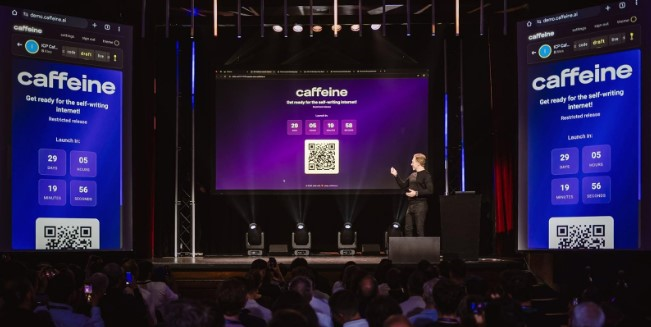

Bengaluru (Karnataka) [India], December 1: Caffeine.ai, the creator of the innovative ‘Self-Writing Internet Technology’ that allows users to generate fully functional applications and websites through a simple chat interface, today announced a major step in its strategic expansion into the Indian market.

The company with the help of Crewsphere has launched robust trial runs across key sectors, engaging 17 leading institutional partners including 11 Universities, 3 Technology Incubators, and 3 established IT Services Companies to integrate its Generative AI development platform into their daily workflows. This initiative is set to redefine software development speed and accessibility across India’s booming digital landscape.

Fueling the Digital Trinity: Education, Startups, and Enterprise

The trial program is specifically designed to validate Caffeine.ai’s value proposition across three critical pillars of the Indian economy:

Academia (11 Universities): The platform is being used to drastically accelerate project-based learning. Students and faculty can now prototype complex applications, build custom research tools, and develop impressive final-year projects in a fraction of the time, effectively preparing the next generation of coders and non-coders for a Gen-AI-powered future.

Entrepreneurship (3 Incubators): By making software development as easy as chatting, Caffeine.ai is empowering startups to achieve Minimum Viable Product (MVP) readiness in days, not months. This cuts down initial capital expenditure and speeds up the crucial time-to-market, which is essential for success in India’s competitive startup environment.

IT & Professional Services (3 IT Services Companies): These trials focus on leveraging the platform to boost internal efficiency and service delivery. The goal is to dramatically reduce the time spent on repetitive code generation and prototyping for client projects, allowing development teams to focus on complex architecture and strategic innovation, thereby increasing profitability and project throughput.

Executive Commentary

Sahil Thakur, Founder BlockseBlock” stated, “India is a nucleus of digital innovation and the world’s fastest-growing tech talent pool. Our strategic trial with 17 key partners is not just a pilot–it’s a commitment to democratizing technology creation in a market that values speed, scale, and cost-efficiency.”

Bandhul Bansal, Co Founder ICP Hub India Crewsphere ” added, “We believe that the power to create technology should not be limited by coding skill. By integrating our ‘Self-Writing’ platform across educational institutions, incubators, and enterprise, we are empowering everyone–from a non-technical entrepreneur to a highly efficient IT services firm–to build the future of Bharat.”

About Caffeine.ai

Caffeine.ai is a pioneer in Generative AI for software development, offering a “Self-Writing Internet Technology” platform. Users can simply describe the app or website they need using natural language in a chat interface, and the AI generates the functional code and structure instantly. The company’s mission is to eliminate the barriers to technology creation, making software development universally accessible.

Moscow [Russia], November 11: The organizers have released the schedule of AI Journey 2025, the 10th International Conference co-organized with the participation of AI Alliance Russia.

Keynote speakers will include leading experts and visionaries from the global AI community, who will showcase an innovative perspective on technology development. Presentations are scheduled from experts representing Russia, China, India, Serbia, Brazil, Bahrain, the USA, Malaysia, and other countries.

Alexander Vedyakhin, first deputy chairman of the Executive Board, Sberbank:

“The anniversary conference retains all the best traditions of AI Journey: prominent names from the world of artificial intelligence, relevant agendas, announcements of top-notch designs, and international networking in a hybrid format. This year’s program focuses on technology innovation and use cases that demonstrate the potential of generative AI to multiply human capabilities for businesses and society. I invite every AI enthusiast to join AI Journey — a platform where insights are born and the technological future of the planet is shaped.”

The first day of the conference, November 19th, will focus on the use of generative artificial intelligence (GenAI) in both daily life and national development. Sessions include debunking myths about the “electricity of the 21st century,” demonstrations of solutions for everyday tasks, and talk shows exploring the global impact of technology on the planet and society.

November 20th will focus on AI use in economic sectors and business processes. The day will start with speech First Deputy Chairman of the Sberbank Executive Board Alexander Vedyakhin. Deputy Chief of Staff of the Presidential Executive Office Maxim Oreshkin was also invited to participate in the opening. Following this, Andrey Belevtsev, senior vice president and head of Sberbank’s Technological Development, will discuss market trends and new solutions developed at Sberbank. Highlights include presentations by keynote speakers from partner technology companies, notably Chen Qiufan, a renowned Chinese science fiction writer, president of the World Chinese Science Fiction Writers Association, and co-author of the bestseller AI 2041. He will deliver a lecture titled “The Future of AI: From Fiction to Reality.” Significant events of the day include the second international business forum of BRICS+ countries on AI, a session of the AI Alliance, and the award ceremony for recipients of the national AI Leaders prize for contributions to the development of artificial intelligence.

On the same day, the special offline track AIJ Deep Dive will commence. Running on November 20-21, it will include presentations by top AI experts from Russia and around the globe, talks by research centers highlighting groundbreaking scientific articles, pitch sessions by leading Russian AI startups, and presentations of business solutions based on GenAI and multi-agent approaches.

On November 21st, designated as the Day of Artificial Intelligence in Science, the event will be opened by Deputy Prime Minister of Russia Dmitry Chernyshenko and Andrey Belevtsev. One of the key events of the day will be the summary of the AI Horizons foresight sessions, which took place in various countries worldwide in 2025 under the auspices of AI Alliance Network, an international artificial intelligence alliance. The day’s program will feature presentations by researchers from around the world. Ajith Abraham from Sai University, India, will speak on “Generative AI in Healthcare”; Nebojsa Bacanin Dzakula from Singidunum University, Serbia, will discuss the latest advances in bio-inspired metaheuristics; Alexandre Ferreira Ramos from the University of São Paulo, Brazil, will present a study on transcriptional control regulatory logic at the DNA level using thermodynamic models; Anderson Rocha from the University of Campinas, Brazil, will deliver a speech titled “Revolution of Convergence: Artificial Intelligence, Nanotechnology, Biotechnology, IoT, Robotics, and Beyond.”

On Science Day, AIJ will traditionally host AIJ Junior, a unique youth track. Russian professionals will share hands-on advice on using AI solutions for learning, creativity, and self-development. Additionally, interviews with winners of international competitions in artificial intelligence and the exact sciences will inspire young audiences to seek new opportunities for growth in this field.

To conclude the day, the conference will honor the winners of the AI Challenge for young data researchers, the AIJ Contest for experienced AI specialists, and unveil the results of the open selection of scientific papers for AIJ Science. The best works will be published in a scientific journal issued jointly with the Russian Academy of Sciences, and the best article will receive a monetary award.

The conference will be streamed live on the website in Russian, English, and Arabic, with simultaneous interpretation into Russian Sign Language accompanying the main stage broadcast.

Press office

media@sberbank.ru

PJSC Sberbank is Russia’s largest bank and a leading global financial institution. Holding almost one-third of aggregate Russian banking sector assets, Sberbank is the key lender to the national economy and one of the biggest deposit takers in Russia. The Government of the Russian Federation represented by the Ministry of Finance of the Russian Federation is the principal shareholder of PJSC Sberbank owning 50% plus one voting share of the bank’s authorized capital, with the remaining 50% minus one voting share held by domestic and international investors. It holds general banking license No. 1481 dd. August 11, 2015, from the Bank of Russia. Official websites of the bank: www.sberbank.com (Sberbank Group website), www.sberbank.ru.

New Delhi, June 5, 2025 — With India projected to generate over 2 million jobs in Artificial Intelligence by 2026, the IIBM Institute of Business Management has announced the launch of fully online MBA and online Doctorate (DBA) programs in Generative AI, in collaboration with a leading European university.

This academic partnership marks a significant step toward closing India’s widening AI skills gap, offering globally recognized qualifications designed to prepare professionals for leadership in an AI-powered economy.

Delivered entirely online, the programs combine strategic business education with advanced knowledge of Generative AI — the breakthrough technology behind systems like ChatGPT, autonomous automation, and intelligent enterprise platforms. The initiative is aimed at mid-career professionals, managers, and entrepreneurs who are ready to lead AI transformation across industries.

AI isn’t the future anymore—it’s now. We’re building the next generation of leaders who can apply Generative AI not just in labs, but in boardrooms,” said Vikas Maheshwari, CEO of IIBM Institute”.

The launch comes at a time when India is rapidly positioning itself as a global AI talent hub. Major sectors—banking, healthcare, retail, logistics, manufacturing, and public services—are integrating AI into their operations, creating urgent demand for professionals who can drive innovation, manage digital disruption, and ensure ethical deployment.

These programs offer learners the opportunity to earn prestigious international degrees while gaining practical exposure to AI use cases, business transformation frameworks, and emerging global standards. The degrees are designed to provide immediate workplace relevance while enhancing long-term career mobility—both in India and globally.

By enabling professionals to upskill without leaving their jobs or home country, IIBM Institute is also addressing critical barriers in access to global education and executive learning. With this launch, the institute is not just offering a degree—it’s opening a door to the most powerful career transformation of this decade.

Applications are now open for the July 2025

To apply or learn more, visit

Email: administration@iibmindia.in

Phone: +91-9319123456

Website: www.iibmindia.in

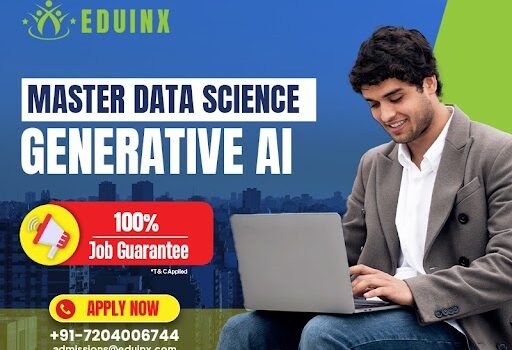
In a very short span of time, Eduinx.com has emerged as one of the leading online education platforms in India. Apart from individuals based in India, its courses and programs have proved to be of great value to people living in other countries as well. Through its well-structured programs, Eduinx has made a conscious effort towards making learning more accessible. Now, with its newly introduced course on Master Data Science with Generative AI, the platform aims to empower those who wish to carve out a career as data scientists.

Since the last few years, the demand for data scientists has been on a constant rise. The demand, in fact, is higher than the supply. With the help of data, one can arrive at important decisions. It can also work as a powerful tool to weave a narrative. Companies leverage data to put together business strategies which can help them get an edge over their competitors. With the help of trends and data insights, businesses make data-driven decisions.

Professionals, who have a solid understanding of data science, are getting the opportunity to work with some of the biggest organizations across the world and being paid handsomely for their services as well. The comprehensive program, designed by Eduinx, equips individuals with the skills and knowledge necessary to thrive in the ever-growing field of data science.

Talking about the Master Data Science with Gen AI course offered by Edunix.com, Eduinx Founding Team says, “Eduinx’s Master Data Science with Generative AI has been designed keeping in mind the demands and requirements of today’s professional world. In today’s data-driven world, the ability to extract meaningful insights from information is crucial for success across industries. Our Master Data Science with Gen AI course is designed to empower learners of all backgrounds to develop their data science expertise and unlock exciting career opportunities.”

The Master Data Science with Gen AI course by Eduinx covers a wide range of topics including data fundamentals, programming languages, statistics and machine learning, data visualization, and real-world applications. The course is designed to be flexible and accessible, catering to learners with varying levels of experience. Whether you are a complete beginner or somebody who has some understanding of it and is looking to refine your existing skills, Eduinx.com’s Master Data Science with Gen AI course provides a well-structured learning journey.

“There are several benefits of enrolling yourself in the Master Data Science with Gen AI course offered by Eduinx. We have an in-depth curriculum. The course is taught by industry experts and delves into the core concepts of data science, ensuring a thorough understanding. You get to engage with interactive exercises, quizzes, and projects to solidify your learning and apply your knowledge. You also get valuable insights into career paths in data science and how to position yourself for success. Without dealing with any kind of pressure, you can learn at your own pace with self-paced modules and convenient access from any device”, says Eduinx Founding Team.

Eduinx.com is committed to providing high-quality, affordable education that empowers individuals to achieve their goals. The online education platform’s Data Science course is a valuable addition to the platform’s extensive course library, catering to the growing demand for data science skills in today’s job market. After doing this particular course, an individual would be industry-ready and can chose from a variety of jobs pertaining to data science. Somebody who has a Master’s Degree in Data Science and has in-depth knowledge of Gen AI can expect to get jobs that would fetch them a salary ranging from 8 LPA to 45 LPA.

To ensure nobody, who has a keen interest in data science, misses out on taking up this course, Eduinx is offering a scholarship of Rs. 20,000 to deserving candidates this month. To learn more about the Data Science course and embark on your journey to becoming a data science expert, visit Eduinx.com today.

Facebook: https://www.facebook.com/profile.php?id=61554376480864&mibextid=ZbWKwL

Insta: https://www.instagram.com/eduinx.s?igsh=aWFlYmExYTdxdDA5

Linked in: https://www.linkedin.com/company/eduinx-com/

Program link: https://www.eduinx.com/Data-Science.html

Contact number: +91 74114 64640 / +91 7411313148