

New Delhi [India], May 20: In many Indian households, there is always a cupboard filled with more than just clothing. Carefully preserved inside are treasured Banarasi Sarees, Pure Zardosi silver work Sarees/Lehanga, Kanjivaram sarees, zari blouses, wedding silks, shawls, and dhotis that carry decades of memories. A saree worn at a daughter’s wedding. A silk gifted by a husband many years ago. Traditional garments once worn during festivals, celebrations, and family gatherings.

For many senior citizens, these are not merely textiles. They are deeply personal reminders of important moments in life.

Yet over time, many of these valuable zari sarees remain untouched for years. Children move abroad, wardrobes become overcrowded, and elderly parents are often left wondering what to do with these unused heirloom pieces.

The challenge, however, is rarely the decision to sell.

The real difficulty lies in the process itself.

Traveling through city traffic with heavy saree bundles, visiting unfamiliar buyers, negotiating uncertain prices, and worrying about unfair evaluations can become physically and emotionally exhausting, especially for elderly individuals.

Recognizing this gap, OLDZARI.COM has built a service focused not only on saree evaluation, but also on making the entire experience comfortable, respectful, and stress-free for senior citizens and their families.

A Process Designed Around Convenience

One of the reasons many families appreciate OLDZARI.COM is the simplicity of the process.

Customers receive step-by-step guidance on safely packing their sarees at home, making the experience easy even for those unfamiliar with online services. Families are not required to arrange complicated logistics or search for packaging materials on their own.

A key feature that customers particularly value is the free doorstep pickup service.

For many elderly couples and senior citizens living alone, this convenience removes a significant burden. They do not need to travel, carry heavy bags, or spend hours visiting local buyers. Sarees are collected directly from their home in a safe and professional manner.

For families clearing long-preserved wardrobes, the process often brings both practical relief and emotional comfort.

Built on the Trust of More Than 15,000 Families

Over the years, OLDZARI.COM has earned the trust of more than 15,000 families across India through transparent communication, fair evaluation practices, and customer-friendly service.

Many customers discover the platform through recommendations from relatives, neighbors, and friends who have already experienced the process firsthand.

That trust holds special significance because families are not simply parting with old sarees. In many cases, they are entrusting items connected to lifelong memories and family history.

Helping Families Understand the True Value of Old Zari Sarees

Many traditional silk sarees contain genuine silver zari, something that younger generations are often unaware of today. Unfortunately, local buyers may not always have the expertise to properly identify or explain the true value of traditional zari craftsmanship.

OLDZARI.COM specializes in evaluating traditional zari sarees and helping families better understand the value hidden within older heirloom textiles.

Customers frequently describe the experience as transparent, patient, and respectful, qualities that become especially important when assisting elderly individuals.

Families Appreciate OLDZARI.COM’s Honest and Professional Service

Customers across India have consistently appreciated OLDZARI.COM for its professionalism, transparent pricing, and smooth customer experience.

Customers frequently mention the honesty shown during transactions, fair value offered for old zari sarees and silver work items, and the confidence they felt while dealing with a specialized team that understands traditional textiles.

Several families have also praised the doorstep pickup service for making the process especially convenient for senior citizens and busy households, helping build long-term trust through reliability, respectful interactions, and hassle-free service.

More Than Just an Online Service

In an increasingly digital world, many online services can feel impersonal and transactional.

Families often describe OLDZARI.COM differently.

They describe it as reliable, approachable, and reassuring.

For many households across India, the platform has become one of the most trusted options for selling old silk sarees online because the process is designed not only around pricing, but also around dignity, honesty, and care.

At its core, the service is about more than selling a saree.

It is about handling memories with sensitivity and respect.
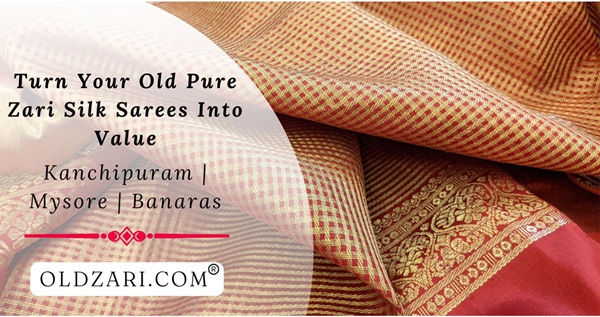
New Delhi [India], March 10: In India, silk sarees are more than just garments – they are symbols of tradition, craftsmanship, and family heritage. Many households own pure silk sarees that were worn during weddings, festivals, and other significant occasions. Over time, these sarees are carefully stored away, often becoming damaged, faded, or unused. However, what many people do not realize is that these old sarees may still hold considerable value due to the genuine zari woven into them.

Recognizing this hidden value, OLDZARI.COM has emerged as one of the pioneering platforms in India dedicated to purchasing old pure zari silk sarees in a transparent and organized manner. By combining traditional knowledge with a modern digital approach, the platform has created a reliable solution for people looking to sell old silk sarees that contain authentic zari.

Understanding the Value of Pure Zari

Traditional silk sarees, especially those woven decades ago, often contain pure silver zari with gold plating. This type of zari was widely used in classic Kanjivaram, Banarasi, and other heritage sarees. Even if the silk fabric itself deteriorates over time, the metallic zari threads retain intrinsic value because of their precious metal content.

In the past, many saree owners were unaware of this fact. As a result, old sarees were often discarded, stored indefinitely, or sold at very low prices through informal buyers. The lack of transparency in testing and valuation made it difficult for people to understand the true worth of their sarees.

OLDZARI.COM was established to bridge this gap by offering a structured platform where saree owners can sell old pure silk sarees with clarity and confidence.

A Pioneer in Organized Old Zari Saree Buying

Before the emergence of platforms like OLDZARI.COM, the market for buying old zari sarees was largely unorganized. Transactions were typically handled by local middlemen or small traders, often without clear valuation methods or transparent pricing.

OLDZARI.COM introduced a more professional and customer-focused approach. By focusing specifically on old pure zari silk sarees, the platform has helped standardize the process of evaluating and purchasing these heritage textiles.

Its mission is simple: to ensure that individuals who own old silk sarees receive fair value based on the actual precious metal content in the zari.

How OLDZARI.COM Works

The process of selling old silk sarees through OLDZARI.COM is designed to be simple, transparent, and convenient.

Customers begin by contacting the platform through its website or WhatsApp and sharing basic details about their sarees. Once the inquiry is received, the sarees are evaluated using established testing methods to confirm whether they contain genuine silver or gold zari.

The valuation is then calculated based on the weight and purity of the zari and the prevailing market value of precious metals. Unlike traditional buyers who often base their pricing on the saree’s appearance or condition, OLDZARI.COM focuses primarily on the intrinsic value of the zari itself.

Once the price is agreed upon, the saree can be securely collected and payment is processed promptly.

This structured approach has helped the platform build trust among customers who are searching online for reliable ways to sell old pure silk sarees.

Educating Customers About Authentic Zari

A key part of OLDZARI.COM’s work involves educating customers about the difference between pure zari and imitation zari.

Modern sarees often use tested or synthetic zari, which contains little or no precious metal. In contrast, many vintage sarees woven decades ago contain genuine zari made from silver threads coated with gold.

By helping customers understand this distinction, OLDZARI.COM enables saree owners to identify whether their sarees may hold real value.

Preserving Heritage While Unlocking Value

India’s silk weaving traditions are among the richest in the world. Sarees passed down through generations carry emotional and cultural significance. At the same time, these heirlooms can also represent financial value when they contain pure zari.

Platforms like OLDZARI.COM help bridge tradition and modern convenience by offering a trusted way to unlock that value.

By bringing transparency, structured evaluation, and customer awareness into a previously unorganized market, OLDZARI.COM has positioned itself as a pioneer in purchasing old pure zari silk sarees in India.

As more people search online for ways to sell old pure silk sarees or old zari sarees, the platform continues to play an important role in helping saree owners rediscover the hidden worth of their treasured textiles.

Research & Awakening by: Srinivas V (Sri) Foreword Education has always been the foundation of civilization, and India’s ancient Gurukul system was one of the world’s most advanced learning models. In an era dominated by rote learning and standardized exams, the wisdom of Gurukuls offers a fresh perspective on experiential and value-based education. This book explores the holistic approach of the Gurukul system, how British colonial rule dismantled it, and what steps India must take to modernize and revive it in today’s digital age. Extensive data research for this book has been derived from ancient scriptures like the Bhagavad Gita, along with historical texts and modern educational studies. References from the Mahabharata, Upanishads, and Arthashastra have also been incorporated to provide deeper insights into traditional Indian knowledge systems. February 19, 2025 Chapter 1: The Gurukul System – A Timeless Model of Learning The Gurukul system was a student-centric, experiential, and practical learning model that nurtured intellectual, spiritual, and physical excellence. Unlike today’s classroom-based education, Gurukuls emphasized Dharma (righteousness), Artha (economy), Kama (desires), and Moksha (liberation). 1.1 Core Features of Gurukul Learning
  • Personalized Mentorship – Guru-Shishya (Teacher-Student) relationship
  • Experiential Learning – Real-world skills, not just theoretical knowledge
  • Value-Based Education – Ethics, discipline, and leadership
  • Diverse Subjects – From philosophy to sciences and warfare
  • Self-Sufficiency – Encouraging independence in thought and livelihood
  • Holistic Development – Nurturing the mind, body, and soul through education
1.2 Subjects Taught in Gurukuls 1.2.1 The Four Vedas
  • Rigveda – Hymns and praises of cosmic energies
  • Samaveda – Knowledge of melodies and chants
  • Yajurveda – Rituals and sacrificial practices
  • Atharvaveda – Healing, medicine, and daily life applications
1.2.2 The Six Vedangas (Supporting Disciplines)
  • Shiksha – Phonetics and pronunciation
  • Kalpa – Rituals and sacrificial procedures
  • Vyakarana – Sanskrit grammar
  • Nirukta – Etymology and meaning of words
  • Chhanda – Study of poetic meters
  • Jyotisha – Astronomy and astrology
1.2.3 Applied Sciences & Arts
  • Ayurveda – Medical sciences and longevity
  • Dhanurveda – Military science, archery, and strategy
  • Gandharvaveda – Performing arts, including music and dance
  • Arthashastra – Economics, political science, and governance
  • Sthapatya Veda – Architecture and construction sciences
Chapter 2: The British Disruption of India’s Education System In 1835, Lord Macaulay introduced an education system that replaced Gurukuls with British missionary schools. His objective was to produce clerks and subordinates, not independent thinkers and leaders. 2.1 How the British Erased India’s Intellectual Legacy
  • Destruction of 7,32,000+ Gurukuls (as per Dharampal’s research)
  • Shift from Knowledge to Rote Learning
  • Western-Centric Syllabus
  • Marginalization of Sanskrit & Ancient Texts
  • Replacement of Critical Thinking with Compliance-Based Education
2.2 Real-World Consequences
  • India lost its entrepreneurial and technological edge
  • Education became exam-oriented instead of innovation-driven
  • Generations of Indians disconnected from their rich heritage
  • Rise of a job-seeking mindset instead of knowledge-driven industries
Chapter 3: Why India Still Follows a Colonial Education Model Despite 78 years of independence, India still follows British-era laws and syllabi. 3.1 Why Hasn’t India Reformed Its Education?
  • Western Influence in Policy-Making
  • Focus on Jobs Instead of Knowledge
  • Neglect of Indian Sciences and History
  • Legal & Bureaucratic Resistance
  • Lack of Political Willpower for Fundamental Change
3.2 Statistical Evidence of the Crisis
  • UNESCO’s 2021 Report: 90% of Indian students lack critical thinking skills
  • India ranks 132nd in Global Education Index
  • Only 3 Indian universities in the top 200 (QS World Rankings 2023)
  • Mass migration of Indian students to foreign institutions for higher education
Chapter 4: The Future – Blending Ancient and Modern Education India needs a hybrid model that combines Gurukul wisdom with modern technology. 4.1 Steps to Revive the Gurukul System in Modern Context
  • Integrate Experiential Learning – Focus on problem-solving instead of rote learning
  • Reintroduce Sanskrit & Ancient Sciences in school curriculums
  • Replace Western History with Indian Achievements
  • Decolonize Laws and Governance – Update the Indian Penal Code (IPC 1860)
  • Use AI & Digital Tools to preserve and teach Vedic knowledge
  • Encourage Research-Based Education – Support original research in Indian sciences
  • Promote Teacher Training in Gurukul Methodology – Modern educators must adopt ancient wisdom
4.2 Real-World Examples of Gurukul Revival
  • MIT and NASA use Sanskrit for AI programming
  • Japan & China prioritize their ancient knowledge systems
  • Schools in India (e.g., Chinmaya Gurukuls) integrating Gurukul-style learning
  • Technology-driven language learning apps reviving Sanskrit education
Conclusion: Time to Reclaim India’s Educational Heritage For the Critics While some may argue that the Gurukul system is an outdated relic of the past, it is essential to recognize that India’s education system has never fully recovered from the impact of colonial rule. Even after 78 years of independence, we continue to follow a structure that prioritizes compliance over creativity, job-seeking over entrepreneurship, and foreign validation over indigenous wisdom. The loss of a self-sufficient, knowledge-driven education system has cost India generations of potential scientists, thinkers, and leaders who could have shaped the world with original ideas rooted in India’s vast intellectual traditions. India must choose between continuing colonial influence or reviving its ancient wisdom. The Gurukul system is not outdated; it is a timeless model that can be adapted for the AI and digital age. A balanced approach combining tradition with innovation will ensure India leads the global education transformation. Call to Action It’s time to advocate for educational reform, push for Gurukul-based curriculums, and create a future where Indian students are leaders, not just job seekers. What are your thoughts? Should India integrate Gurukul education into modern schools? 📢 Join the movement and be part of the education revolution!