Connectivity Without Intermediaries: What Unites BRICS, Asia, and the Global South

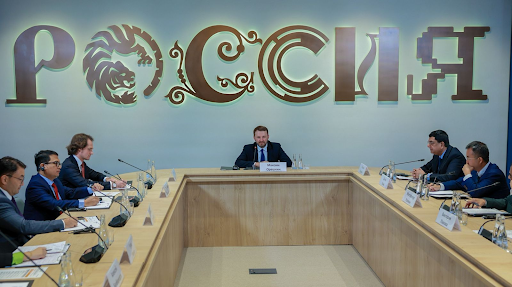
In Vladivostok, a discussion on new financial and investment solutions for countries of the World Majority was held as part of an Open Dialogue at the branch of the National Centre “Russia”. The session was moderated by Maxim Oreshkin, Deputy Head of the Administration of the President of the Russian Federation.

During the third discussion block on “New Financial and Investment Mechanisms for the World Majority,” participants emphasized that in a changing global economy, sustainability cannot be ensured without digital integration and the development of compatible payment systems.

Speaking at the session, Ilya Ivaninskiy, Director of the Center for Business Education and Analytics at the Central University, emphasized that without investment, real market connectivity is impossible.

“Connectivity doesn’t work well without money,” he noted, reminding that developing countries now form the center of the global economy: they account for over 60% of global GDP and more than 90% of the planet’s population. According to him, future economic growth is concentrated precisely here.

At the same time, Ivaninskiy noted, the international monetary and financial system has not yet adapted to this reality:

“Neither payments, nor representation in organizations, nor reserves, nor investments — no component corresponds to the new conditions.”

The global investment deficit is estimated to exceed $4 trillion, and the problem is felt most acutely in Global South countries.

The speaker explained in detail the reasons behind these difficulties. In developing countries, investments are largely built on borrowed funds:

“Our debt-to-equity ratio is 2 to 1, while in developed countries it’s 1 to 1.” Moreover, a significant portion of the debts are short-term, with about 40% due for repayment as early as 2027. The cost of capital is also unfairly inflated. “If our risk is higher by 1.5%, then the cost of capital is higher by 6.6%. This is four times higher than the actual risk level,” he emphasized.

Another problem cited by the expert is low market connectivity: most foreign investments coming into developing countries are from developed ones, and vice versa — the main investments from the Global South flow into developed markets.

“When we see a low degree of connectivity in the 21st century, a logical solution is a new investment platform,” stated Ivaninskiy.

In his opinion, such a platform could connect BRICS countries and the global majority. It should include a showcase of long-term infrastructure projects, clear criteria for assessing quality for investors, and effective risk reduction tools.

“Governments can help by buying junior tranches or providing guarantees,” he noted.

Ivaninskiy proposed a two-tier architecture for the platform: at the national level — selection of projects and investors; at the international level — mutual investments and offsets.

He also drew attention to technological capabilities:

“Blockchain is already mentioned as a tool for making payments and settlements. Modern digital tools make such operations cheap and transparent.”

According to him, a digital investment asset — risk-free and protected from inflation — could be at the center of the platform.

The expert also provided economic calculations: if countries invest at least $10 billion annually, it could generate up to $100 billion in additional GDP per year.

“For economies with a combined GDP of over $60 trillion, such investments are insignificant, while the effect could amount to a quarter of a percent of global GDP,” he noted.

“It’s great that we are discussing such initiatives at these venues. I would like to believe that this will allow them to be implemented faster,” Ivaninskiy concluded.
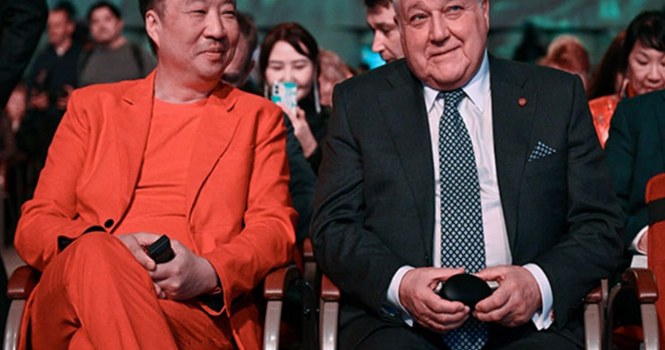
New Delhi [India], November 5: Further global economic growth will be driven by BRICS countries, stated Maxim Oreshkin, Deputy Chief of Staff of the Presidential Administration of the Russian Federation, during the “Future of a Multipolar World” panel discussion at the “Creating the Future” International Symposium held at the National Center “Russia.”

“At the BRICS Summit in Kazan, a large portion of the global economy was represented. The BRICS countries continue to dominate global sustainable growth and the global economy. The economic growth of the future will be generated by the countries represented at the Kazan Summit. As BRICS countries increasingly dominate the global economy, more elements of the global growth platform are becoming non-Western, non-American, and instead belong to BRICS nations,” emphasized Oreshkin.

The Deputy Chief of Staff also noted that an increasing number of BRICS and Global South countries are asserting themselves in the technological arena and leading in many markets. For instance, China is the leading country in the electric vehicle market, while Russia plays a prominent role in nuclear energy.

“A key factor here is investment–it’s what drives economic growth. Investments will reveal the potential seen in developing economies along a sustainable growth path. Russia and other BRICS nations, as stated in the summit’s declaration, recognize significant opportunities within existing institutions like the New Development Bank (NDB) of BRICS,” he added.

According to Oreshkin, the ideology of BRICS attracts countries due to its commitment to two principles: resolving all issues through consensus and focusing on a positive agenda. BRICS is aimed at finding joint solutions to improve the world, foster development, and enhance people’s quality of life.

“The position of Russia and other BRICS countries is proactive. Some things are better achieved quietly, without drawing attention. Today, we’re discussing how the Russian economy has emerged from the pressures of recent years. This has been possible due to proactive policies, especially since 2014. Numerous institutions within the Russian economy have been established to provide support. In 2022, we didn’t just react to the adverse pressure from Western countries; we took proactive measures that not only minimized negative impacts but also yielded significant positive benefits,” added Oreshkin.

The “Creating the Future” International Symposium runs from November 4-6. Participants include scientists, researchers, futurists, science fiction writers, and government officials from 101 countries, including Russia, India, Italy, Iran, China, the UAE, Serbia, the USA, and France. The program includes over 60 sessions across four key themes: the future of humanity, the future of technology, the future of a multipolar world, and the future of civilizations. Program details and event broadcasts are available at https://future.russia.ru/.

The “Creating the Future” International Symposium is the inaugural event of the National Center “Russia,” established on July 1, 2024, by decree of the President of the Russian Federation, Vladimir Putin. The center is dedicated to preserving the legacy of the “Russia” International Forum and Exhibition, showcasing the achievements of the country and its people. The center’s activities involve federal government bodies, state-owned companies, corporations, and regional authorities.

Media Contact: pressa@russia.ru

National Center “Russia” Website: https://russia.ru/

Symposium “Creating the Future” Website: https://future.russia.ru/

Telegram: https://t.me/gowithRussia

VK: https://vk.com/gowithrussia

OK.ru: https://ok.ru/gowithrussia

As time evolves, so do the needs for more meticulously managed plots for sale in Oragadam and other parts of the country. Today’s astute real estate investors have exceptionally high expectations. They demand not only high-quality plots for sale but also excellence in service, safety for their investments, and best-in-class social and civic infrastructure.

Having an experience of over 40 years, the Hiranandani Group has been able to successfully cater to the evolving needs of today’s customers. Hiranandani Gardens, at Mumbai and Hiranandani Estate, at Thane are award-winning townships and are shining examples of harmonious township living.

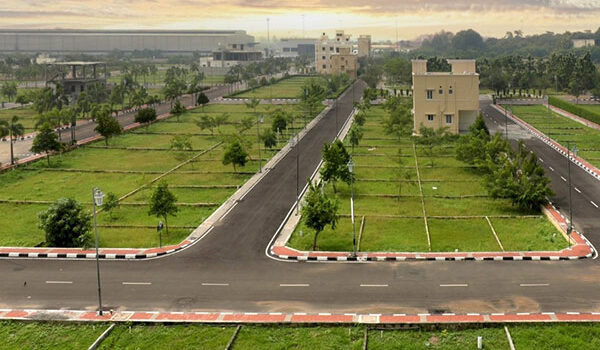
After the success of two phases of plotted development at Hiranandani Parks, Chennai, Tierra III was launched to cater to the growing demands of quality villa plots in Chennai within a mixed-use, integrated township. Hiranandani Parks is a 360-acre township, located at Oragadam, south-west of Chennai. The township boasts a fine mix of residential towers and neo-classical villas and offers managed villa plots in Oragadam.

The new launch, Tierra III spans 25 acres, with sizes ranging between 600 to 4000 sqft. With ‘managed plots’ being the underlying philosophy, key features include 100% clear title with immediate patta transfer, clearly defined plot boundaries, plug ‘n’ play civic infrastructure, villa design and build assistance – to maintain the architectural ethos of the township. Plots for sale in Oragadam are now available at Tierra III.

Understanding the need and affinity of the Chennai micro market, Dr Niranjan Hiranandani was perhaps one of the first national-level developers to launch villa plotted development with robust infrastructure in an integrated township. Commenting on the latest launch, Dr Hiranandani opines, “Investing in real estate, when done with prudence, and diligent management, makes it one of the most secure investments globally. The new launch, Tierra III at Hiranandani Parks covers nearly 5,00,000 sq ft. of plotted development.”

Elaborating further, N Shridhar, Director – Group Strategy, Hiranandani commented, “Oragadam, as a location, has seen a surge in economic development over the past 5 years. Adding to its already established automotive manufacturing, other industries like wind technology, IT/ITeS, and mobile phone manufacturing – now call Oragadam and its immediate vicinity their home. Which, in turn, creates a robust demand for good-quality housing. A project like Hiranandani Parks, in its small life cycle, has provided impressive returns on plots to its earliest investors. At the township level, we as the Hiranandani Group have already sketched a road map that includes new residential segments, to add to the vibrancy of the existing product mix.”

The concept of an integrated, mixed-use township holds true. The presence of The Indian Public School (TIPS), Rela Hospital, Nilgiris Supermarket, multi-cuisine restaurants, a 55-acre golf course, a grand clubhouse, 7-themed gardens and more makes this township a hub for fine living with ample recreational activities.

To know more about these villa-plotted development and how we manage plots at Hiranandani Parks, visit www.hiranandaniparks.com.