


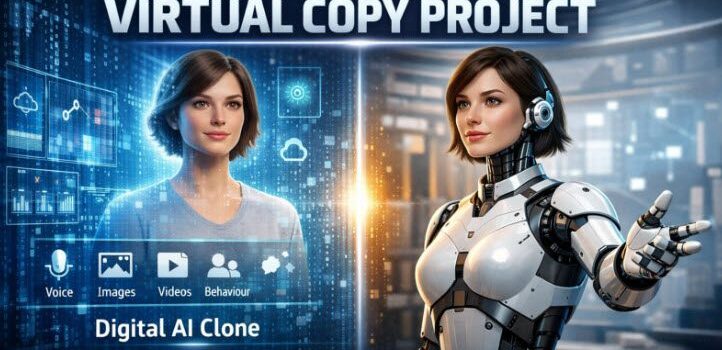
New Delhi [India], February 23: In what could become one of the most ambitious artificial intelligence projects to emerge from India, Atomesus has revealed that it is working on a groundbreaking initiative called Virtual Copy — a system designed to digitally recreate a person with remarkable depth and precision.
The project, currently under development, aims to create a highly advanced AI-based replica of an individual using comprehensive personal data, including behavior patterns, voice, appearance, habits, and communication style. According to early information shared by the company, Virtual Copy is positioned as a long-term platform that could eventually bridge the gap between digital identity and physical embodiment.
What Is Virtual Copy?
Virtual Copy is designed as a deep-personalization AI system. When a user applies for a Virtual Copy on the Atomesus platform, they will be required to submit extensive personal data, including:
- Facial images from multiple angles
- Video recordings capturing expressions and movement
- Voice samples in different tones and contexts
- Behavioral data and communication patterns
- Personal habits and preferences
- Dressing style and physical characteristics
- Decision-making tendencies and personality traits
This data will then be processed and trained using advanced AI models developed by Atomesus.
The goal: to create a highly accurate digital representation of the individual — one that thinks, speaks, and behaves in alignment with the original person.
How It Works
Once the required data is collected, Atomesus plans to use its in-house AI training architecture to build a personalized intelligence model tailored to that specific individual.
The system would:
1. Analyze and map personality patterns
2. Reconstruct voice and speech behavior
3. Model facial expressions and gestures
4. Simulate communication style
5. Mirror decision logic and emotional responses
The result would be a digital virtual entity capable of interacting in a way that closely resembles the real person.
The Long-Term Vision: Physical Robotic Embodiment
While Virtual Copy will initially exist in digital form, Atomesus has indicated a much larger vision.
In the near future, once the company begins manufacturing AI-powered robots, these digital copies could be transferred into a physical robotic body — creating what the company describes as an “exact physical robotic version” of the person.
This would mean:
- A robot that looks like the individual
- Speaks in their exact voice
- Mimics their gestures and expressions
- Reflects their personality and habits
Such a development would push the boundaries of robotics, artificial intelligence, and identity replication.
Potential Use Cases
Although the full roadmap is yet to be revealed, potential applications could include:
- Personal legacy preservation
- Digital assistants modeled after real individuals
- Advanced training simulations
- Virtual brand ambassadors
- Remote presence and representation
- Knowledge preservation for experts and leaders
The implications stretch across industries — from education and business to entertainment and personal identity management.
Ethical and Privacy Considerations
Projects of this magnitude naturally raise significant ethical and privacy questions.
Creating a full behavioral and physical AI replica of a human being requires:
- Robust data protection mechanisms
- Explicit consent frameworks
- Clear ownership rights over digital identity
- Strict safeguards against misuse
As AI-human integration deepens, governance and regulatory clarity will become critical to maintaining trust and preventing abuse.
A Glimpse into the Future
If successfully executed, Virtual Copy could redefine how individuals interact with technology — moving from generic AI systems to deeply personalized digital beings.
The idea of having a digital and eventually physical version of oneself may sound futuristic, but as AI systems continue to evolve, concepts once considered science fiction are steadily becoming technological possibilities.
Atomesus appears determined to position itself at the forefront of this transformation.
Whether Virtual Copy becomes a mainstream reality or remains an experimental frontier, one thing is clear:
The line between human identity and artificial intelligence is becoming thinner than ever before.
Data Ownership, Encryption & Post-Life Rights
Atomesus has emphasized that privacy and ownership will remain central to the Virtual Copy project. All submitted data — including voice samples, images, videos, behavioral patterns, and personality mapping — will remain fully encrypted using advanced security protocols.
The ownership of the Virtual Copy and all associated data will always belong exclusively to the individual who created it. Atomesus will function only as a technology provider and custodian of encrypted data, not as the owner.
In the event of the individual’s demise, the platform will provide two clear options:
1. Permanent deletion of all stored data and the Virtual Copy.
2. Transfer of data rights and control to designated family members or legal heirs.
This framework ensures that identity, legacy, and digital presence remain under personal and family control — reinforcing security, consent, and long-term ethical responsibility at every stage of the project.