


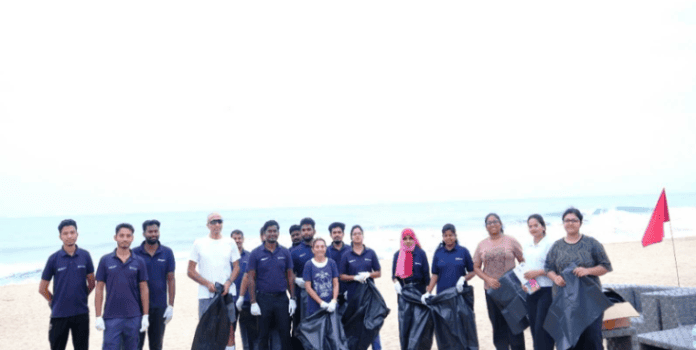
Chennai (Tamil Nadu) [India], September 23: Ahead of the upcoming RHUMI TWIN Rocket Mission – 2026, Space Zone India Private Limited, in association with The Global Help International, Inc., USA, and with the support of Sheraton Grand Chennai Resort & Spa, ECR, conducted a voluntary coastal clean-up and environmental awareness initiative near the Thiruvidanthai coastal area on East Coast Road (ECR), Chennai.

The initiative commenced at around 6:00 AM, with the Space Zone India team and volunteers joining together to clean the coastal stretch near the upcoming rocket launch location.

During the clean-up drive, the team collected and removed nearly 100 kilograms of waste, including plastic bottles, plastic covers, discarded packaging, containers and other human-generated waste that had accumulated and was scattered across the coastal area.

The initiative originated during a visit by the Space Zone India team to inspect and witness preparations at the proposed launch location. After observing the quantity of waste along the coastline, the organisations decided that preparing the site for a scientific mission should also include contributing positively to the surrounding environment and community.

Anand Megalingam, Founder & CEO of Space Zone India and Mission Director of the RHUMI TWIN Mission, highlighted the importance of environmental and social responsibility alongside technological advancement.

“Our responsibility is not limited to launching a rocket. When we select and operate from a location, we also have a responsibility towards that place, its environment and the surrounding community. Along with ensuring mission and public safety, we should contribute something meaningful to society. Protecting our coastline and environment is one such responsibility.”

Dr Neemu Murthy, CEO of The Global Help International, Inc., USA, emphasised the need for collective action to protect oceans and marine ecosystems.

“Protecting our environment is a responsibility shared by all of us. Waste and plastic entering our oceans can affect fish, marine organisms and the overall health of our ecosystem. Our oceans are an essential part of our planet, and safeguarding them is ultimately about safeguarding the Earth for future generations. Through this coastal clean-up initiative, we want not only to remove waste but also to create awareness and encourage people to take responsibility for keeping our beaches and oceans clean. Even a small contribution from each of us can collectively create a meaningful impact.”

She further highlighted that environmental protection should become a continuous responsibility rather than a one-time activity, encouraging students, young people, organisations and communities to actively participate in protecting natural resources and reducing plastic pollution.

The entire Space Zone India team and volunteers actively participated in the initiative, demonstrating that space exploration, technological innovation and environmental responsibility can progress together.

The coastal clean-up also sought to create greater public awareness about the impact of plastic and other waste on beaches, oceans and marine ecosystems and to encourage visitors to avoid littering coastal areas.

Space Zone India is currently preparing for its RHUMI TWIN Mission – 2026, scheduled for 10 October 2026, involving the launch of two hybrid rockets from the coastal region.

Through initiatives such as this, Space Zone India, Global Help International, Inc., USA, and supporting partners aim to encourage students, volunteers and members of the public to recognise that achievements in science and space technology should go hand-in-hand with environmental protection, social responsibility and community service.

“OUR RESPONSIBILITY DOESN’T END WITH LAUNCHING A ROCKET — IT EXTENDS TO PROTECTING THE PLACE FROM WHICH WE LAUNCH.”

— Space Zone India Team.
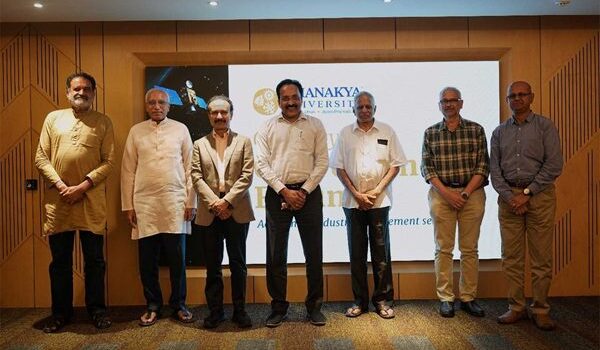
New Delhi [India], September 12: Chanakya University hosted the Chanakya Convergence Forum (CCF), an academia-industry engagement series, on September 10, 2026 at Accel LaunchPad, Koramangala.

The inaugural edition brought together leaders and practitioners from India’s space technology ecosystem for an evening of knowledge sharing and networking around the future of India’s space economy.

Themed “India’s Space Economy & The Next Decade,” the Forum opened with a keynote address from Dr. S. Somanath, Chancellor, Chanakya University and Former Chairman, ISRO, who spoke on the need for sustained investment in space research and allied sectors for national development. He urged industry partners to collaborate with Chanakya on R&D so that future innovators in the field get hands-on training.

This was followed by a panel discussion, “Who Will Build India’s Space-Tech Future?”, featuring Sri Prashanth Prakash, Partner at Accel India, Sri Suyash Singh, Co-founder of GalaxEye Space, and Prof. Duvvuri Subrahmanyam, IISc. Sri Prashanth Prakash noted that India’s private space-tech sector is still in its early days and has exciting days ahead, Sri Suyash Singh spoke on the need for greater innovation and policy support, and Prof. Duvvuri Subrahmanyam expressed confidence in closer academia-industry alignment for space research.

The Forum felicitated Prof. P.A. Ramakrishna from IIT Madras, Dr. V. R. Lalithambika from ISRO, Sri Suyash Singh from GalaxEye Space, and Prof. Duvvuri Subrahmanyam from IISc for their outstanding contributions to the growth of the space sector in India.

Sri Mohandas Pai, Chairman, Aarin Capital, also addressed the gathering, speaking on the need to invest further in infrastructure and RCD for India’s economy. He urged young people in the audience to dream big, build startups and create jobs, and while being candid about gaps in policy, reform and governance, closed on an optimistic note about India’s path to becoming a developed nation.

At the event, Prof. S. Sadagopan, Founding Director, IIIT-B launched the Centre for Technology Development and Consultancy (CTDC), through which the University will work directly with industry and startups to develop, test and deploy technology solutions. CTDC’s mandate spans technology co-development, IP and research commercialisation, industry consultancy, executive education and incubation support for young innovators.

The University also launched the Chanakya SpaceTech Fellowship (2026–27), an industry-academia initiative placing young researchers on industry problems sponsored by industry partners. Fellows will work across domains including satellite communications, earth observation, space robotics, radar signal processing, hyperspectral imaging and space debris tracking. Prof. H. S. Subramanya, Pro-Vice Chancellor of Chanakya University invited companies to join Chanakya through the fellowship along with research collaboration on other high-tech sectors such as mobility, pharma and devices, and artificial intelligence.

The Forum saw participation from space-tech companies including Nibe Industries, Collins Aerospace, GalaxEye Space and EtherealIX, alongside venture capital firms such as 3One4 Capital, Momentum Capital, Pratithi and the Kris Gopalakrishnan Family Office, offering a platform for founders, investors and researchers to connect. Other prominent guests included entrepreneur Sri Madan Padaki, Sri Umakant Soni from Bharat1.AI, Smt. Malini Goyal from UnboxingBlr, Prof. Aloke Kumar from IISc, and many more.

Pro-Chancellor Sri M.P. Kumar delivered the closing remarks, describing the CCF as the institution’s step toward integrating industry with academia and reaffirming Chanakya’s commitment to building a culture of industry-aligned research and curriculum.

The Chanakya Convergence Forum is a flagship platform bringing together leaders and thinkers to engage with questions that matter and ideas that can shape the future, with each edition centred on a theme at the intersection of industry, research, entrepreneurship and institutions.