
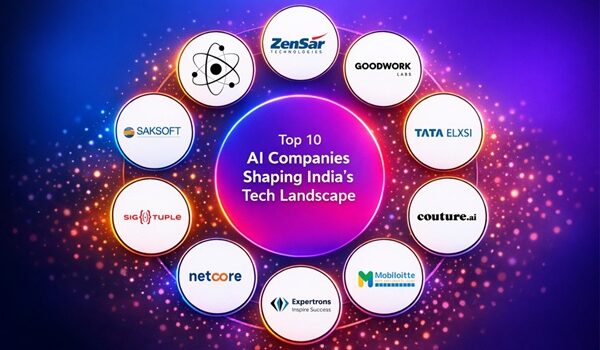
New Delhi [India], February 11: India is no longer preparing for the artificial intelligence era — it is actively constructing it. Once recognized primarily as a global reservoir of engineering talent, the country is rapidly transforming into a serious center of AI innovation. Affordable internet, one of the world’s youngest digital populations, expanding startup infrastructure, and rising investor confidence are converging to create a rare technological inflection point.

Estimates suggest India’s AI market could grow into one of the fastest-expanding globally over the next decade, fueled by enterprise adoption, government digitization, and consumer-scale platforms. Yet what makes this moment especially distinctive is not just growth — it is intent. Rather than replicating Western playbooks, a new generation of startups is designing AI around India’s economic realities, linguistic diversity, and massive scale.

The shift is unmistakable: India is evolving from an AI consumer into an AI creator. The companies emerging from this ecosystem are not simply building products — they are laying the groundwork for technological influence that could extend far beyond national borders.

1. Sarvam AI — Laying the Foundation for India’s AI Stack

Sarvam AI is pursuing one of the most strategically demanding paths in artificial intelligence: infrastructure. Instead of concentrating solely on applications, the company is investing in foundational models optimized for Indian languages and population-scale deployment — a critical requirement in a country where hundreds of millions of future internet users will interact with technology in regional dialects.

Building at this layer requires deep technical expertise, significant long-term capital, and patience. Infrastructure companies rarely scale overnight, but when they succeed, they often shape entire ecosystems. By prioritizing core AI capabilities early, Sarvam is positioning itself as more than a participant in India’s AI expansion — it is aiming to become part of the digital backbone supporting future innovation.

There is also a broader strategic dimension at play. Nations that cultivate domestic foundational AI capabilities gain technological leverage, reduce external dependencies, and strengthen their innovation pipelines. If AI becomes the defining infrastructure of modern economies, companies operating at this level could influence how entire industries evolve.

2. Atomesus AI — Building AI for the Next Billion Users

While many AI startups initially gravitate toward enterprise revenue, Atomesus AI is targeting a far wider opportunity: population-scale adoption. The company is developing an independent, next-generation platform designed to be accessible, affordable, and practical for everyday users — from students and freelancers to startups and small businesses that increasingly rely on intelligent tools to compete.

Early momentum indicates meaningful demand. The platform attracted over 150,000 visitors and more than 12,000 users within its first week, with paying subscribers arriving shortly after launch — a signal that utility is resonating quickly. Adoption is already international, with users from more than a dozen countries joining despite the company’s India-first strategy.

Operating on a hybrid architecture today, Atomesus is actively building proprietary systems with the ambition of full technological independence. That transition could accelerate product velocity, strengthen strategic control, and improve long-term economics. By optimizing for accessibility rather than immediate monetization, the company is making a calculated bet: lowering barriers to advanced AI may unlock one of the largest usage waves the industry has seen.

3. Krutrim — Advancing India’s Sovereign AI Ambitions

As artificial intelligence becomes increasingly intertwined with geopolitics, technological sovereignty is emerging as a national priority. Krutrim is positioning itself within this critical conversation by developing large language models tailored for Indian contexts, including multilingual and voice-first experiences designed to reflect how millions actually communicate.

The company’s vision extends beyond model development. Its broader objective is to power transportation, commerce, and digital services through a domestically built AI stack — an approach that aligns with the growing belief that countries benefiting most from AI will be those that control key layers of the technology.

Distribution may prove to be Krutrim’s defining advantage. When AI integrates into platforms already embedded in daily life, adoption tends to follow naturally, creating both scale and defensibility. In the next phase of global competition, leadership will likely belong not only to the most advanced technologies but also to those most strategically embedded within their home markets.

4. Yellow.ai — Taking Enterprise Automation Global

Yellow.ai has steadily evolved into one of India’s most internationally recognized AI companies by focusing on a segment where measurable outcomes matter deeply: enterprise automation. Specializing in conversational AI, the company enables businesses across banking, retail, and telecommunications to automate customer engagement, reduce operational strain, and improve responsiveness.

What differentiates Yellow.ai is disciplined execution. Earlier chatbot waves often generated excitement without delivering sustained value, but the company has emphasized scalability and real-world performance. This operational maturity has supported its expansion into global markets — still a relatively rare achievement in an increasingly crowded AI landscape.

International presence does more than validate product strength; it signals organizational readiness. Companies capable of competing across regions typically demonstrate stronger governance, clearer product-market fit, and resilient technology. As enterprises accelerate AI adoption, providers already operating at global scale may enjoy a meaningful structural advantage.

5. Soket AI — Powering the Builders of the AI Economy

Soket AI is emerging as a developer-first platform focused on simplifying how organizations build and deploy artificial intelligence applications. Rather than forcing teams to assemble complex stacks from scratch, the company provides infrastructure that shortens the journey from concept to production — a capability growing more valuable as AI transitions from experimentation into operational reality.

Developers remain the multipliers of the AI economy. Platforms that remove engineering friction often enable waves of downstream innovation, allowing startups and enterprises alike to move faster while concentrating on differentiation instead of technical plumbing.

By serving builders rather than only end users, Soket is positioning itself within a high-leverage layer of the market. History suggests that when developers are empowered, innovation compounds — and the platforms supporting them frequently become essential components of the technology ecosystem.

The Bigger Shift: India’s Defining AI Decade

Several structural forces are converging simultaneously — massive digital adoption, improving infrastructure, strong startup momentum, and increasing policy support. Artificial intelligence is no longer a specialized capability within India; it is rapidly becoming a foundational productivity layer shaping education, work, entrepreneurship, and commerce.

Equally important is the shift in mindset. Indian startups are no longer merely adapting global innovations — they are designing technology for local constraints while thinking at planetary scale. Some are building infrastructure, others are democratizing access, and a few are redefining automation itself.

Together, these companies signal a profound transition. India is not simply joining the AI revolution; it is beginning to influence its direction. For founders, investors, and industry leaders watching closely, one reality is becoming harder to ignore: the next wave of global AI breakthroughs may emerge not from traditional tech capitals, but from markets bold enough to build for billions.
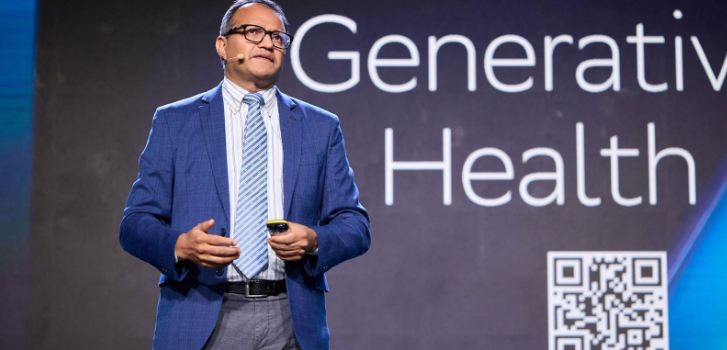
Chennai (Tamil Nadu) [India], December 15: Sai University proudly announces that its Vice Chancellor, Prof. Dr. Ajith Abraham, delivered a highly impactful Plenary Talk on Digital Healthcare Innovation at AI Journey 2025 — one of the world’s largest AI and machine learning conferences, held in Moscow, Russia, from November 19-21, 2025.

The global conference was inaugurated by President Vladimir Putin, followed by a high-profile panel discussion featuring global AI leaders, setting the stage for three days of intensive deliberations on the future of artificial intelligence.

A Vision for the Future of Digital Healthcare

As a plenary speaker, Prof. Abraham presented a compelling vision on how AI-driven digital healthcare can transform global health systems, especially in emerging economies. His talk highlighted the enormous potential of artificial intelligence to:

* Enhance early diagnostics and clinical decision support

* Expand telemedicine and remote patient monitoring

* Enable predictive analytics for disease surveillance

* Deliver personalized, data-driven medical care

* Improve healthcare accessibility for underserved populations

Ethics, Equity, and Human-Centric Innovation

Prof. Abraham emphasized that while AI is revolutionizing healthcare, the transformation must be guided by robust ethical frameworks, data governance, and patient-centered design. He called for stronger collaborations across academia, industry, and government to build responsible, secure, and scalable digital health ecosystems.

He also highlighted the urgent need for interdisciplinary training, where future professionals must bridge AI engineering, biomedical sciences, and public health–an area where Sai University is uniquely positioned to lead.

Strengthening India’s Voice on the Global AI Healthcare Stage

By presenting at AI Journey 2025–a platform hosting global scientists, health-tech innovators, policymakers, and industry visionaries–Prof. Abraham showcased India’s growing leadership in AI-based healthcare innovation.

“Digital healthcare is not just about technology–it is about ensuring dignity, accessibility, and human well-being across communities worldwide.”

— Prof. Dr. Ajith Abraham, Vice Chancellor, Sai University

Sai University’s participation in AI Journey 2025 reinforces the university’s commitment to advancing responsible AI, global research collaborations, and technology for societal benefit.

About Sai University

Sai University, established under Tamil Nadu Act No. 42 of 2018 and recognized under Section 2(f) of the UGC Act, is a forward-looking private university committed to interdisciplinary and multidisciplinary education. Founded by entrepreneur and philanthropist Shri K. V. Ramani, Sai University was envisioned as a global-standard institution that nurtures innovation, critical thinking, and societal impact.

The University offers interdisciplinary programs across eight schools–including Arts & Sciences, Law, Business, Computing & Data Science, Artificial Intelligence, Media Studies, Technology, and Allied Health Sciences.

Chennai (Tamil Nadu) [India], December 11: Sai University is proud to announce that its Vice-Chancellor, Prof. Dr. Ajith Abraham, delivered a keynote address at the prominent BRICS Business Forum held on 20 November 2025 at Sberbank HQ, Moscow — as part of the global AI conference, AI Journey 2025.

The BRICS Business Forum gathered distinguished leaders from industry, academia, government, and civil society from across BRICS and partner nations. The session was chaired by Alexander Vedyakhin (First Deputy Chairman of the Executive Board, Sberbank), whose stewardship lent depth and strategic perspective to the discussion.

In his address, Prof. Abraham painted a compelling vision of artificial intelligence as a shared global ecosystem — not merely a technological tool, but a domain requiring coordinated scientific cooperation, ethical frameworks, and inclusive innovation. He argued that BRICS nations, which together represent a substantial segment of the global population and a growing share of worldwide R&D, are uniquely positioned to lead this cooperative effort.

Key themes of his address included:

* The strategic value of cross-national AI research hubs and shared laboratories, enabling scientists from São Paulo, Shanghai, Pretoria, Moscow, New Delhi, and beyond to collaborate on AI solutions.

* Talent mobility and unified research programmes — advocating for researcher exchanges, joint doctoral and postdoctoral initiatives, and continuous lifelong learning, ensuring that AI talent and knowledge flow across borders.

* Education reform and industry-academia integration — stressing the need for modern academic structures and micro-credentialing in specialised AI domains, so the next generation of professionals are ready for real-world challenges.

* Potential impact of collaborative AI on critical sectors: digital healthcare, agriculture automation, sustainable manufacturing, financial inclusion, regulatory compliance, and more — helping BRICS nations address socio-economic challenges while leapfrogging traditional development constraints.

Prof. Abraham concluded with a call for equitable, human-centered AI development: AI should serve as a force for global good — combining technological excellence with societal responsibility.

This important participation underscores Sai University’s commitment to shaping global AI discourse and fostering collaborative research and innovation across borders. It also strengthens the University’s position as a thought leader in AI, aligned with India’s vision of inclusive, sustainable, and globally competitive scientific development.

About Sai University

Sai University, established under Tamil Nadu Act No. 42 of 2018 and recognized under Section 2(f) of the UGC Act, offers interdisciplinary programs across eight schools–including Arts & Sciences, Law, Business, Computing & Data Science, Artificial Intelligence, Media Studies, Technology, and Allied Health Sciences.

A special mention to the School of AI, which blends world-class research with real-world application, preparing students to drive the next wave of intelligent innovation through its UG AI programs.

Moscow [Russia], November 11: The organizers have released the schedule of AI Journey 2025, the 10th International Conference co-organized with the participation of AI Alliance Russia.

Keynote speakers will include leading experts and visionaries from the global AI community, who will showcase an innovative perspective on technology development. Presentations are scheduled from experts representing Russia, China, India, Serbia, Brazil, Bahrain, the USA, Malaysia, and other countries.

Alexander Vedyakhin, first deputy chairman of the Executive Board, Sberbank:

“The anniversary conference retains all the best traditions of AI Journey: prominent names from the world of artificial intelligence, relevant agendas, announcements of top-notch designs, and international networking in a hybrid format. This year’s program focuses on technology innovation and use cases that demonstrate the potential of generative AI to multiply human capabilities for businesses and society. I invite every AI enthusiast to join AI Journey — a platform where insights are born and the technological future of the planet is shaped.”

The first day of the conference, November 19th, will focus on the use of generative artificial intelligence (GenAI) in both daily life and national development. Sessions include debunking myths about the “electricity of the 21st century,” demonstrations of solutions for everyday tasks, and talk shows exploring the global impact of technology on the planet and society.

November 20th will focus on AI use in economic sectors and business processes. The day will start with speech First Deputy Chairman of the Sberbank Executive Board Alexander Vedyakhin. Deputy Chief of Staff of the Presidential Executive Office Maxim Oreshkin was also invited to participate in the opening. Following this, Andrey Belevtsev, senior vice president and head of Sberbank’s Technological Development, will discuss market trends and new solutions developed at Sberbank. Highlights include presentations by keynote speakers from partner technology companies, notably Chen Qiufan, a renowned Chinese science fiction writer, president of the World Chinese Science Fiction Writers Association, and co-author of the bestseller AI 2041. He will deliver a lecture titled “The Future of AI: From Fiction to Reality.” Significant events of the day include the second international business forum of BRICS+ countries on AI, a session of the AI Alliance, and the award ceremony for recipients of the national AI Leaders prize for contributions to the development of artificial intelligence.

On the same day, the special offline track AIJ Deep Dive will commence. Running on November 20-21, it will include presentations by top AI experts from Russia and around the globe, talks by research centers highlighting groundbreaking scientific articles, pitch sessions by leading Russian AI startups, and presentations of business solutions based on GenAI and multi-agent approaches.

On November 21st, designated as the Day of Artificial Intelligence in Science, the event will be opened by Deputy Prime Minister of Russia Dmitry Chernyshenko and Andrey Belevtsev. One of the key events of the day will be the summary of the AI Horizons foresight sessions, which took place in various countries worldwide in 2025 under the auspices of AI Alliance Network, an international artificial intelligence alliance. The day’s program will feature presentations by researchers from around the world. Ajith Abraham from Sai University, India, will speak on “Generative AI in Healthcare”; Nebojsa Bacanin Dzakula from Singidunum University, Serbia, will discuss the latest advances in bio-inspired metaheuristics; Alexandre Ferreira Ramos from the University of São Paulo, Brazil, will present a study on transcriptional control regulatory logic at the DNA level using thermodynamic models; Anderson Rocha from the University of Campinas, Brazil, will deliver a speech titled “Revolution of Convergence: Artificial Intelligence, Nanotechnology, Biotechnology, IoT, Robotics, and Beyond.”

On Science Day, AIJ will traditionally host AIJ Junior, a unique youth track. Russian professionals will share hands-on advice on using AI solutions for learning, creativity, and self-development. Additionally, interviews with winners of international competitions in artificial intelligence and the exact sciences will inspire young audiences to seek new opportunities for growth in this field.

To conclude the day, the conference will honor the winners of the AI Challenge for young data researchers, the AIJ Contest for experienced AI specialists, and unveil the results of the open selection of scientific papers for AIJ Science. The best works will be published in a scientific journal issued jointly with the Russian Academy of Sciences, and the best article will receive a monetary award.

The conference will be streamed live on the website in Russian, English, and Arabic, with simultaneous interpretation into Russian Sign Language accompanying the main stage broadcast.

Press office

media@sberbank.ru

PJSC Sberbank is Russia’s largest bank and a leading global financial institution. Holding almost one-third of aggregate Russian banking sector assets, Sberbank is the key lender to the national economy and one of the biggest deposit takers in Russia. The Government of the Russian Federation represented by the Ministry of Finance of the Russian Federation is the principal shareholder of PJSC Sberbank owning 50% plus one voting share of the bank’s authorized capital, with the remaining 50% minus one voting share held by domestic and international investors. It holds general banking license No. 1481 dd. August 11, 2015, from the Bank of Russia. Official websites of the bank: www.sberbank.com (Sberbank Group website), www.sberbank.ru.