Empowering Communities with Mass Cardiac Screening and Early Detection using their Point of care ECG tool ‘SanketLife’

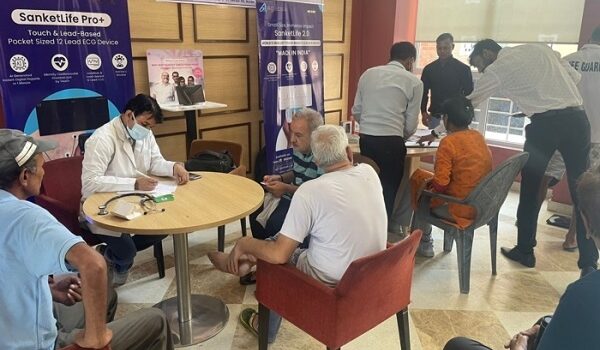
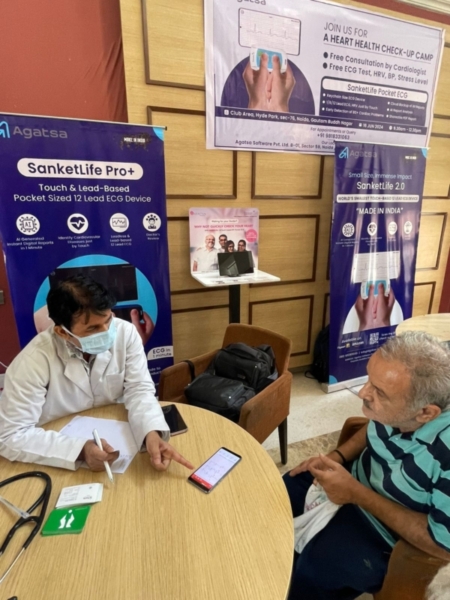
Noida, 19 June 2024 – Agatsa, a med-tech innovation company, is on a mission to mass screen the urban population for heart risks and underlying diseases by conducting Heart Health Camps in various RWA societies in the Delhi/NCR region. Their first camp in this initiative is the camp at the RWA Hyde Park in Sector 78, Noida, U.P., on Sunday, 16 June 2024. This marks the launch of Agatsa’s breakthrough campaign, “Har Ghar ECG,” aimed at heart health screening.

The “Har Ghar ECG” campaign is to empower patients, laypersons, and medical professionals to explore innovative tech devices and AI to not only screen and detect underlying cardiac diseases early but also to monitor and manage the diseases regularly for a fitter society and peace of mind. Agatsa’s pioneering Indian innovation, SanketLife, offers a miniature, pocket-sized, touch-based, fully medical-grade ECG device that transforms the traditional approach to heart disease alerts. With SanketLife, early detection of heart disease is possible, beyond the usual chest pain or other heart attack symptoms.

Rahul Rastogi, founder of Agatsa, quoted, “Agatsa’s aim, right from the beginning, has been saving people’s lives by promoting timely action before it’s too late. Traditionally, cardiac diseases are only detected when there is a severe symptom, and most people die during the first heart attack because they have ignored symptoms for too long. With our Har Ghar ECG Campaign, we aim to detect underlying cardiac problems with our device SanketLife save lives through timely action and intervention’ which works just by Touch. We seek support from various state governments to come forward and help us in our endeavor.”

Agatsa’s SanketLife provides instant ECG reports, with an option to receive a cardiologist’s opinion within 10 minutes. It is the world’s first leadless 12-lead ECG device, which is digital, connected, and easy to use, coupled with a mobile app. The device’s accessibility and convenience underscore the importance of early detection in managing heart conditions, potentially saving lives through timely medical intervention.

On the first day of the campaign, cardiac abnormalities were detected in residents of the society in Noida (Delhi/NCR). The patient was promptly advised and referred to a hospital for angiography and to begin treatment before it is too late. Hence, demonstrating the crucial role of early detection and life-saving intervention in cardiac cases, Agatsa aims to make preventive healthcare a household need, and Agatsa devices solve the purpose beautifully.

This initiative is launched in collaboration with Fortis Hospital with a well-known cardiologist present not just to raise awareness and disseminate knowledge but also to detect abnormalities and advise people on the right treatment.

The Heart Health Camp will feature screenings for ECG and stress levels using Agatsa’s advanced devices. Additionally, there will be cardiac consultations and an awareness talk led by Dr. Sanjeev Gera, Director of Cardiology at Fortis Hospital, Noida, alongside Dr. Hemant.

The camp commenced at 9:30 AM in the Club Area of Hyde Park, Sector 78, Noida, U.P., on Sunday, 16 June 2024.

Agatsa invites everyone to join and learn more about heart health and the critical benefits of early detection. If you also want to conduct such camps in your neighborhood, please contact Shantanu Singh at +91 94157 87209.

About Agatsa:

Agatsa, a MedTech Company founded by Rahul Rastogi and Neha Rastogi, is committed towards healthcare by providing top-quality services for all. Specializing in preventing cardiac diseases through early detection of behavioral risk factors, Agatsa emphasizes timely intervention and treatment. Its AI and IoT-driven platform, “SanketLife,”facilitates rapid assessment of cardiac health, bridging the gap between patients and healthcare providers.

Agatsa envisions a healthier world by offering effective digital healthcare solutions globally, particularly in cardiac health, to improve lives and eliminate stigmas surrounding overall health. The company’s mission is to revolutionize healthcare through technology, promoting health and wellness with quality monitoring devices. Founded in 2014 by Neha and Rahul Rastogi, Agatsa emerged from a desire to combat health risks and save lives. Rahul Rastogi and Neha Rastogi, with 14 years of experience, are dedicated to raising awareness about cardiac care and healthy living. Together, they embody Agatsa’s core values of excellence, teamwork, and inclusion shape the company’s purpose and guide its actions, evident in their revolutionary innovation of Agatsa’s SanketLife ECG and ongoing research for further innovative devices.

Revelation Prophecies and Their Fulfillment Revealed… Over 7,000 Participants Including 1,000 Pastors

Chairman Lee Man-hee: “Perceive Revelation and Teach It to Your Church Members”

European Pastors in Attendance: “We Want to Learn Revelation”… Expectation for Church Revival Through Continuous Exchange

“The teachings that explain the Book of Revelation were truly profound and amazing. I want to learn more about the Bible, and if invited to Korea, I will start preparing my ticket (airfare) right away.”

This was the impression shared by Pastor Delly Delphin Matondo of the Full Gospel denomination, who participated in the Bible Seminar held by Shincheonji Church of Jesus, the Temple of the Tabernacle of the Testimony (Chairman Lee Man-hee; hereinafter referred to as Shincheonji Church) in Paris, France on June 15 (local time).

Many other pastors who attended the European Bible Seminar also expressed a strong desire to hear more about Shincheonji Church’s teachings on the Book of Revelation.

The seminar took place at a critical time when measures were urgently needed as Europe’s Christian influence declined, with churches being sold off and repurposed as restaurants, bars, and clubs. This Bible Seminar was part of the “2024 Continental Bible Seminar” series that began in the Philippines on April 20, and was organized in response to numerous requests from pastors eager for a revival in Europe.

With over 7,000 participants, including 1,000 European pastors, the event garnered significant attention. Prior to the seminar, a discussion on “The Role of Pastors for the Spiritual Enlightenment of Christians Today” was held.

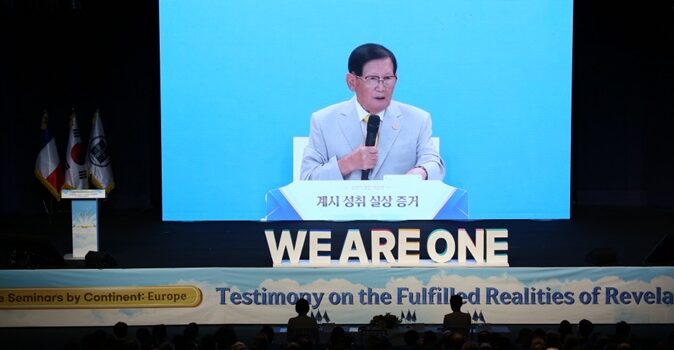
Overview of the Continental Word Seminar held in Paris, France on the 15th (local time).

Following this, attendees watched a video lecture by Chairman Lee Man-hee from the “Shincheonji Bible Seminar: Testimony on the Fulfillment of Revelation” held in Korea on June 8.

In his lecture, Chairman Lee stated, “God’s work is fulfilled according to the unalterable Book of Revelation. Everyone listening to this lecture must know who is being referred to in Revelation,” emphasizing, “I hope all pastors will perceive these words and teach them to their congregants. You must teach your church members without adding or subtracting from Revelation.”

After Chairman Lee’s lecture, Simon Tribe Leader Lee Seung-joo provided an explanation of the meaning of biblical prophecies and their fulfillment, addressing European pastors with an appeal.

Tribe Leader Lee stated, “The fulfilled words of Revelation have life in them, and as more people are re-created in God’s image and likeness through these words, (European churches) will also experience revival. I encourage you to learn and testify from Revelation chapters 1 to 22 through Shincheonji Church’s Zion Christian Mission Center, which has produced over 100,000 graduates annually in recent years.”

During subsequent exchanges among pastors, a pastor from Austria commented, “I was impressed that Shincheonji Church focuses on the prophetic words written in the Bible. I want to work with enthusiastic and bright people for God’s kingdom and work. I would like to know how to collaborate and learn more about Revelation.”

A pastor from Poland also remarked, “Seeing European pastors and believers united brought tears to my eyes. I want to share these words with more people. Please tell me how I can spread this message to many others.”

According to data from the Center for the Study of Global Christianity at Gordon-Conwell Theological Seminary in the United States, Europe’s Christian population increased to 560 million in the 2000s but has stagnated this year (2024) and is expected to decrease to 490 million by 2050.

As European society modernized and industrialized, it began to secularize. The rise of liberal theology led to a decline in Bible-based teachings within churches. Additionally, the rapid rise of atheism and religious pluralism, coupled with various clergy scandals, has caused Christianity to lose trust and struggle to find its direction. It is hoped that this Bible Seminar will serve as a catalyst for the revival of European churches.

A representative from Shincheonji Church stated, “After this Bible Seminar, many European pastors have inquired about how they can learn Revelation from Shincheonji Church. We are preparing places and programs where they can learn, and we will further activate Zion Christian Mission Centers across Europe to expand platforms for their education.”

The representative also mentioned, “Pastors worldwide have requested additional Bible Seminars to learn more about Revelation. We are planning and preparing a Bible Seminar at the end of this year to invite pastors from around the world to Korea. Through this event, we aim to create a platform where we can become one within God and His word.”

Meanwhile, according to Shincheonji Church of Jesus, as of June 5th this year, MOUs have been signed with a total of 12,538 churches in 83 countries overseas. Additionally, 1,341 churches in 41 countries have joined Shincheonji Church of Jesus and changed their signage. Furthermore, as of the end of May, the number of domestic and international pastors currently taking Bible education courses at Zion Christian Mission Center has reached 5,614.

The premier skin and hair clinic, Skulpted by Kan is causing a stir in the beauty business with its cutting-edge procedures and excellent offerings. Leading the charge at Skulpted by Kan is the dynamic duo of Ms. Reetu Durga, head aesthetician and cosmetologist, and Ms. Kanika Durga, managing director and the creative force behind the name of the clinic. Together, they assure all their clients of a life-changing experience.

An Excellence-Based Vision

Ms. Reetu Durga offers a variety of state-of-the-art treatments tailored to address a variety of skin and hair issues, putting her vast experience in cosmetology to the forefront. Ms. Reetu is passionate about assisting clients in realizing their aesthetic objectives, and she makes sure that every treatment is customized to each patient’s needs while offering individualized care and attention.

“Our mission is to help everyone feel confident and beautiful in their own skin,” says Ms. Reetu Durga. “We think that inner beauty is just as important as outward appearance.”

The creative force behind Skulpted by Kan, Ms. Kanika Durga, is essential to the clinic’s management team. The clinic’s mission to provide outstanding results is driven by her dedication to innovation and excellence. In the beauty industry, Skulpted by Kan has become a trusted and high-quality brand under her direction. “Our objective is to establish a haven where clients can fulfill their desires for wellness and beauty,” Ms. Kanika Durga states.

“Wewant to create a space that is welcoming and friendly in addition to being cutting edge and professional.”

Skulpted by Kan provides a wide range of services, such as:

Laser Hair Removal: Using cutting-edge Diode technology, laser hair removal reduces hair safely and effectively for smooth, hair-free skin.

Age Rewind Facial Therapy: A personalized facial that revitalizes the skin to give the appearance of youthfulness by targeting fine lines and wrinkles.

Botox: Reducing wrinkles and fine lines to give the complexion a smoother, younger appearance.

Dermal Fillers: Adding plumpness and volume to the skin to improve facial contours and minimize wrinkles.

Threadlift: A non-surgical treatment that uses biodegradable threads to tighten and lift drooping skin.

PRP Therapy: Using your own blood platelets, PRP (Platelet-Rich Plasma) therapy can rejuvenate skin, minimize wrinkles, and encourage hair growth.

IV Drips: Tailored intravenous treatments to increase skin health, improve hydration, and improve general wellbeing.

To guarantee the highest standards of safety and efficacy, each treatment is carried out utilizing cutting-edge tools and methods. The clinic’s dedication to staying on the cutting edge of technology guarantees that patients get the best and most modern care available.

Client-Centered Philosophy

The client is at the centre of everything we do at Skulpted by Kan. Our team of exceptionally skilled experts is committed to offering each client individualized care and attention, making sure that their particular needs and goals are satisfied. Every stage of the process, from the first consultation to the last treatment, is intended to deliver an amazing experience.

“We’re committed to transforming lives through advanced skincare solutions.”, says Ms. Kanika Durga. “We prioritize achieving outcomes that enhance self-assurance and self-worth, as feeling good about your skin radiates into all aspects of your life.”

Luxe by Kan: A Pop-Up

To further heighten the excitement, Skulpted by Kan is pleased to present a permanent Luxe by Kan pop-up, giving customers the chance to purchase well-known international beauty brands right from the clinic. An unmatched beauty destination is created by this special fusion of luxury products and advanced skincare procedures.

Commitment to Quality and Innovation

Skulpted by Kan’s dedication to innovation and quality is seen in all facets of the clinic. We work hard to give our customers the best service possible, from the carefully chosen goods and cutting-edge machinery to the constant training and development of our employees. We are able to stay at the forefront of the beauty and wellness industry because of our commitment to excellence.

Our Vision

Our goal is to lead the beauty and wellness sectors by offering our clients cutting-edge, efficacious treatments that accentuate their inherent beauty. Our goal is to create an environment where clients feel beautiful and confident, knowing they are getting the best care possible. Our mission is to empower each client we work with to feel confident and well.

Come Along on a Transformative Journey with Us

Everyone is invited to discover their true beauty potential and to witness the magic of transformation at Skulpted by Kan. Our clinic provides an extensive array of services to cater to your requirements, be it customized facial therapies, hair removal solutions, or cutting- edge skin treatments.

For additional details regarding Skulpted by Kan and its offerings, kindly visit

www.skulpted.in or get in touch with them at +918055000550.

Contact Information:

Skulpted by Kan

A9-10, Manak Vihar Extension, Near Amit Nursing Home

New Delhi, 110027

+918055000550

info@skulpted.in

www.skulpted.in

New York [US]/ Bangalore (Karnataka) [India]: Leading global AI-powered credit underwriting platform provider Scienaptic AI announced today that Fi (Epifi Technologies Pvt. Ltd.) has completed deployment and is live on its Credit Decisioning Engine platform. This deployment facilitates a faster and more robust decision-making process, enabling individuals to access Fi’s products and services efficiently. Fi will use Scienaptic’s platform for real-time credit decisioning and batch processing for anchor-based financing.

Founded in 2019, Fi is a money management solution that is designed to help individuals reach their financial goals. Fi provides digital, mobile-first financial solutions for payments, money transfers, lending, other banking services and investment facilities. The company offers app-based instant loans and credit cards in collaboration with banks. Fi will use Scienaptic’s Business Rule Engine (BRE) for lending and non-lending products such as customer onboarding and host and run models for multiple use cases.

“At Fi, we aim to create a one-stop-shop experience for all things money. This requires us to listens to our customers’ needs, understand their wants, and nudge them to achieve their financial goals,” said Arvind TP, from the Founding team of Fi. “Going live on Scienaptic’s platform will streamline our digital lending process and allow us to adapt products faster, catering to the changing needs of our customers. Scienaptic’s platform will help us experiment, test, analyze and implement improved strategies for our customers and offer our services to the right people at the right time.”

“Correspondingly, Joydip Gupta, APAC Head of Scienaptic, said, “We are excited to help Fi build and offer better options for their customers. Our BRE engine will assist Fi in setting up decisioning strategies based on risk assessments to execute decisions faster, create a memorable digital experience for its customers and increase usage and loyalty on the platform.”

Scienaptic AI’s mission is to increase credit availability across the globe by transforming the technology used in credit decisioning. NBFCs, auto lenders, banks, and fintechs, use Scienaptic’s AI native credit decisioning platform to continually improve the quality and speed of their underwriting decisions.

The platform enables FIs to reach more borrowers, including underbanked and underserved individuals, and say “yes” more often without increasing risk. It democratizes automated AI-powered lending while addressing all regulatory requirements, including Fair Lending and explainable adverse actions. Scienaptic-enabled lenders have processed more than 300 million transactions, benefitting millions of borrowers.

For more information, visit http://www.scienaptic.ai

New Delhi [India]: The Indian automotive market is undergoing rapid evolution, fueled by urbanization, rising incomes, and an expanding middle class. This dynamic sector encompasses a wide range of vehicles, from two-wheelers to passenger cars. A noticeable shift is underway, as many two-wheeler owners aspire to upgrade for improved comfort, safety, and status. Simultaneously, India’s automotive industry is experiencing a seismic shift with electric vehicles (EVs) at the forefront. As global concerns regarding climate change and environmental degradation intensify, EVs are becoming crucial for sustainable mobility.

India is emerging as a key player in this global transition, leveraging its unique set of challenges and opportunities. This combined transition, with the rise of EVs, is reshaping the industry and influencing both manufacturing trends and marketing strategies. Automakers are strategically targeting this evolving customer base, aided by government initiatives like the “Make in India” campaign and EV incentives. As the sector continues to develop, the shift from two-wheelers to passenger vehicles and the adoption of EVs will be pivotal in shaping the future of mobility in India.

This article delves into the trends, technological innovations, policy and regulation impacts of electric vehicles, examining how India can become a global leader in the automotive world.

Market Trends and Predictions

The Indian electric vehicle (EV) market exhibits a promising growth trajectory, poised to advance at an unprecedented pace over the forthcoming decade. Projections indicate a noteworthy compound annual growth rate (CAGR) of 36%, propelled by a convergence of factors including governmental incentives, diminishing costs of EV components, and heightened consumer awareness regarding the advantages of electric mobility. The passenger vehicle market in India experienced significant growth during the pre-COVID years due to increasing urbanization. For example, the urban population rose from 32.7% in 2015 to 34.5% in 2019. Alongside this, passenger vehicle production increased from 3.09 million units in FY 2014 to 4.03 million units.

The surge in consumer adoption of EVs in India is evident, fuelled by several compelling factors. These include the allure of lower total cost of ownership (TCO), supportive governmental policies, and an escalating consciousness of environmental imperatives. Particularly discernible within urban locales, where air pollution stands as a pressing concern, this transition is underpinned by a growing acknowledgment of the enduring economic benefits in terms of fuel savings and maintenance expenses, notwithstanding the initial higher acquisition costs of EVs. Furthermore, the diverse array of available models, ranging from affordable electric scooters to upscale electric vehicles, caters to a wide spectrum of consumer preferences.

Significant regional disparities exist in the adoption rates of EVs across India. Predominantly, major metropolitan hubs such as Delhi, Mumbai, Bengaluru, and Hyderabad spearhead this movement owing to superior infrastructure, augmented disposable incomes, and heightened environmental consciousness. Nonetheless, the potential for EV adoption in tier-2 and tier-3 cities is still considerable and warrants attention. These regions are experiencing a burgeoning interest, particularly considering the government’s emphasis on nurturing smart cities that integrate sustainable mobility solutions.

India passenger vehicle has shown significant growth during the pre-COVID years owing to the increasing urbanization in the country, such as in 2015

Technological Advancements in focus:

Battery Technology:

India is swiftly advancing its battery technology, pivotal for its expanding EV ecosystem. Breakthroughs in battery chemistry, notably lithium-ion and upcoming solid-state variants, promise superior energy density, faster charging, and prolonged lifespan. The establishment of battery manufacturing plants, championed by the ‘Make in India’ initiative, aims to significantly reduce costs and enhance supply chain resilience. Moreover, exploration into alternative materials like sodium-ion and zinc-air batteries holds promise for future innovations. Aligned with the National Mission on Transformative Mobility and Battery Storage, efforts are underway to foster large-scale battery manufacturing plants. This drive has sparked international collaborations, with Suzuki Motor Corporation, Toshiba Corporation, and Denso Corporation partnering with Indian counterparts like Maruti Suzuki to inaugurate lithium-ion battery facilities in Gujarat.

Domestically, heavy investments from corporate giants like Tata Group and Reliance Industries underscore the nation’s commitment to battery technology. Tata Chemicals is spearheading the establishment of a lithium-ion battery plant, while Reliance is dedicated to pioneering advanced battery materials. Synergies between research institutions and industry stakeholders drive innovation, with the Indian Space Research Organisation’s transfer of lithium-ion cell technology further catalysing progress. These initiatives solidify India’s position as a frontrunner in electric mobility and underscore its potential to lead the global transition towards sustainable transportation.

Charging Infrastructure:

Expanding charging infrastructure is pivotal piece of the puzzle for widespread EV adoption. India’s government, under initiatives like FAME (Faster Adoption and Manufacturing of (Hybrid &) Electric Vehicles), prioritizes building a robust charging network. Fast-charging stations along major highways and in urban hubs are underway, exemplified by plans for the Delhi-Jaipur highway and installations in Bengaluru and Mumbai. Public-private partnerships are driving expansion efforts. Tata Power and municipal collaborations are deploying stations across cities, while Bharat Petroleum integrates charging into its petrol pump network. These partnerships aim to ensure nationwide accessibility.

According to the Indian Economic Survey, India would require INR 371,8 trillion infrastructure investment by 2040. A large part of this infrastructure investment would need to be focused on urban India which includes transport infrastructure as well, by 2030, 38% of the country’s population, or 600 million people would reside in cities. India Gross Domestic Product (GDP) per Capita reached INR 1,91,724.6 in March 2022 compares to INR 1,62,673.5 in March 2021 and expected to reach around INR 9,91,508.4 by 20247 driven by strong economic growth.

Innovations like wireless charging and battery swapping add convenience. Battery swapping stations, for instance, promise quicker charging and alleviate range anxiety. India’s future charging infrastructure vision integrates seamlessly into urban environments. Smart charging, renewable energy integration, and technological optimization are priorities. The goal is an efficient, sustainable charging network supporting widespread EV adoption, aligning with India’s commitment to a cleaner transportation future.

Policy and Regulation Impact:

India has made significant headway in promoting electric vehicles (EVs) through incentives like FAME India and stringent emission standards (BS VI). However, further action is needed to truly accelerate EV adoption. The government should prioritize streamlining the permitting process for setting up charging stations, making it easier for both public and private entities to invest in infrastructure. Additionally, establishing clear standards for charging infrastructure will ensure seamless compatibility across different EV models, reducing “range anxiety” and encouraging wider EV use. Exploring and incentivizing battery swapping stations, particularly for two- and three-wheelers where charging times can be a significant barrier, is another potential avenue.

Looking beyond infrastructure, robust regulations for battery recycling and waste management are crucial to ensure environmental sustainability throughout the EV lifecycle. Investing in skilling and workforce development initiatives will create a qualified workforce for EV maintenance, repair, and manufacturing, addressing potential service gaps and ensuring a smooth transition for the automotive sector. Finally, crafting a long-term and predictable policy framework for EVs will provide clear visibility for investors and manufacturers, encouraging long-term investments in EV technology and infrastructure development.

Building on existing strengths, the government should continue to review and refine incentive programs like FAME India to ensure they remain effective in addressing evolving market needs. Additionally, prioritizing the development of a robust public charging network, particularly in urban areas and along major highways, will overcome range anxiety and encourage long-distance travel in EVs. Finally, launching targeted consumer awareness campaigns to educate the public about the benefits of EVs and address concerns about range, charging infrastructure, and overall life-cycle costs is essential for widespread adoption. By taking these action-oriented steps alongside existing initiatives, India can significantly accelerate the adoption of electric vehicles and solidify its position as a leader in the global transition towards sustainable mobility.

Looking Ahead: A Global Leader in the Making?

Buoyed by a rising GDP and a burgeoning middle class, India is positioned for a transformative journey in the automotive industry. This economic boom presents a unique opportunity to address the growing demand for personal transportation in a sustainable and innovative way. The “Make in India” initiative is at the core of this transformation, fostering domestic EV manufacturing and innovation. The surge in EV patent filings by Indian companies and the government’s push for indigenous battery production are testaments to this commitment. Collaboration between industry leaders, academia, and international partners is also crucial. Joint ventures with global automakers will not only reduce costs but also facilitate technology transfer and the localization of advanced manufacturing processes, propelling India’s EV technology to a globally competitive level.

India’s strategic positioning as a hub for EVs is further bolstered by its vast and growing middle class, creating a compelling domestic market. Combined with its skilled workforce and strategic location, India is becoming an attractive destination for global EV manufacturers seeking to expand their reach. This strategic positioning is further solidified by India’s potential as a major export hub for EVs and components. Leading global manufacturers are taking notice, establishing production facilities within the country. Additionally, India’s unwavering focus on leveraging renewable energy sources like solar and wind power creates a clean and sustainable ecosystem for EVs. Looking ahead, India must focus on accelerating EV adoption through government support and incentives, building a robust charging network, and investing in R&D for advanced battery technology and domestic manufacturing. A sustainable and user-centric approach, with diverse ownership models and advanced features, will be central to attracting consumers and securing India’s position as a global leader in the future of electric mobility.

The future of electric vehicles and the broader automotive industry in India is bright, marked by continuous innovation, supportive policies, and growing consumer interest. Overcoming the challenges facing the industry will require collaboration among government bodies, industry stakeholders, and academic institutions. As India positions itself as a global leader in the automotive world, the country’s EV market will play a crucial role in shaping a more sustainable and efficient transportation landscape. By staying at the forefront of these developments, automotive professionals in India can drive the transition towards a cleaner, greener future. India’s journey towards electric mobility is not just about technology, but also about creating a sustainable ecosystem that benefits the economy, the environment, and society at large.

About the author: Aman Tripathi is a promising young talent in the global electric vehicle sector. The fusion of technical knowledge and future-oriented thinking allows him to steer the course of the automotive industry towards a more sustainable future. Beyond his academic achievements, Aman’s entrepreneurial spirit shines through. He pioneered an International Go-Kart event for engineering students, fostering real-world experiences and igniting a nationwide movement. This visionary initiative showcases his ability to identify opportunities and translate them into impactful change. Currently, he extends his expertise as an external advisor for Vastukul, a government-recognized startup focused on green design and education. Aman’s multifaceted journey embodies leadership, innovation, and a commitment to shaping tomorrow’s transportation landscape.

For any feedback on the article, reach out on: https://www.linkedin.com/in/triaman/

The UPSC CSE Prelims 2024 was held on 16th June 2024 which has provided several insights into the evolving nature of the examination and the key areas of focus for aspirants. This analysis aims to delve deeper into the trends observed in this year’s paper, providing valuable takeaways and strategic suggestions for future candidates.

Overview of 2024 UPSC GS Prelims

The 2024 GS Prelims paper was characterized by a balanced and comprehensive approach, emphasizing foundational knowledge across a wide range of subjects. Compared to recent years, the overall difficulty level was relatively lower, making the paper more accessible to well-prepared candidates. This shift highlights the importance of a holistic preparation strategy, covering both conventional and dynamic aspects of the syllabus.

One of the most notable features of this year’s paper was the significant weightage given to conventional and static subjects. The emphasis was on testing aspirants’ understanding of core concepts and fundamental facts, which made the paper more manageable for those with a strong grasp of the basics. This trend underscores the need for aspirants to focus on building a solid foundation in each subject area.

Subject-Wise Analysis

  1. Geography: Geography made a strong comeback in this year’s paper, with nearly 20 questions dedicated to the subject. This included a substantial focus on environment and ecology, indicating the growing importance of these areas in the UPSC Prelims. The questions were designed to test both factual knowledge and conceptual understanding, reinforcing the need for thorough preparation in physical, human, and environmental geography.
  2. Polity & Governance: The Polity & Governance section was relatively easier, with questions based on conventional topics. The paper tested candidates’ knowledge of fundamental principles, constitutional provisions, and important governance mechanisms. This trend suggests that aspirants should continue to prioritize understanding the Constitution, key amendments, and landmark judgments.
  3. History: In the History section, the weightage of modern history showed a decline. However, the questions asked were conventional and doable, focusing on key events, personalities, and movements. Art & Culture was more influenced by current affairs, with questions linking historical events to contemporary issues. Ancient and medieval history saw fewer questions compared to last year, but the ones asked required a good grasp of significant events and cultural developments.
  4. Science & Technology: Science & Technology questions leaned towards cutting-edge technologies, with topics that were less complex but required an understanding of recent advancements. This indicates that aspirants should stay updated with the latest developments in science and technology, particularly those with practical applications and societal impact.
  5. Defence and Security: Defence and security-related questions made a notable appearance, highlighting the increasing importance of these areas. The questions were designed to test knowledge of recent developments, strategic policies, and key initiatives in national security.
  6. Economics: The Economics section included both conceptual and news-oriented questions. Aspirants were tested on fundamental economic principles as well as recent economic trends and policies. This dual focus underscores the need for a solid understanding of economic theory and current economic affairs.
  7. Current Affairs: Current Affairs continued to be a significant component, inspiring many static questions. The paper demonstrated the integration of current events with static topics, emphasizing the importance of regular newspaper reading and staying updated with ongoing national and international developments.

Key Takeaways and Strategic Suggestions

  1. Focus on Foundational Knowledge: The key takeaway from this year’s paper is the significance of focusing on foundational knowledge. Aspirants should prioritize building a strong understanding of the basics across all subjects. This includes revising standard textbooks, practicing previous years’ question papers, and strengthening core concepts.
  2. Comprehensive Preparation: The strategy to enhance attemptability in the UPSC Prelims should prioritize equal focus on every static subject. As observed this year with Geography’s resurgence, any subject could see a comeback in subsequent exams. Therefore, students cannot afford to neglect any subject in their comprehensive preparation. Regular revision and a balanced approach to all subjects are crucial.
  3. Practice and Elimination Skills: This year’s paper reaffirms the idea that “practice is the key.” Aspirants must diligently practice test papers for the prelims to enhance their readiness and performance. The return of elimination skills in the paper is a positive development. Students should hone their ability to eliminate incorrect options, as this technique can significantly increase the chances of selecting the correct answer.
  4. Importance of Current Affairs: Current Affairs remains a core part of the preparation. Despite the paper being theoretical and conceptual, many questions were centered around recent news issues. This highlights the need for aspirants to integrate current affairs with static knowledge. Regular reading of newspapers, and monthly current affairs magazines, and following reliable online sources are essential practices.
  5. Subject-Specific Strategies:
  • Geography: Given its prominence this year, aspirants should focus on comprehensive coverage of physical, human, and environmental geography. Understanding geographical phenomena, current environmental issues, and recent policies is crucial.
  • Polity & Governance: Continue to emphasize understanding the Constitution, governance mechanisms, and key amendments. Regular revision of standard polity textbooks is recommended.
  • History: Maintain a balanced approach to all periods of history. Link historical events with current affairs to better understand their relevance and implications.
  • Science & Technology: Stay updated with recent advancements and practical applications of emerging technologies. Focus on understanding basic scientific principles and their real-world implications.
  • Economics: Strengthen conceptual knowledge and stay informed about recent economic developments, policies, and trends. Regularly read economic surveys, budget documents, and reliable financial news sources.
  1. Stress Management and Time Management: Managing stress and time effectively is crucial for optimal performance. Aspirants should practice mindfulness techniques, maintain a healthy routine, and allocate sufficient time for each subject. Regular breaks, adequate sleep, and a balanced diet can help maintain physical and mental well-being.

The 2024 UPSC GS Prelims paper has highlighted the importance of a comprehensive and balanced preparation strategy. By focusing on foundational knowledge, practicing diligently, and staying updated with current affairs, aspirants can enhance their readiness for the exam. The insights gained from this year’s paper should guide future candidates in refining their preparation strategies, ensuring they are well-equipped to tackle the diverse and dynamic nature of the UPSC Prelims.

Visit us at:

https://visionias.in/

Or Call us at: 8468022022, 9019066066

Today, June 16th, 2024, the much-anticipated UPSC Civil Services Examination (CSE) Prelims 2024 took place in two sessions. The first session, featuring the General Studies Paper 1 (GS Paper 1), commenced at 9:30 AM and concluded at 11:30 AM. With the examination now completed, candidates are keenly seeking the answer key to verify their answers and assess their performance.

Understanding the importance of timely and accurate information, ForumIAS, a prominent UPSC civil services coaching institution, has promptly released the answer key for GS Paper 1 before 5 PM today. This enables aspirants to quickly access the answer key, evaluate their performance, and estimate their chances of progressing in the examination.

The release of an accurate answer key is crucial for UPSC aspirants as it allows them to gauge their performance and reduce anxiety and uncertainty while awaiting the official results. It also aids them in identifying areas that need improvement and strategizing their preparation for the Main Examination.

Mr. Divyesh, the head of the ForumIAS IT team, commented, “We recognize the critical need for timely and precise information for UPSC aspirants. Thus, like all previous years, this year as well, our team has ensured a prompt release of the answer key and provided detailed, comprehensible explanations. In this way, we aim to support candidates in their preparation journey and boost their confidence.”

ForumIAS has also made detailed explanations for each question available by 7 PM today. These explanations are designed to help candidates understand the reasoning behind the correct answers, thereby enhancing their preparation and learning experience.

UPSC Prelims 2024 Answer Key by ForumIAS is available at: https://forumias.com/blog/upsc-prelims-answer-key-2024/

About UPSC CSE Prelims 2024

The UPSC Civil Services Preliminary Examination is the first stage of the UPSC Civil Services Examination, which is a highly competitive exam conducted annually by the UPSC of India. The Prelims exam serves as a screening test for candidates who aspire to join the prestigious Indian Administrative Service (IAS), Indian Foreign Service (IFS), Indian Police Service (IPS), and other central services.

The Preliminary Examination comprises two compulsory papers, both of which are objective in nature (multiple-choice questions). The details of GS Paper 1 are as follows:

General Studies Paper 1 (GS Paper 1)

  • Duration: 2 hours
  • Total Questions: 100
  • Total Marks: 200
  • Question Type: Multiple Choice Questions (MCQs)
  • Negative Marking: 1/3rd mark deducted for each incorrect answer
  • Purpose: This paper tests the candidates’ knowledge and understanding of a wide range of subjects, including:
    • History of India and Indian National Movement
    • Indian and World Geography – Physical, Social, Economic Geography of India and the World
    • Indian Polity and Governance – Constitution, Political System, Panchayati Raj, Public Policy, Rights Issues, etc.
    • Economic and Social Development – Sustainable Development, Poverty, Inclusion, Demographics, Social Sector Initiatives, etc.
    • General Issues on Environmental Ecology, Biodiversity, and Climate Change – that do not require subject specialization
    • General Science
    • Current Events of National and International Importance

General Studies Paper 2 (CSAT)

  • Duration: 2 hours
  • Total Questions: 80
  • Total Marks: 200
  • Question Type: Multiple Choice Questions (MCQs)
  • Negative Marking: 1/3rd mark deducted for each incorrect answer
  • Purpose: This paper tests the candidates’ skills in areas such as:
    • Comprehension
    • Interpersonal Skills including Communication Skills
    • Logical Reasoning and Analytical Ability
    • Decision-Making and Problem-Solving
    • General Mental Ability
    • Basic Numeracy (numbers and their relations, orders of magnitude, etc.) – Class X level
    • Data Interpretation (charts, graphs, tables, data sufficiency, etc.) – Class X level

The CSAT paper (GS Paper 2) is of qualifying nature, meaning candidates need to secure at least 33% marks (66 out of 200) to qualify. The marks obtained in GS Paper 1 are considered for the cut-off.

Cut-off: The cut-off for the Preliminary Examination is determined based on the marks obtained in GS Paper 1 only. Candidates need to clear the cut-off to qualify for the Main Examination.

Total Marks: The total marks for the Preliminary Examination (considering both papers) are 400.

In a surrounding full of chemical-packed skincare products, finding something natural can feel like finding a needle in a haystack. But that’s where Neera Naturals comes in! Started as a mom-daughter duo startup, Neera Natural has made a place in the hearts of those who embrace 100% nature’s goodness.

While other commercial soap manufacturers rely on fancy machines and tricky marketing, Neera Naturals keeps it real. They handpick every ingredient, mixing them together like a magical potion. Then, they let them dry for days before packing them up and sending them straight to your doorstep. It’s skincare made with love, and it shows!

With their rebranding and new product lineup, Neera Naturals is poised to revolutionize the skincare industry and redefine the concept of natural beauty. So without further ado let’s learn more about one of the leading organic skincare brands in India.

The Inception of Neera Naturals

Neera Naturals is one of the trusted skincare brands in India that offers end-to-end organic and handmade products. Neera is a Sanskrit term that means Pure and altogether “Pure Naturals” – It all replicates the brand’s goal and offerings.

The ideation of “Neera Naturals” began with a not-that-much fancier story but a divine blessing of Krishna Ji and duo of mom & daughter doing something of their own. One day, when mom and daughter were relaxing, spilling the tea and having a good time, they came up with the idea of doing something great together by utilizing their expertise.

Kalpana Brahmbhatt – A Cosmetologist & Co-Founder of Neera Naturals, has experience of more than 30 years in the beauty industry. Her vision was to develop a brand with 100% pure and natural ingredients that would take the bathing experience to the next level. Followed by her daughter Lajja Brahmbhatt – Founder of Neera Naturals made it her mission to make her mom’s dream come true, she is a lawyer by profession but an enthusiastic business-minded person.

So finally on 10th June 2021, they stepped into the industry by launching a curated selection of luxurious and unique bath soaps. Features options like Donkey Milk Soap – inspired by the queen of Egypt Cleopatra to fruity-flower-infused bars. The lineup was unique and crossed fingers to make a big impact in the industry.

The Journey of Becoming a Government-Recognized Brand

Reality often proves more challenging than the glossy portrayals we see in movies and motivational speeches. In truth, life is a rollercoaster of ups and downs. Yet, those who passed through it, armed with the right mindset, are bound to emerge with a win-win formula.

The journey to success is patience, not giving up, and facing all the challenges it has. Thus the journey of this Mom-daughter duo was inspiring to all the women out there looking forward to starting their business or wanting to do something of their own.

A startup manifests as an extension of a founder’s personality and perspectives, and Neera Naturals is no exception. It was this unique vision that led Lajja to be awarded by the Hon’ble President of India, Smt Droupadi Murmu during the HerStartup launch at Gujarat University in the year 2022.

Neera Naturals stood among the top 10 female startups in India and has been awarded for the same. The achievement list is big and so remarkable – from receiving the award from the President of India to making a presence in the Under 30 category.

Spotlight on Achievements:

Year 2022: Received HerStartup Award from the President of India

Year 2023: Named Business Blogger of the Year at SIBA Awards

Year 2023: She won the Glaze Iconic Awards 30 under 30 for promising and emerging entrepreneurs

What’s Going On in Neera Naturals?

From starting as a small business to now being a private company, they’re about to hit their third-year mark. It’s been quite a ride, especially considering the unexpected twists and turns along the way.

With the commitment to providing an organic and handmade skincare product line that is free from any parabens, SLS ingredients (Sodium Laureth sulphate), and other harmful chemicals, etc. Neera Naturals has become an irreplaceable choice of buyers, becoming a highly preferred option for buying natural and handmade bathing essentials.

Neera Naturals Products Packed With Nature’s Pure Goodness

→ Natural Handmade Bath Soaps

→ Natural Body Butter

→ Natural Bath Salt

→ Natural Lip Tint Balms

→ Natural Wax Powder

On its path to becoming a renowned luxury skincare brand in India, Neera Naturals now caters to customers across the nation. As it evolves from its startup roots, the focus now revolves around product development and giving its packaging a makeover. The goal? To offer even more fantastic products while giving their brand a fresh new look.

Stepping Into The Rebranding Stage

Neera Naturals is gearing up for an exciting transformation that promises to skincare and beyond! After months of meticulous research and development, the brand is proud to unveil its new look soon but here are some expectations.

At the forefront of this transformation is the introduction of a vibrant orange logo, symbolizing vitality, energy, and a bold new direction. This dynamic change signifies Neera Naturals’ commitment to standing out in the crowd, grabbing attention, and making a statement in the evolving market landscape.

But the changes don’t stop there. Neera Naturals is taking bold steps to enhance its product offerings and customer experience. From new formulations to innovative packaging designs, customers can expect a host of exciting updates that elevate the Neera Naturals experience to new heights.

What’s Coming Up?

Here’s a sneak peek into the exciting offers coming your way soon – it’s more than just skincare, it’s a whole new never-before experience for Neera Naturals fans.

Introducing Handmade Man Grooming Range: Neera Naturals is diving into the world of men’s grooming with a range of handmade products designed just for them.

All-Natural Hair Care: Neera Naturals will launch a range of all-natural hair care products that are designed to meet hair needs.

Connective Online Presence: Apart from rebranding, Neera Naturals is revamping its online presence with exciting giveaways and fresh brand opportunities.

Global Expansion: In the near years Neera Naturals will bring natural skincare goodness to every corner of the globe, becoming a globally recognized brand.

Exciting Monthly Launches: They will be dropping new products every month, so one always has something fresh to look forward to.

Conclusion

In conclusion, the stage is set for Neera Naturals to embark on an exciting journey of rebranding, promising to revolutionize the skincare industry and beyond.

Mark your calendars for June 10th, 2024, as Neera Naturals prepares to unveil its fresh new look and expanded product offerings. It’s not just a rebranding – it’s a celebration of growth and the unwavering commitment to providing customers with the best.

Let’s begin the countdown & get ready for an anniversary to remember!

Neera Naturals
+91 72840 40261
info@neeranaturals.com

Visit us on social media:

Facebook
Instagram
LinkedIn

Solapur, India – In a groundbreaking move towards digitization, MIT Vishwaprayag University (MITVPU) in Solapur has successfully implemented paperless exams. This initiative marks a significant milestone in the university’s commitment to innovation and sustainability, reflecting a broader trend towards digital transformation in higher education.

The university’s adoption of paperless exams is a strategic step into the digital age, eliminating the need for physical exam materials. By transitioning to a secure online platform, MITVPU has streamlined the examination process, benefiting both students and faculty. This move is poised to enhance the overall learning experience, showcasing the university’s dedication to staying ahead in the rapidly evolving educational landscape.

One of the primary advantages of this transition is the reduction of administrative tasks. With the elimination of paper, faculty and staff are no longer burdened with the logistical challenges of printing, distributing, collecting, and securely storing exam materials. This change allows university resources to be redirected towards more strategic initiatives, such as curriculum development and enhanced faculty support services.

Moreover, the digital platform automates grading for specific types of questions, allowing faculty to focus on providing in-depth feedback. Students now receive not only their overall scores but also detailed performance analytics on individual questions and learning objectives. This detailed feedback empowers students to identify areas for improvement and to target their efforts more effectively.

Inclusivity is another significant benefit of paperless exams. Digital platforms often include features that cater to students with disabilities, such as text-to speech conversion, zoom capabilities, and alternative question formats. These features ensure that all students have an equal opportunity to demonstrate their knowledge and skills.

The transition also addresses concerns about security and data integrity.

Paper-based exams are susceptible to loss, damage, or accidental exposure. In contrast, digital exams provide a more secure platform for administering and storing sensitive student data, with robust encryption and access controls that minimize the risk of unauthorized access or information breaches.

Beyond operational efficiency, MITVPU’s move to paperless exams contributes to environmental sustainability. The elimination of paper exams significantly reduces paper waste, thereby decreasing the environmental impact associated with paper production, such as deforestation, water pollution, and energy consumption. This initiative reflects the university’s commitment to environmental consciousness and promotes a culture of sustainability within the MITVPU community. Students, faculty, and staff are becoming accustomed to a digital workflow, encouraging the adoption of sustainable practices in other aspects of university life. This sets a positive example that resonates beyond the campus.

The implementation of paperless exams at MIT Vishwaprayag University stands as a testament to the institution’s unwavering commitment to continuous improvement and innovation. By embracing digitization, MITVPU is not only enhancing operational efficiency but also paving the way for a more sustainable and environmentally conscious educational environment. This forward-thinking approach benefits both present and future generations, positioning MITVPU as a leader in the field of educational innovation.

For further information, please contact:

MIT Vishwaprayag University (MITVPU)

Solapur-Pune highway, Kegaon, Solapur, Maharashtra, India – 413255

+91 8496849849  info@mitvpu.ac.in

https://www.mitvpu.ac.in/

Founded on a vision of providing exemplary customer convenience, Avaan India stands out as a bootstrapped, woman-led business relentlessly innovating the baggage/package delivery space.

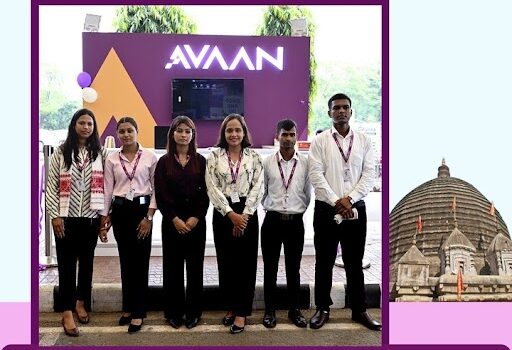
Assam, renowned for its vibrant cultural heritage and dynamic economic growth, is the perfect stage for opening Avaan India’s latest airport kiosk. Our presence in Guwahati, often called the gateway to Northeast India not only underscores our commitment to this thriving area but also harnesses the region’s unique potential.

The new airport kiosk in Guwahati located outside the departures area will serve as a one-stop convenience point, offering services such as excess baggage delivery, packaging, and doorstep delivery of lost baggage. With this move, we are reinforcing our core promise of providing baggage-free and hands-free travel, saving time and money for airport passengers.

Our founder, Ms. Meera, has a deep connection with the North East, and it is her mission to create employment opportunities for the people of this region, particularly young girls who will now operate all Avaan airport kiosks across the country. Additionally, Avaan India supports the Ministry of Rural Development’s initiative by training and employing youth from the DDU-GKY program. This commitment aligns with Avaan India’s dedication to nation-building and providing employability for all.

For more information about Avaan India and its services, contact:

Phone: 08069405400

Website: https://avaanexcess.com