

First-ever “Incredible India” Pavilion at Southern Hemisphere’s largest agricultural fair builds on momentum of new India–New Zealand Free Trade Agreement

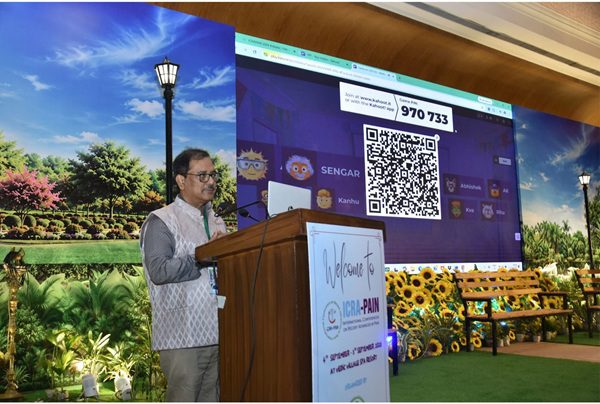
Hamilton (New Zealand) / New Delhi, 20 June 2026: India made its first-ever appearance at Fieldays 2026, New Zealand’s premier agricultural and agribusiness exhibition, with the launch of the inaugural “Incredible India” Pavilion at Mystery Creek, Hamilton, a moment described by officials as a landmark in the deepening India–New Zealand relationship.

Organised by the Consulate General of India, Auckland, the four-day Pavilion gave Indian exporters, agri-tech firms, food processors and tourism bodies a dedicated platform at one of the world’s most-watched agricultural events, even as it offered New Zealand’s farming and business community a direct window into India’s agriculture, agri-technology, food processing, manufacturing and innovation sectors.

The Pavilion drew more than 1,000 visitors on its opening day alone; a turnout organiser called a clear signal of the appetite on both sides for closer economic engagement. Interactive touchscreen kiosks at the venue walked visitors through trade, investment, and sector-specific opportunities in India, while exhibits highlighted precision agriculture, sustainable farming practices, and emerging agri-tech solutions from Indian companies and institutions.

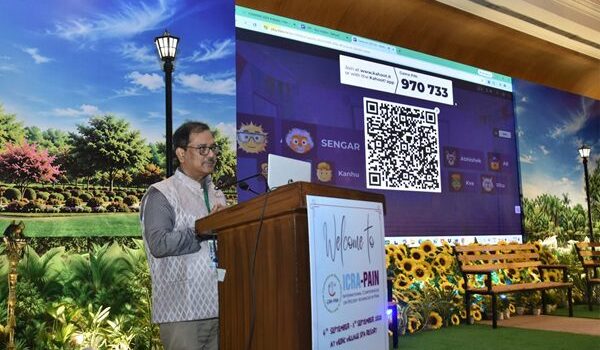
“This is the first time India has had a dedicated presence at Fieldays and the response has exceeded every expectation we set for ourselves. With the India–New Zealand Free Trade Agreement now in place, the timing could not have been better, this Pavilion is where that agreement starts to take a tangible, human shape, in the conversations happening between our farmers, our innovators, and our businesses,” said H.E. Dr. Madan Mohan Sethi, Consul General of India, Auckland.

India’s debut at Fieldays comes soon after the signing of the India–New Zealand Free Trade Agreement (FTA), a deal both governments expect to open new doors for trade, investment, technology collaboration and market access between the two countries. The Pavilion was positioned explicitly within this framework, with officials from both sides using the platform to outline the opportunities the agreement is expected to unlock for agriculture, food technology, education and trade.

The Pavilion was formally inaugurated by a cross-party group of New Zealand ministers, Hon. Todd McClay, Minister for Trade and Investment, Hon. Louise Upston, Hon. Tama Potaka and Hon. Damien O’Connor alongside H.E. Ms. Muanpuii Saiawi, India’s High Commissioner to New Zealand, and H.E. Dr. Madan Mohan Sethi, Consul General of India, Auckland.

Over the course of the four days, the Pavilion hosted a steady stream of senior visitors, including Minister McClay, High Commissioner Saiawi, and New Zealand trade negotiator Mr. Vangelis Vitalis, who discussed the FTA at the New Zealand International Business Centre, followed by a visit from Rt. Hon. Chris Hipkins, along with Minister Upston, MP Paramjit Parmar, and other dignitaries. Minister McClay, Minister Mark Mitchell, and representatives from the Irish Consulate and Zoho also visited the Pavilion. The event closed on a community note, with Deputy Prime Minister David Seymour visiting to congratulate the Consulate on India’s first-ever participation and welcome closer ties with New Zealand’s agricultural sector.

The Consulate General of India described the Pavilion as the opening chapter of a new phase in India–New Zealand agricultural and economic cooperation, positioning India among the world’s fastest-growing major economies and a global player in digital innovation, manufacturing, and agricultural transformation as a significant opportunity for New Zealand businesses looking to enter one of the world’s largest markets.

The Consulate extended its appreciation to the Fieldays organisers and to all visitors whose engagement contributed to the success of India’s debut outing.

About Fieldays:

Held annually at Mystery Creek, Hamilton, Fieldays is the largest agricultural exhibition in the Southern Hemisphere, bringing together farmers, agribusiness leaders, exporters, researchers and policymakers from across New Zealand and the world.

New Delhi [India], June 19: India’s digital payments revolution, powered by the Unified Payments Interface (UPI) and a rapidly expanding base of digital wallet and Prepaid Payment Instrument (PPI) users, has made small-value, app-based payments a part of everyday life for hundreds of millions of Indians. Digital wallets are now used for everything from daily commute and grocery payments to recharges, bill payments and merchant transactions, making the balance and transaction limits attached to them a matter of direct, practical interest to consumers.

  • 63% of digital wallet users surveyed want RBI to retain or increase wallet limits while 23% believe limits should depend on the level of KYC/authentication completed by the user
  • 62% of digital wallet users surveyed say reducing the amount that can be stored or transacted via wallets would inconvenience their everyday payments; 38% believe lower limits won’t curb fraud and will only penalise genuine users
  • Nationwide survey receives 43,000 responses from users of digital wallets across 304 districts of India

Against this backdrop, the Reserve Bank of India (RBI) in April 2026 released a draft Master Direction on Prepaid Payment Instruments (PPIs), 2026, for public comments, replacing its August 2021 framework, with the consultation window open till May 22, 2026. While the draft raises the maximum outstanding balance for Full-KYC wallets to ₹2 lakh, it also proposes to sharply cut the monthly cash top-up limit for such wallets from ₹50,000 to ₹10,000, introduces a uniform ₹25,000 monthly cap on person-to-person transfers, mandates UPI and card-network interoperability, requires immediate refunds for failed transactions and imposes tighter compliance norms on issuers, citing rising fraud and anti-money-laundering concerns.

The proposed reduction in how much money can be loaded into and moved through digital wallets has drawn considerable attention from users and industry alike, with many arguing that genuine, everyday users could be inconvenienced even as the changes do little to deter determined fraudsters. To understand how digital wallet users view these limits, LocalCircles conducted a large survey seeking their direct opinion on whether the RBI should reduce, retain or increase wallet limits, and how a reduction would affect them.

The survey received over 43,000 responses from users of digital wallets across 304 districts of India and found that an overwhelming majority of digital wallet users are against any reduction in wallet limits. 63% of those surveyed want the RBI to retain or increase limits, only 7% support reducing them, and 23% believe limits should depend on the level of KYC/authentication done by the user. Further, 62% say they would be inconvenienced if limits were reduced, and 38% believe that reducing limits will not curb fraud, but instead penalise genuine users. The detailed findings are summarised below.

63% of digital wallet users surveyed believe RBI should retain or increase limits; 23% believe limits should depend on level of KYC/authentication

With the RBI’s draft rules proposing changes to how much money can be stored and transacted through digital wallets, the survey first sought users’ view on the money limits for digital wallets. In response, 33% said current limits should be increased as people increasingly rely on wallets, while 30% said current limits are adequate and should be retained as is – taking the share that wants limits retained or increased to 63%. Another 23% felt limits should depend on the level of KYC/verification done by the user, and only 7% said limits should be reduced to lower fraud and misuse risk, while 7% could not say. This indicates that a large majority of users see digital wallets as a growing necessity rather than a risk to be curtailed. This question in the survey received 22,259 responses.

62% of digital wallet users surveyed believe that they would be inconvenienced if RBI reduced the amount of money that can be stored or transacted via digital wallets; 38% also believe reducing limits won’t curb fraud but penalise genuine users

The survey next asked digital wallet users how it would affect them if the RBI were to reduce the amount of money that can be stored or transacted via digital wallets. In response, 62% said it would inconvenience them as they use wallets for regular/daily payments, 26% said they would be forced to shift back to bank/UPI for higher-value payments and 17% said they would be forced to shift to cash. Among the respondents, 19% felt it would reduce their rewards and offers, another 19% felt it would reduce their exposure and make them feel safer from fraud, 31% said it would not affect them much. Importantly, 38% of users stated that reducing limits won’t curb fraud and will only penalise genuine users. This question in the survey received 21,356 responses. (Some respondents selected more than one option and hence the total does not equate to 100%.)

To summarise, the survey makes it clear that digital wallet users overwhelmingly do not want the RBI to reduce the amount of money that can be stored or transacted via digital wallets. With 63% of users wanting limits retained or increased and only 7% in favour of a reduction, the message from consumers is that digital wallets have become an everyday financial tool rather than a fringe convenience. As wallet usage deepens across tier 1, tier 2 and smaller towns, users appear to view higher or stable limits as essential to managing their daily payments seamlessly.

The concern around the proposed reduction is rooted in real-world impact. 62% of users say a reduction would inconvenience their regular payments, while sizeable proportions say they would be pushed back to bank/UPI for higher-value payments (26%) or even to cash (17%) – an outcome at odds with the broader push towards a digital, less-cash economy. With 38% of users asserting that lower limits won’t curb fraud and will only penalise genuine users, there is clear scepticism about whether reducing limits, particularly the sharp cut in monthly cash top-up from ₹50,000 to ₹10,000 proposed in the draft PPI Directions, will achieve its stated objective.

LocalCircles will be escalating these survey findings with the RBI and other stakeholders as part of the public consultation on the draft Master Direction on Prepaid Payment Instruments, 2026. While users broadly welcome measures that improve security, interoperability and faster refunds, the survey suggests that the central bank should reconsider any reduction in wallet storage and transaction limits, and instead consider retaining or increasing them – potentially linking higher limits to the level of KYC/authentication completed by the user, an approach 23% of users have endorsed.

Survey Demographics

The survey received over 43,000 responses from users of digital wallets located across 304 districts of India. 66% respondents were men while 34% respondents were women. 42% of respondents were from tier 1, 33% from tier 2 and 25% respondents were from tier 3, 4, 5 & rural districts. The survey was conducted via LocalCircles platform, and all participants were validated citizens who had to be registered with LocalCircles to participate in this survey.

About LocalCircles

LocalCircles, India’s leading Community Social Media platform enables citizens and small businesses to escalate issues for policy and enforcement interventions and enables the Government to make policies that are citizen and small business centric. LocalCircles is also India’s # 1 pollster on issues of governance, public and consumer interest. More about LocalCircles can be found on http://www.localcircles.com

Media Contact: media@localcircles.com, +91-8585909866

Bengaluru (Karnataka) [India], June 20: As automation gains traction in today’s fast-changing business landscape, businesses are looking into more creative customer engagement strategies to boost their operational efficiency. In this, Bengaluru-based customer communication platform MCUBE is performing astoundingly across the various industries with its AI-based solutions.

Founded in 2006, MCUBE has augmented with multiple organizations managing business communications through cloud telephony, call management, and customer engagement solutions. Led by Founders Rajarshi Mukherjee, Ajay Jagtap, and Tapan Chatterjee, the company serves businesses across healthcare, education, real estate, financial services, e-commerce, logistics, and other customer-focused industries.

The company launched its AI Voice Bot and Post Call Analysis solution to facilitate repetitive customer interactions through automation and provide actionable insights from customer conversations. “Conversations are the cornerstone of the business, but scale and routine can dilute their value. Our approach is to let technology carry the operational load, creating more space for people to make decisions by analyzing vast amounts of data in real time, forecast the trends, predict the outcomes, & respond to market changes with greater speed. Our Voice Bot & Call audit platform is built on this principle, augmenting human capability rather than replacing it, enabling people and technology to perform at their best together. The future belongs to businesses that combine the speed and scale of AI with the judgment, creativity, and empathy that only people can provide”, commented Ajay Jagtap, Director of sales and marketing.

MCUBE’s proven expertise across customer communications has been beneficial in developing AI capabilities that solve real-life business challenges, rather than automated use cases. The company will keep investing in its AI capabilities to meet the changing expectations of customers and communication technologies.

About MCUBE

MCUBE offers cloud telephony and customer communication platform solutions to businesses, enabling them to handle customer interactions via voice, messaging, automation, and AI-powered tools, based out of Bengaluru. The company has been helping organizations since 2006 to enhance customer engagement, optimize business processes, and boost business growth by providing technology-enabled communication solutions.

New Delhi [India], June 18: The Central government primarily through food regulator, the Food Safety & Standards Authority of India (FSSAI), has taken some steps to crack down on food products selling online by enforcing the Food Safety act which requires products listed for sale online to have atleast 30% shelf life remaining. However, 1 in 2 consumers surveyed by LocalCircles still can’t find “Best Before” or expiry date information listed online as mandated in the Legal Metrology Packaged Commodity Rules 2018 amendment.

  • LocalCircles writes to FSSAI again about amending act and ensuring compliance
  • 48% consumers report being unable to find Best Before Date information; Only 9 percentage points improvement from 2024 to 2026
  • Zepto, Swiggy Instamart, Blinkit, Jiomart and Milk Basket all non-compliant; Only Amazon Now, Flipkart and Big Basket display best before dates
  • Consumers cite hundreds of cases of near expiry date products being received

Under the Legal Metrology (Packaged Commodities) Amendment Rules, 2018, all packaged human consumption products listed on e-commerce sites/apps must display clear “Best Before” or “Use By” dates, with day, month, and year, at the point of digital sale. However, since food as a subject has been governed by FSSAI, Legal Metrology has not been enforcing this clause of displaying best before date online for such products.

FSSAI, to which LocalCircles has written twice since 2024 is yet to enforce compliance by online grocery platforms. Instead, it has been trying to enforce its Food Safety Law 2020 amendment which calls for e-commerce/quick-commerce platforms having at least 30% of packaged food product’s shelf life remaining or 45 days before expiry, at the time of delivery. However, there is no way for the consumer to check the shelf life before ordering packaged foods with most of these platforms, despite it being in the PCR 2017 amendment.

Following the LocalCircles escalation in October 2024, FSSAI formally issued warnings to some quick commerce and e-commerce platforms to stop selling consumables with missing or near-expiry dates. Platforms were asked to only list products meeting the 30% or 45 day criteria or face punitive action. However, no directions were issued by FSSAI to platforms to display best before dates online on the app/website.

Some consumers have even alleged some online grocery platforms engaging in the practice of buying inventory with small shelf life left and listing it on their platform at a high discount, in violation of the 30%- or 45-day shelf life rule. One of the most common examples reported on LocalCircles is that of bread where the product delivered often has 1-2 days of shelf life remaining while the average shelf life is 5-7 days.

LocalCircles through a follow on survey has strived to find out from consumers what has been their experience of Best Before Date display compliance on online grocery platforms and whether the situation has improve since 2024. The survey received over 17,000 responses from consumers of online platforms located in 164 districts of India. 61% respondents were men while 39% respondents were women. 53% respondents were from tier 1, 29% from tier 2 and 18% respondents were from tier 3 & 4 districts.

48% Indian online grocery platforms shoppers surveyed say they still cannot find date (for human consumption products) displayed on most platforms

The survey asked consumers, “When you shopped on online grocery platforms in the last 12 months, how did you find the Best Before date (shelf life remaining) of the human consumption products (packaged food, groceries, medicines, cosmetics, etc.,) displayed online?” Out of 17,133 who responded to the question 13% stated the “Best Before date was displayed on all apps/sites”; 5% of respondents stated ““Best Before date was displayed on most apps/sites”; 21% of respondents stated “Best Before date was displayed on some apps/sites”;13% of respondents stated “Best Before date was displayed on just a apps/sites”; 35% of respondents however stated that they “could not find Best Before date on any apps/site”; and 13% of respondents did not give a clear answer. To sum up, 48% Indian online grocery platforms shoppers surveyed say they still cannot find Best Before date (for human consumption products) displayed on most platforms.

Minor improvement observed in display of best before dates by online grocery platforms; 1 in 2 consumers surveyed still can’t find it

A comparison with the study results of 2024 and this year shows that there has been minor improvement in the display of ‘Best Before’ dates by online grocery platforms as non-compliance has dipped from 57% to 48%. However, 1 in 2 consumers surveyed still can’t find it on most platforms.

Majority online platforms selling packaged foods continue to not display best before date as required under Packaged Commodity Rules Amendment 2018

Based on consumers’ complaints and LocalCircles’ study out of 8 major online grocery platforms, 5 have been found to be non-compliant with the requirement that Best Before date should be displayed on all packaged food products sold through the platform. Among those found to be compliant are Amazon Now, BigBasket, and Flipkart Minutes, while those found non-compliant are Milkbasket, JioMart, Blinkit, Swiggy Instamart, and Zepto. Some of these platforms instead of providing a Best Before Date or a Manufacturing Date with Shelf Life, just provide Shelf Life which is meaningless as it does not tell the consumer when the product expires. Below are some examples of products sold through various online grocery platforms – some which have Best Before Date displayed and others where this information is not available.

In summary, 48% of Indian online grocery shoppers surveyed say they still cannot find Best Before date (for human consumption products) displayed on most online platforms. However, there has been minor improvement observed in display of Best Before dates by some platforms. Despite the improvement, 1 in 2 consumers surveyed still can’t find it.

LocalCircles was instrumental in the original development, implementation and compliance tracking of Legal Metrology Packaged Commodity Rules 2017 amendment as well as the modification of food safety laws from an eCommerce perspective. Following the LocalCircles survey in October 2024, which revealed an increasing number of consumers purchasing food products online being unable to see the best before date of the products, the platform had repeatedly escalated with FSSAI the need for ensuring the display of best before date for human consumption products on online platforms. Though considerable time has passed since the last submission to FSSAI in January 2026, the Best Before Date is not being displayed on online platforms for such products.

The LocalCircles submission to FSSAI said that the Food Safety and Standards Amendment Regulation 2020 should be implemented in letter and spirit with the regulator ensuring compliance. The authority should ensure that sellers/platforms must only display foods that have 30% or higher shelf life or 45 days for sale and update the law to mandate display of Best Before Dates online for all packaged food products.

Alternatively, LocalCircles had urged the authorities that in the event of FSSAI is unable to update their act in a timely manner, the clause that exempts food products in PCR 2017 amendment of legal metrology should be revoked such that consumers have this information available to them when purchasing food products online. This will ensure that just like in physical retail stores where the consumer has the benefit of seeing the expiry date of products when buying, they have the same information available when buying online.

LocalCircles plans to share the findings of this new survey with FSSAI, Legal Metrology and CCPA so the necessary changes can be made along with enforcing such that every online grocery platform complies and displays best before date for all human consumption products on their apps.

Survey Demographics

The survey received over 17,000 responses from consumers of online platforms located in 164 districts of India. 61% respondents were men while 39% respondents were women. 53% respondents were from tier 1, 29% from tier 2 and 18% respondents were from tier 3 & 4 districts. The survey was conducted via LocalCircles platform, and all participants were validated citizens who had to be registered with LocalCircles to participate in this survey.

About LocalCircles

LocalCircles, India’s leading Community Social Media platform enables citizens and small businesses to escalate issues for policy and enforcement interventions and enables the Government to make policies that are citizen and small business centric. LocalCircles is also India’s # 1 pollster on issues of governance, public and consumer interest. More about LocalCircles can be found on http://www.localcircles.com

Media Contact: media@localcircles.com, +91-8585909866

New Delhi [India], June 18: At Suchitra Academy, the Cambridge Pathway provides students with a globally recognised education that develops not only academic excellence but also the skills, attitudes, and values needed to thrive in an interconnected world. From the early years onwards, learners are encouraged to become confident, responsible, reflective, innovative, and engaged individuals.

The curriculum is designed to promote inquiry, critical thinking, collaboration, and communication. In classrooms, students explore real-world issues, analyse different perspectives, and apply their learning to meaningful contexts. Students conduct SCOT (Strengths, Challenges, Opportunities, and Threats) analyses and create SMART goals to take ownership of their personal and academic growth. Across the school, regular reading programmes, wellbeing lessons, and project-based learning experiences nurture independent thinking and self-management skills.

Global awareness is further strengthened through activities such as cultural celebrations, sustainability projects, Model United Nations-style discussions, World Music Day events, and interdisciplinary learning experiences that encourage students to appreciate diverse viewpoints and cultures. Students also participate in public speaking, debates, literary competitions, scientific investigations, and community initiatives, helping them develop confidence and leadership.

Assessment within the Cambridge framework focuses on continuous progress and skill development, enabling teachers to provide targeted support and challenge. Through data-informed teaching and personalised learning pathways, every student is encouraged to achieve their potential.

By combining the rigour of the Cambridge curriculum with Suchitra Academy’s commitment to holistic development, the school equips learners with the knowledge, skills, and global outlook needed to succeed in higher education and contribute positively to an ever-changing world.

Website: https://suchitra.in/

Mallcom reinforces India’s industrial safety ecosystem with a ₹100 crore investment in its Sanand facility, supporting localisation, job creation, and sustainable industrial growth.

Ahmedabad, 17 June, 2026: Mallcom India Limited, a head-to-toe PPE manufacturer in India, has announced an investment of over Rs. 100 Crores in its production plant at Sanand, Gujarat. This strategic move not only supports import substitution in the PPE segment, but also advances the ‘Make In India’ mission, strengthens domestic manufacturing capabilities, and addresses the rising demand for industrial safety equipment across local and global markets. The unit is equipped with modern production lines for large-scale manufacturing of a wide range of Industrial Safety Equipment. It functions as a strategic hub for innovation and localisation in the PPE production process. As Mallcom’s 17th manufacturing facility and its 2nd facility in Gujarat, the Sanand unit currently employs over 200 local workers. It is further expected to create more than 300 jobs by next year. With strong commissioning, Mallcom is operating the Sanand facility on a full-fledged basis. The company continues to set new benchmarks in PPE manufacturing, strengthening its position as a trusted industry leader in India.

Strengthening India’s Self-Reliance In Safety Equipment Production

As Indian industries continue to place greater focus on workplace safety, the demand for high-quality industrial safety equipment is also rising. The strong expansion of the Sanand facility reflects Mallcom’s commitment to shaping the evolving Indian industrial landscape.

The facility houses multiple product lines, including NBR and PU gloves dipping lines. From cotton-knitted gloves to PU-coated and Industrial Nitrile Gloves, and from bump caps to industrial safety helmets, the advanced manufacturing unit is equipped with state-of-the-art production lines to deliver world-class safety solutions. Through integrated operations and stringent cross-production quality control, Mallcom strengthens its position as one of the most reliable PPE manufacturers in India. Every industrial safety equipment product manufactured at the facility strictly adheres to European, American and Indian safety standards.

Strengthening the Sanand facility is a key step in enhancing India’s domestic PPE manufacturing capacity, contributing to the broader national vision of Atmanirbhar Bharat.

Advancing Import Substitution Of PU & Other Gloves

India’s usage of industrial gloves, especially PU-coated gloves, has largely remained dependent on imports. Reducing this dependence is important for strengthening domestic manufacturing, conserving foreign exchange, and developing a more resilient supply ecosystem.

To help secure India’s Forex reserve, Indian PPE manufacturers like Mallcom have moved towards import substitution of PU Coated Gloves and nitrile gloves for industrial use. The expansion of the Sanand production plant is a strategic step towards creating greater domestic capacity in India’s PPE sector.

This initiative places strong emphasis on the use of innovative machinery to enable the successful distribution of PU coated and other gloves for both domestic and international markets. With the recent addition of a new NBR dipping line with online printing and stripping, Mallcom supports the localised production of Protech PU Gloves and other products that were earlier imported. The unit utilises the strength of India’s local workforce for a smooth transition towards import substitution. Strategic investment in the Sanand facility and its expansion will play a key role in reducing import dependence in the industrial safety equipment sector.

Setting New Standards For PPE Manufacturers In India

The development of the Sanand facility represents a new benchmark for innovation in PPE production and operational excellence. The unit supports sustainable practices, including the use of biomass pellets for cleaner energy generation, a Zero Liquid Discharge system for water conservation, and compliance with SEDEX-audited standards of ethical manufacturing.

Energy-efficient machinery, waste management systems and safe working conditions are among the key features that define the Sanand facility.

The growth of this unit reflects Mallcom’s commitment to making India self-sufficient in advanced and trusted industrial safety equipment.

Commenting on the development, Mr. Giriraj Mall, Executive Director, Mallcom India Ltd., said, “The Sanand facility reinforces our commitment to building globally competitive manufacturing capabilities in India. Our continued investments reflect our long-term vision to strengthen indigenous production, advance import substitution, and develop safety solutions that can serve both domestic and international markets.”

Mr. Rohit Mall, Associate Vice President, Mallcom India Ltd., added, “We believe the next phase of growth in the PPE industry will be driven by localisation, product innovation and advanced manufacturing. Our investments in the Sanand facility are focused on building future-ready manufacturing capabilities that can respond to evolving customer requirements while reducing dependence on imports.”

For more information about Mallcom Industrial Safety Equipment, visit: https://www.mallcom.in/

About Mallcom

Founded in 1983 and headquartered in Kolkata, Mallcom India Ltd. is a renowned PPE manufacturer in India. It provides comprehensive head-to-toe safety solutions across industries and has a strong presence in over 50 countries and six continents. Mallcom has established itself as a globally trusted PPE brand backed by vertically integrated manufacturing capabilities and internationally recognised certifications including EN, CE, ANSI, and IS standards. The company’s diverse product portfolio includes PU coated gloves, industrial nitrile gloves, safety shoes, industrial garments & workwear, industrial safety helmets and other industrial safety equipment. With a strong focus on innovation, sustainability, ethical manufacturing, and indigenous production, Mallcom continues to strengthen its commitment towards the Government of India’s ‘Make in India’ vision while driving employment generation and responsible business growth.

Media Contact

Mallcom India Ltd
Website: www.mallcom.in
Email:sales@mallcom.in
Phone:+91 33 40161000

BHOPALPATNAM, BIJAPUR (CHHATTISGARH) — In a significant example of the rapid developmental change unfolding across Chhattisgarh, Dr. Mukesh Kumar, a frontline Medical Officer at the Community Health Center (CHC) in Bhopalpatnam, has secured a historic Guinness World Records title. This milestone reflects a new regional narrative where technology-driven progress and global achievements are making their way to the most remote corners of the state.

Dr. Kumar reached this achievement under the constant guidance, encouragement, and administrative support of Bijapur’s Chief Medical and Health Officer (CMHO), Dr. B.R. Pujari, who has been actively driving medical advancements and upgrading rural health infrastructure across the district.

The global record was established during a nationwide academic initiative conducted by the National Board of Examinations in Medical Sciences (NBEMS) under the Union Ministry of Health and Family Welfare. The project officially earned the Guinness World Records title for the “Most viewers of an artificial intelligence in healthcare lesson live stream on YouTube” with an exceptional peak concurrent viewership of 17,999 medical professionals.

Achieving the strict compliance standards of a Guinness World Record demands uninterrupted digital connectivity—a major infrastructural challenge in interior Bijapur. To ensure that frontline doctors could take part seamlessly in this important national training on advanced Artificial Intelligence (AI) diagnostics, CMHO Dr. B.R. Pujari offered crucial administrative support and technical encouragement, emphasizing that distance and remoteness should never limit a medical officer’s academic and professional growth.

“Significant changes are taking place in Chhattisgarh today. The Bastar that was once identified mainly with Naxalism is now writing a fresh chapter of development, and its people are actively contributing to global milestones such as the Guinness World Records. Serving in an interior and network-challenged block like Bhopalpatnam involves daily logistical hurdles, but with the proactive support of our CMHO, Dr. B.R. Pujari, we are proving that doctors working in the remotest regions can remain at the leading edge of modern medical science.”

— DR. MUKESH KUMAR, MEDICAL OFFICER, CHC BHOPALPATNAM

Speaking about the milestone, CMHO Dr. B.R. Pujari applauded the achievement, observing that Dr. Mukesh Kumar’s dedication creates an outstanding benchmark for medical officers across the region. He further stressed that technical and geographical limitations can be overcome with strong resolve, organised administrative support, and an uncompromising commitment to public health excellence.

MEDIA CONTACT INFORMATION

Participant Name: Dr. Mukesh Kumar (Medical Officer, CHC Bhopalpatnam)

Guiding Authority: Dr. B.R. Pujari (Chief Medical and Health Officer, Bijapur)

Official Address: Office of the CMHO, District – Bijapur, Chhattisgarh, India

Phone / Mobile: +91 9672575365

Email Address: mukeshkalau2@gmail.com

Attachments: Official Guinness World Records Certificate Image

Both features are live for new and existing users from 1 June 2026.

Chennai, India, 12 June 2026: Offrd, HR operations software used by more than 4,000 Indian companies, has launched two features: Form 16 generation and AI resume screening.

Form 16 generation produces the annual salary tax certificate from payroll data already on the platform, so employers no longer prepare it separately or send it to an outside consultant. AI resume screening reviews incoming CVs and ranks them against the role, which speeds up shortlisting before the offer stage.

The two features widen Offrd beyond its offer, payroll, attendance and exit tools, putting more of the hiring and compliance work in one place for companies with small HR teams.

Ravi Balan, Chief Product Officer at Offrd, said: “Customers had asked for Form 16 for a while. Many ran payroll with us, then went elsewhere for the certificate. Resume screening closes a similar gap at the hiring end. Both fit what the platform already does.”

Offrd is used in over 350 cities in India, and offer letters worth more than INR 7 billion have been generated through it. Both new features are available now within the existing platform.

About Offrd

Offrd is HR operations software for Indian SMEs and growing companies. It generates offer letters, payslips, onboarding kits, payroll, HR policies and exit paperwork, with Indian statutory rules for EPF, ESI, professional tax and gratuity built in. Attendance is handled through Atndnz, its bundled application. More than 4,000 companies across over 350 cities use Offrd. For more information, visit offrd.co.

New Delhi [India], June 16: As more Indians explore overseas real estate opportunities, Canada is quickly becoming one of the most preferred destinations for Indian property investors, following the UAE. Premier Canadian developers, including industry leader Westbank, will participate in the International Property Expo, organised by NKN Media at the Taj Palace, New Delhi, on 4th and 5th July 2026.

The number of Indians interested in buying international real estate has grown significantly over the past decade. This rise is largely driven by factors such as migration, global education needs, and better investment opportunities. While cities like Dubai attract buyers with tax-free benefits, easy resale options, and strong rental yields, the Canadian government is also making the process more convenient for Indian home buyers.

Speaking about the upcoming Expo, Mr. Abdul Majid Khan, Group CEO & Managing Director, NKN Media, said, “Today’s generation of Indian buyers has become more globally aware and is investing overseas more than ever before. Foreign real estate investment is now being viewed not just as a source of income, but also as an important requirement for education and migration. Through our International Property Expo, we aim to directly connect reputed global developers with Indian customers.”

The purpose of the International Property Expo is to build a platform where Indian consumers can directly engage with trusted international developers and industry experts to make informed property investment decisions. The event will give Indian buyers an opportunity to explore properties across different countries and understand the latest global real estate trends, along with the process of buying property abroad. The Expo will also feature leading Indian developers showcasing their projects from across the country. The two-day event is expected to bring global real estate experts and stakeholders together under one roof, encouraging meaningful discussions and knowledge sharing.

The Expo will also see the presence of celebrity brand ambassadors Chitrangada Singh, Jacqueline Fernandez and Arbaaz Khan. This marks the first time that global developers and Indian brands will come together to present the best of international real estate. Earlier, NKN Media has successfully organised mega Property Expos in Dubai, Singapore and London.

About NKN Media

NKN Media is a global media conglomerate headquartered in Dubai, with a strong presence across the UAE, UK, Singapore, Malaysia, Canada, Bahrain, India, and Sri Lanka. A 360-degree media powerhouse, it works with leading broadcast networks including Republic TV, Aaj Tak, India Today, and Times Now, while also publishing SpiceRoute, the in-flight magazine of SpiceJet. With an expanding portfolio of proprietary IPs, NKN Media continues to promote innovation and growth across international markets.

Udupi (Karnataka) [India], June 16: More than 60 aspiring tourism entrepreneurs, guides, artisans, storytellers, homestay hosts and community tourism practitioners participated in the Community Tourism Startup Lab, a programme focused on creating local livelihoods through tourism and strengthening a Made-in-Local tourism economy in Coastal Karnataka. The programme was hosted by PlaceXplore, the Department of Tourism, Udupi, Dudmi – Local Livelihood Programme in Byndoor, the Zilla Panchayat National Rural Livelihoods Mission (NRLM), and OneTAC.

The initiative launched with a focus on women micro-entrepreneurs from Byndoor Taluk, with the objective of developing unique tourism trails and visitor experiences that showcase local entrepreneurs and community-led enterprises across the region. The programme seeks to connect tourism opportunities for local communities around Kollur Mookambika, Kodachadri and Byndoor through curated experiences such as farm-to-table dining, village walks, local crafts, cultural storytelling, spiritual tourism, nature-based experiences, and the celebration of local art forms, festivals and traditions.

Gururaj Shetty Gantihole, MLA for the Byndoor Constituency, has championed the Dudmi Local Jobs Programme and highlighted the potential of tourism to generate sustainable livelihoods for local residents. In a message shared with participants, he said:”Byndoor has all the ingredients needed to become a model for community-led tourism — from the spiritual significance of Kollur Mookambika and the natural beauty of Kodachadri to our rich culture, cuisine and entrepreneurial spirit. Tourism can create meaningful opportunities for local youth, women and small entrepreneurs while ensuring that economic benefits remain within our communities. Initiatives such as the Community Tourism Startup Lab and Dudmi are important steps towards creating local jobs, strengthening livelihoods and showcasing the unique identity of our region.”

Vindhya N.M., Assistant Director, Department of Tourism, Udupi, said:”The future of tourism lies in creating opportunities for local communities to become active participants in the visitor economy. Udupi has a rich cultural heritage, vibrant traditions, unique cuisine and extraordinary natural assets. By supporting local entrepreneurs, guides, artisans and experience creators, we can build a strong Made-in-Local tourism ecosystem that generates livelihoods while showcasing the authentic spirit of our district.”

The initiative aimed to equip participants with the skills, knowledge and networks required to develop tourism experiences rooted in local culture, heritage, crafts, food traditions, nature and community knowledge. The programme explored how community-based tourism can create new livelihood opportunities while preserving the region’s unique identity and ensuring that tourism benefits reach local communities.

The training commenced with a session by the Department of Tourism, Udupi, which introduced participants to the growing opportunities in community-based tourism and the role local communities can play in shaping visitor experiences.

Manvitha Amin from PlaceXplore hosted an interactive session on building community-based tourism enterprises and invited participants to present their tourism products, business ideas and entrepreneurial aspirations. The session provided an opportunity for local entrepreneurs to share their stories, identify opportunities and receive feedback from facilitators and peers.

A communication and storytelling workshop led by Dr. Shubha H. S., Professor and Director-Coordinator, Manipal Institute of Communication (MIC), Manipal Academy of Higher Education, focused on helping participants better articulate their stories, experiences and tourism offerings. Participants were encouraged to share place-based stories and reflect on how local oral histories, traditions and personal narratives can enhance visitor experiences and create meaningful connections with destinations.

This was followed by an immersive session on the history, culture and traditions of Tulunadu by Praveen Shetty, Assistant Professor, Department of Humanities and Management, Manipal Academy of Higher Education. The session encouraged participants to build authentic place-based experiences that celebrate the region’s heritage and cultural identity. Through examples such as Nagaradhane, Bhoota Kola and Kambala, participants explored how local traditions can strengthen destination branding and create unique visitor experiences that cannot be replicated elsewhere.

The afternoon session highlighted government schemes, support programmes and entrepreneurship opportunities available to tourism enterprises, providing participants with practical guidance on accessing resources and building sustainable ventures.

As part of the event, OneTAC launched the Udupi prototype of Orange Dot, an initiative supported by the EkStep Foundation that aims to make informal tourism, arts and culture actors discoverable through digital public infrastructure.

The prototype will work with local guides, storytellers, artisans, performers, boat operators, community hosts and other micro-entrepreneurs who contribute significantly to the tourism economy but often remain invisible online.

Satish Shekar, Mission Lead of OneTAC and Director of Takshay Labs Pvt. Ltd. and Culkey Foundation, said: “Discoverability is not a marketing problem; it is an infrastructure problem. Udupi has an extraordinary wealth of talent, culture and experiences. Orange Dot is an opportunity to make that talent visible and enable greater participation in the local economy.”

Prathima Manohar, Member of the OneTAC Steering Committee, Chair of PlaceXplore, and Director of Paradise Resorts and GoodPass, said: “Community tourism has the power to create meaningful livelihoods while preserving local culture and identity. Through the Community Tourism Startup Lab and Orange Dot, we hope to help local entrepreneurs, artisans, guides and storytellers become more visible, strengthen their digital presence, develop market-ready experiences and participate more fully in the tourism economy. Our vision is to build a Made-in-Local tourism ecosystem where local communities are not just beneficiaries of tourism, but active creators of it.”

The organisers also announced that digital profiles will be created for participating entrepreneurs, experiences and community enterprises to improve their online visibility and discoverability. Additional training modules will be conducted in the coming months covering product development, storytelling, digital marketing and experience design. Ideas generated during the workshop will also be explored for inclusion in future Byndoor destination marketing and digital campaigns.

The organisers noted that the programme marks the beginning of a broader effort to identify, train and support local tourism entrepreneurs across Coastal Karnataka and connect them to visitors, markets and digital platforms. Future initiatives will focus on developing tourism trails, strengthening community enterprises, improving digital discoverability and creating new livelihood opportunities through tourism.

The Community Tourism Startup Lab forms part of a larger effort to position Udupi as a leading destination for community-based tourism, where local culture, heritage, food, crafts, festivals and stories become drivers of sustainable livelihoods and inclusive economic growth.