Chennai (Tamil Nadu) [India], September 9: DigiSME, a leading provider of next-gen HR software, has been honoured with the “Employee Experience Solutions Provider” award at the ETHRWorld Employee Experience Awards 2025.

The third edition of the ETHRWorld EX Awards took place on July 2025, at the Sheraton Grand, Bengaluru. The event celebrated forward-thinking organizations and service providers that are redefining how modern workplaces care for and empower their people.

DigiSME emerged as a standout among a highly competitive field. The jury praised the company for its intuitive product design, real-world client outcomes, and ability to scale without compromising on quality or user experience.

The company considers this prestigious award as more than a badge of success. Every team member is celebrating this milestone as it reflects the organisation’s mission to simplify workplace management and elevate employee experience through user-friendly design, automation, and customer-focused approach.

“This recognition is a proud milestone for us. We don’t see employee experience as a trend. It’s the core of everything we build. This award is a tribute to our team’s dedication and to the trust our customers place in us,” said Dinesh Kamal Somanchi, Chief Technology Officer at DigiSME.

DigiSME’s all-in-one HRMS is built for businesses of all sizes. The HR platform streamlines payroll, onboarding, attendance, leave, and appraisal processes for employers. Employees can mark attendance with location-based tracking, access payslips and check leave balances, and all necessary associated with mobile-first self-service app.

What set DigiSME apart is their belief that real transformation begins with effective implementation and not just software adoption. HR teams and employees may not have the time or resources to manage the digital transformation on their own. To bridge that gap, every customer will have a dedicated specialist who assists in setting up the platform and configuring the workflow.

DigiSME also ensures direct and personal support without automated menus or delays. When there is an issue, the customers can reach out to them, and this continues throughout their journey with DigiSME.

The ETHRWorld jury evaluated entries based on innovation, business impact, scalability, and measurable outcomes. DigiSME’s efficiency in reducing the HR workloads and enhancing employee engagement played a key role. The award places DigiSME among India’s top experience-focused HR tech innovators.

Clients across industries have praised DigiSME for its simplicity and support. This win adds another meaningful chapter to DigiSME’s journey toward helping SMEs across India build better, happier, and more productive workplaces.

“We’re just getting started. With AI-powered features, integrations, and a growing community of users, we’re evolving to meet the needs of tomorrow’s workforce,” added Dinesh.

About DigiSME

DigiSME is a cloud-based HRMS software platform designed for businesses of all sizes in India, Singapore, New Zealand, UAE, Australia and more. It helps organisations automate HR processes, stay compliant, and create exceptional employee experiences from hire to retire.

An expert session within the Open Dialogue project took place on September 5 at the National Centre “Russia” branch in Primorsky Krai. Authoritative international experts participated in the discussion on the transformation of trade and connectivity in the new reality. The event continued themes from the first Open Dialogue “Future of the World. New Platform for Global Growth,” held in April 2025 in Moscow.

Associate Professor Gulshan Sachdeva, at the School of International Studies at Jawaharlal Nehru University, stated during the Open Dialogue that today’s Global Majority countries are no longer the “Third World,” but rather new powerful centers of political, economic, and intellectual development.

“If we’re talking about the global majority and the Global South, the situation today is completely different. We have grown strategically, economically, technologically, and even intellectually. These countries now dominate and are likely to continue dominating in trade, investments, technologies, climate issues, and other areas. And even if you look just at BRICS—already now the GDP growth rate is 4%, and by 2030 this share will exceed 50%,” stated Gulshan Sachdeva.

Technological innovations (digital payments, AI) demonstrate the potential of Global Majority countries. But the key challenge is organizing joint architecture and connectivity infrastructure without Western dominance, emphasized the Associate Professor at the School of International Studies at Jawaharlal Nehru University.

He also noted that using institutions, trade mechanisms, and currencies as “weapons” erodes the stability of the world order. Gulshan Sachdeva is convinced that alternative solutions are needed within BRICS and beyond.

Western partners still maintain a sense of impunity and the role of sole decisive players, believes Victoria Panova, Head of the BRICS-Russia Expert Council, Vice-Rector of HSE University, and Russia’s Sherpa in the Women’s Twenty. According to her, the financial levers of Western institutions—the dollar payment system, London insurance structures, control over container shipping—effectively give them an advantage and the illusion of the right to conduct dialogue as masters.

“In this context, the role of BRICS is truly invaluable. Despite attempts by Western colleagues to undermine the association, BRICS has proven its relevance and ability to offer new initiatives not only in the economic and financial spheres but across all three pillars of cooperation. Interdependence between countries remains, including with the West, the EU, and the USA, but a new, more multipolar economy is already forming. If you look at the statistics: since the first summit, trade turnover within BRICS countries has grown 3.5 times—this is objective evidence that participants are actively cooperating and can contribute to mutual growth, reducing dependence on Western powers,” she emphasized.

BRICS countries are establishing new institutions and mechanisms that enable participants to enhance their economic independence. One such project is the Contingent Reserve Arrangement. According to Victoria Panova, it still requires refinement but already demonstrates the association’s aspiration to diversify financial instruments and reduce dependence on Western structures.

“The New Development Bank of BRICS has already launched practical initiatives: bonds have been issued in yuan and rand, with rupee issuance in preparation. Today, about 30% of the bank’s operations are conducted in national currencies. An investment package of about 35 billion dollars is aimed at reducing the infrastructure gap in Global South countries and supporting their long-term development,” she emphasized.

BRICS is gradually ensuring the leveling of international architecture, refraining from interfering in the logic of sanctions or counter-sanctions, but rather through practical initiatives that help countries implement their development plans and protect the interests of their citizens, added Victoria Panova.

Open Dialogue participants also discussed attracting investments in the International North-South Transport Corridor, BRICS+ routes, continental railway projects, as well as international logistics challenges and measures to strengthen ties between the EAEU, Africa, and ASEAN.

Alexey Bezborodov, Managing Partner of Infra Projects LLC, spoke on the topic “New Solutions for Enhancing Logistics Connectivity of BRICS Countries.” He noted that the world has entered the era of containerization and that the container will become the basic unit of global trade in non-energy sectors. The expert also stated that Russia is capable of playing a key role in transit within BRICS, particularly through infrastructure development along the Trans-Siberian Railway and the North-South corridor, which becomes strategically important for China and India.

“Today, fragmentation, containerization, local economic spurts, and e-commerce allow us to say that there is a shift in perceptions of geography, cargo movement speeds, methods of final delivery, and cooperation options in production. Essentially, a quiet revolution is occurring in infrastructure and logistics,” stated Alexey Bezborodov.

At the same time, he emphasized that today’s infrastructure development “consumes enormous resources” from all states, and new or modernized facilities are not always durable. Often, they exhaust their potential within 5 to 10 years.

“Therefore, we need to think about new principles of movement—based on small atom, new pipe transportation of goods, new physics and energy,” noted Alexey Bezborodov.

The expert emphasized that several trade and logistics routes are successfully developing in Russia. These include the Northern Sea Route and the Transarctic Transport Corridor. There is also an essential project for joint investments—the North Siberian Railway, which, with the creation of additional links, can connect the October, Northern, Sverdlovsk, and West Siberian railways.

“First and foremost, we must continue developing our standard classical transit from China through Kazakhstan, Russia, Belarus to Europe. It exists now and brings income to all participants,” he noted.

Connectivity Without Intermediaries: What Unites BRICS, Asia, and the Global South

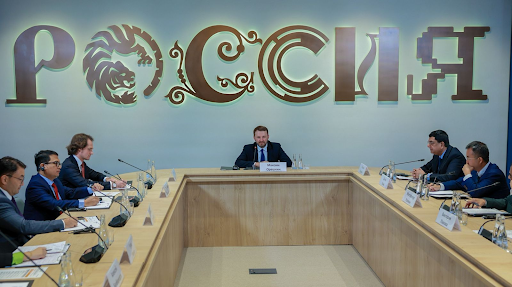
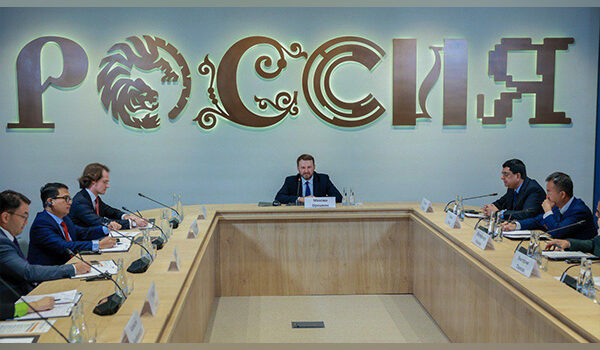
In Vladivostok, a discussion on new financial and investment solutions for countries of the World Majority was held as part of an Open Dialogue at the branch of the National Centre “Russia”. The session was moderated by Maxim Oreshkin, Deputy Head of the Administration of the President of the Russian Federation.

During the third discussion block on “New Financial and Investment Mechanisms for the World Majority,” participants emphasized that in a changing global economy, sustainability cannot be ensured without digital integration and the development of compatible payment systems.

Speaking at the session, Ilya Ivaninskiy, Director of the Center for Business Education and Analytics at the Central University, emphasized that without investment, real market connectivity is impossible.

“Connectivity doesn’t work well without money,” he noted, reminding that developing countries now form the center of the global economy: they account for over 60% of global GDP and more than 90% of the planet’s population. According to him, future economic growth is concentrated precisely here.

At the same time, Ivaninskiy noted, the international monetary and financial system has not yet adapted to this reality:

“Neither payments, nor representation in organizations, nor reserves, nor investments — no component corresponds to the new conditions.”

The global investment deficit is estimated to exceed $4 trillion, and the problem is felt most acutely in Global South countries.

The speaker explained in detail the reasons behind these difficulties. In developing countries, investments are largely built on borrowed funds:

“Our debt-to-equity ratio is 2 to 1, while in developed countries it’s 1 to 1.” Moreover, a significant portion of the debts are short-term, with about 40% due for repayment as early as 2027. The cost of capital is also unfairly inflated. “If our risk is higher by 1.5%, then the cost of capital is higher by 6.6%. This is four times higher than the actual risk level,” he emphasized.

Another problem cited by the expert is low market connectivity: most foreign investments coming into developing countries are from developed ones, and vice versa — the main investments from the Global South flow into developed markets.

“When we see a low degree of connectivity in the 21st century, a logical solution is a new investment platform,” stated Ivaninskiy.

In his opinion, such a platform could connect BRICS countries and the global majority. It should include a showcase of long-term infrastructure projects, clear criteria for assessing quality for investors, and effective risk reduction tools.

“Governments can help by buying junior tranches or providing guarantees,” he noted.

Ivaninskiy proposed a two-tier architecture for the platform: at the national level — selection of projects and investors; at the international level — mutual investments and offsets.

He also drew attention to technological capabilities:

“Blockchain is already mentioned as a tool for making payments and settlements. Modern digital tools make such operations cheap and transparent.”

According to him, a digital investment asset — risk-free and protected from inflation — could be at the center of the platform.

The expert also provided economic calculations: if countries invest at least $10 billion annually, it could generate up to $100 billion in additional GDP per year.

“For economies with a combined GDP of over $60 trillion, such investments are insignificant, while the effect could amount to a quarter of a percent of global GDP,” he noted.

“It’s great that we are discussing such initiatives at these venues. I would like to believe that this will allow them to be implemented faster,” Ivaninskiy concluded.

Mumbai (Maharashtra) [India], September 9: Rusaka Technologies Pvt. Ltd., a next-generation AI-driven financial technology company, today announced its incubation with the prestigious IIIT Bangalore Innovation Centre, marking a major milestone in its journey to build India’s leading financial intelligence and prediction platform.

The company, which recently acquired the India operations of Ruskin Felix Consulting LLC, USA, including the intellectual property rights for SharekeyX and iBankCentral, will leverage this incubation to accelerate its product roadmap, strengthen research collaborations, and scale operations across India.

SharekeyX, Rusaka’s flagship platform, is a state-of-the-art AI-powered market strategy and prediction tool. It integrates real-time stock market data, predictive analytics, sentiment analysis, and news integration to deliver highly accurate financial insights. The platform’s AI models achieve a Mean Absolute Error (MAE) of less than 3% on 3 year back-tested projections and is able to achieve an Alpha of Rs 61% over the benchmark return over a 75 live trading active session with no manual intervention, providing users with powerful tools to assess, predict, and act on market opportunities.

Rusaka Technologies is currently awaiting its SEBI Research Analyst license, which will allow it to roll out the platform in India with full compliance. The company has announced that it expects to officially launch SharekeyX in October 2025.

“Being incubated at IIIT Bangalore Innovation Centre gives us access to world-class mentorship, research talent, and a collaborative ecosystem. This will significantly strengthen our ability to scale SharekeyX and build India’s most trusted AI-driven financial intelligence platform,” said Ruskin Felix Barar, Chairman of Rusaka Technologies.

The company has also revealed that it has been valued at USD $3.5 million (approx. INR 30 crore) in India, underlining strong investor confidence in its vision and growth trajectory. With a global opportunity spanning equities, debt, commodities, and currency markets worth over $100 trillion, Rusaka is strategically positioned to capture the rapidly expanding Indian investor base, which is projected to grow from 161 million in 2024 to 222 million by 2027.

Through SharekeyX, Rusaka Technologies aims to democratize access to predictive market intelligence, helping investors, traders, and institutions make more informed decisions. The platform will offer subscription models, API integrations, and future trading/broking capabilities, creating a full-stack ecosystem for financial insights and execution.

About Rusaka Technologies Pvt. Ltd.

Rusaka Technologies is an AI/ML technology development company headquartered in India. Primarily a technology consulting and programming firm, it owns multiple innovative platforms in AI/ML and NLP and is looking to lead the AI & tech innovation domestic and global market. Its flagship product, SharekeyX, is designed to revolutionize financial market intelligence with AI-powered predictive analytics, NLP-driven sentiment analysis, and integrated portfolio tools. The company is backed by industry leaders in AI, finance, compliance, and private equity, and has recently been incubated by IIIT Bangalore Innovation Centre.

For more information, visit: www.sharekeyx.com & www.rusaka.com

Media Contact:

Rusaka Technologies Private Limited

Email – admin@rusaka.com

Web: www.sharekeyx.com & www.rusaka.com

Kimbal Private Limited (formerly Sinhal Udyog Pvt. Ltd.,) India’s leading provider of advanced metering infrastructure (AMI) solutions, has been recognized by the Confederation of Indian Industry (CII) as an Emerging Eco Organization for 2024-25. This recognition, awarded through the CII Centre of Excellence for Sustainable Development, highlights Kimbal’s commitment to embedding Environmental, Social, and Governance (ESG) principles into every aspect of its operations. From Kimbal Private Limited, the award was received by Kundan Kumar, Manager EHS, Gaurav Agarwal, VP Sales & Marketing, and Pragya Pallavi, Head of Marketing & Branding.

ESG at the Heart of Strategy

For Kimbal, ESG is a commitment that is central to their identity. With end-to-end smart metering solutions and a range of other energy management and energy efficiency solutions, Kimbal empowers utilities to reduce energy losses, integrate renewables, and lower their carbon footprints, thereby directly contributing to India’s clean energy transition goals.

“At Kimbal, ESG isn’t a side program–it’s how we design, build, and scale,” said Anirudh Sinhal, Leader of Innovation and Automation, Kimbal. “Every smart meter we ship is efficient, reliable, and responsibly made. This recognition by CII strengthens our resolve to drive sustainability impact at the intersection of energy, technology, and society.”

Protecting the Planet

Kimbal’s environmental actions are focused on compliance, conservation, and circularity. The company is advancing ISO 14001:2015 certification for environmental management and has implemented rainwater harvesting and zero-liquid-discharge practices at its mega plant. Tree plantation drives around factory premises and nearby communities are boosting biodiversity and carbon sequestration.

Operationally, Kimbal leverages RoHS-compliant materials, recyclable packaging, and MES-driven monitoring of energy, water, and scrap. Kaizen programs continuously improve efficiency, while new electronic filtration systems cut down single-use waste. Looking ahead, Kimbal plans to expand its use of renewable electricity and integrate Battery Energy Storage Systems (BESS) to achieve more sustainable energy operations.

Empowering People and Communities

Kimbal is recognized as a Great Place to Work, reflecting its culture of trust, inclusivity, and safety. The company has established a 24×7 Occupational Health Centre, is advancing ISO 45001:2018 compliance, and conducts regular Gurukul training sessions to upskill frontline workers.

CSR initiatives are rooted in Surajpur, Greater Noida, home to many of Kimbal’s workforce. The company has equipped the local school with a science lab, library, and Kids Eco Club, while also offering self-defense training for girls and counseling sessions for students. The newly built basketball court brings sports and community pride to the area. Medical and eye camps, along with entrepreneurship and fashion training for youth, further strengthen health, confidence, and livelihoods.

Governance with Integrity

Robust governance practices ensure that ESG is built into Kimbal’s strategy. A Board-level ESG Committee oversees initiatives, while disclosures align with BRSR and EcoVadis frameworks. Anti-bribery and whistleblower protection policies maintain ethical standards, and cybersecurity measures are embedded across Kimbal’s AMI platforms to protect utility and consumer data.

Building a Sustainable Future

This recognition marks only the beginning of Kimbal’s ESG journey. The company remains committed to science-based targets, renewable energy expansion, and circular practices. Going forward, Kimbal will focus its efforts around key United Nations Sustainable Development Goals–Good Health and Well-being (SDG 3), Quality Education (SDG 4), Gender Equality (SDG 5), Clean Water and Sanitation (SDG 6), Affordable and Clean Energy (SDG 7), Industry, Innovation and Infrastructure (SDG 9), Sustainable Cities and Communities (SDG 11), and Climate Action (SDG 13). By aligning with these global frameworks, Kimbal seeks to ensure that progress is measured not just in technological solutions deployed but in healthier, smarter, and more resilient communities.

About Kimbal

Founded in 2011, Kimbal Private Limited is a top smart metering company, delivering end-to-end AMI solutions, RF mesh communication infrastructure, and AI-based tools that enable utilities to provide reliable, affordable, and sustainable energy to millions of consumers, accelerating India’s energy transition and supporting global decarbonization goals.

As India cements its place as one of the world’s fastest-growing startup hubs, a quieter but crucial challenge is coming into focus: how to build HR systems that scale as fast as the businesses themselves. For many founders, setting up compliant HR processes has become one of the most time-consuming and complex hurdles. This is where HRTailor’s Online HR Manager is fast emerging as the go-to solution.

Startups, especially in their early stages, often juggle multiple priorities–from fundraising and product development to hiring and market expansion. In this race, HR compliance and structured employee management are frequently left behind until a crisis strikes. But India’s regulatory landscape leaves little room for delay. From labour laws and PF/ESIC compliance to digital documentation, onboarding processes, and policy frameworks, the margin for error is slim.

HRTailor addresses this gap by offering companies a dedicated online HR partner who sets up policies, ensures legal compliance, digitizes employee records, and integrates HR processes through cloud-based systems. Unlike traditional consulting or outsourced HR models, this hybrid approach gives startups the immediacy of an in-house function without the overheads or long learning curve.

Industry experts have noted that solutions like HRTailor are part of a larger trend: startups moving towards specialized, tech-enabled outsourcing to stay lean yet compliant. Recent reports on India’s startup ecosystem show that founders are increasingly prioritizing back-office efficiency, as regulatory scrutiny grows and investors demand tighter governance.

“We recognize that startups can’t afford to stumble when it comes to compliance or HR processes,” said Abhijit Divekar, Founder & Director, HRTailor. “Our Online HR Manager is designed to act as a true partner–building scalable systems, removing the burden of compliance, and giving founders the freedom to focus on innovation and growth.”

With India’s entrepreneurial ecosystem adding thousands of new ventures each year, the demand for reliable, tech-driven HR solutions is only set to rise. For many of these businesses, HRTailor is not just a service–it’s the backbone of their people operations, helping them build credibility with employees, investors, and regulators alike.

About HRTailor

Founded in 2016, HRTailor is a pioneer in providing Dedicated Online HR Managers for startups, SMEs, and growing enterprises in India. Its services cover HR policy design, statutory compliance, payroll management, employee documentation, and cloud-based HRMS integration. With over 150 companies served, HRTailor is redefining how businesses approach HR–making it simple, compliant, and growth-oriented.

New York, NY – September 05, 2025, 09:57 AM EDT – Jason Zangara, MPH, MA, a public health and safety professional and U.S. citizen based in New Jersey, has intensified efforts to address systemic gender bias, pay inequity, and colorism in Bollywood and regional Indian film industries.

The Public Interest Litigation (PIL), submitted on April 15, 2025, invokes Article 32 of the Indian Constitution to challenge discriminatory practices that affect 1.4 billion citizens, including 700 million women.

Key findings of a study he completed on Indian cinema include:

  • Gender Pay Disparity: 96.8% of 250 films (2010–2025) featured male leads, with actresses earning up to 85–90% less despite equal or greater screen presence.
  • Colorism in Casting: 99.6% of lead roles went to fair-skinned actors, marginalizing darker-skinned talent.
  • Male Favoritism: Preferential casting and career opportunities for men reinforce patriarchal norms.

“I love watching Indian cinema but these women have so much more potential. They shouldn’t always be some guy’s love interest or in a kitchen. They should be taking the lead in these films—and be compensated for it,” Zangara said.

To advance his cause, Zangara has also appealed to Shri Brij Lal, Chairman of the Parliamentary Standing Committee on Personnel, Public Grievances, Law and Justice, urging systemic reforms that promote equality and fairness in the film industry.

“This case is not only about fairness in entertainment but about the fundamental dignity and opportunities available to millions of women and artists in India,” Zangara stated.

The initiative has already garnered international attention in U.S. media, including The Indian Panorama, New India Abroad, Thamasoma, and PTC News, highlighting both the issue of industry discrimination and the importance of systemic reforms.

For support or further details, Contact:

Jason Zangara, MPH, MA
+1 (908) 672-0626
firefighterjazzyj@yahoo.com

New Delhi [India], September 5: The Open Dialogue expert session on the thematic vector “Investment in Connectivity,” organized by the National Centre “Russia”, took place on September 5 at the NC “Russia” branch in Primorsky Krai.

Experts from various countries around the world joined the discussion on “Transformation of Trade and Connectivity in the New Reality.” The session continued the Open Dialogue “Future of the World. New Platform for Global Growth,” which was held at NC “Russia” in April 2025.

Opening the discussion, the Open Dialogue session moderator, Deputy Chief of Staff of the Presidential Administration of the Russian Federation, Maxim Oreshkin, noted that BRICS and Global South countries now play a leading role in new solutions in world trade. According to the Deputy Chief of Staff, the new megatrend is sustainable and irreversible. Institutions from the old architecture are becoming irrelevant.

“We truly already have everything: both the new realities of the global economy and the technologies, for a new architecture of world trade to emerge. It doesn’t replace old institutions and trade routes; it complements them. This is a fundamental observation, as we returned from China just a few days ago, where the landmark SCO summit took place. The key tonality of this event, essentially the only one, is the tonality of positive development,” emphasized Maxim Oreshkin.

The gigantic sanctions imposed on Russia have stimulated innovation and the development of an important quality, such as antifragility, believes Rakhim Oshakbaev, Chief Economist at the TALAP Center for Applied Research.

“The result is evident, and it amazes not only external observers but even Russian economists, the extent to which the Russian economy, thanks to a combination of economic policy, public administration, and private initiatives, has been able to demonstrate this resilience,” said Rakhim Oshakbaev.

The positive impact of sanctions and trade restrictions was also noted by Maxim Oreshkin, Deputy Chief of Staff of the Presidential Administration of the Russian Federation.

“I think that the awareness of this positive, favorable impact of sanctions and trade restrictions is something that large economies like China and India will now begin to feel. I think, over time, every country of the global majority will simply ask for sanctions to be imposed against them, looking at the positive effect this process provides,” he said.

Jian Lian, founder of Beijing Hengce Investment Consulting Co (China), noted another significant trend–the transition to national currencies.

“There are huge markets of human resources and labor force. And we in China plan to attract labor from Ethiopia. Together with Russia, we are now trying to implement this project, based on China’s achievements in technology development. We must conduct all settlements in rubles. This is particularly important because, until now, the US dollar has been the primary reserve currency in Ethiopia. Now there is a transition to national currencies. Therefore, we are creating new conditions for improving economic efficiency and achieving this through peaceful means,” said Jian Lian.

According to Petr Ivanov, General Director of Logistics at State Corporation Rosatom and General Director of PJSC Far Eastern Shipping Company, the fleet plays a leading role in connectivity issues.

“Today, speaking about the development of international trade and ensuring connectivity, we understand that, as Peter the Great said, ‘whoever has a fleet has two hands.’ We felt this when many international companies and alliances that control 80% of international trade left Russia, and rates increased 10 times, and this hit connectivity and international trade. Therefore, emphasis on one’s own fleet is the foundation of international trade stability. And those countries that make this emphasis will always have the ability to ensure export-import communications. And we are now also following this path,” noted Petr Ivanov.

About Open Dialogue

The first Open Dialogue “Future of the World. New Platform for Global Growth,” aimed at creating a discussion platform for discussing the future of the world economy, was held at the National Center “Russia” in Moscow from April 28 to 30. The Open Dialogue collected almost 700 essays from 102 countries. The authors represented various sectors, including science, business, government, youth, and expert communities.

More than 100 guests from 48 countries representing all continents of the Earth participated in the in-person program in Moscow. They included world-class experts as well as essay authors.

The topic “Investment in People” (41%) aroused the most significant interest among essay authors during the competition, followed by “Investment in Connectivity” (24%), “Investment in Technology” (22%), and “Investment in Environment” (13%).

The Open Dialogue continued at SPIEF. On June 18, the session “Shaping a New Platform for Global Growth” was held, organized by NC “Russia.” The session moderator, Deputy Chief of Staff of the Presidential Administration of the Russian Federation, Maxim Oreshkin, voiced the main challenges and priorities of the global majority countries, which are becoming the architecture of a new international order. The session also presented the Report on the results of the Open Dialogue, prepared by NC “Russia” partner–the Center for Industry Expertise “Third Rome.” The document presents an analytical overview of global trends compiled by experts and participants from Open Dialogue, spanning over 100 countries.

At the request of essayists and experts, the organizing committee decided to hold the Open Dialogue annually. Next year, it should expand in scale, with additional practical days and new opportunities for participants to communicate and familiarize themselves with the materials from each pitch session.

The recording of the Open Dialogue expert session broadcast in Vladivostok is available on the russia.ru website and in the official social networks of the National Center “Russia.”

For Reference:

Dear colleagues, please use only two variants of the name in materials: National Centre “Russia” or NC “Russia.” Please take this into account when preparing publications and official documents.

The National Centre “Russia” was established by order of the President of the Russian Federation, Vladimir Putin, to preserve the legacy of the International Exhibition-Forum “Russia” and showcase the country’s achievements and its citizens’ accomplishments on a permanent basis. Federal authorities, state companies, corporations, and regions participate in the Center’s work.

The National Centre “Russia” is located at 14 Krasnopresnenskaya Embankment, Moscow. The Center is open from 10:00 to 20:00 every day except Monday.

Media contact: pressa@russia.ru

National Centre “Russia” website — https://russia.ru/

https://t.me/gowithRussia

https://vk.com/gowithrussia

https://ok.ru/gowithrussia

https://dzen.ru/gowithrussia

New Delhi [India], September 5: Australia’s pull in 2025 is undeniable. But along with the promise of Sydney’s sunlit harbour, the coral colours of Australia arrive as a reality assessment — the Australia Tourist Visa Requirements approach & procedure is no longer a simple form-and-flight practice/routine. It’s sharper. It’s slower if you miss a step.

These days, deciding to visit Australia means doing more than buying a ticket. You’ll need a plan that shows intent, documents that speak for themselves, and paperwork so clean and precise it leaves no room for doubt — right from day one. One missing proof, and that dream trip could be pushed back for months — or a flat-out refusal. Meeting the updated Australia Tourist Visa Requirements is critical to avoid such pitfalls.

The margin for error is zero in 2025. Stricter guidelines, higher financial proof, and stronger ties-to-home requirements now define Australia’s Tourist Visa.

With updated visa rules and higher scrutiny on travel intentions, the Australian Department of Home Affairs is rejecting incomplete applications outright. Aptech Visa, India’s leading immigration consultancy with over 1,000 successful tourist visa approvals, has now released the most up-to-date checklist to help Indian travellers secure their updated Australia Tourist Visa Requirements without delays or refusals.

What’s New for Australia Tourist Visa Requirements from India in 2025

This year’s Australia Tourist Visa Requirements aren’t just about ticking boxes — they’re about proving you’re the real deal. In 2025, Australian immigration officers are placing a heavier weight on two things: your ability to fund your trip without strain, and clear, believable evidence that you’ll be heading back to India once your holiday ends. It’s no longer enough to show a bank balance; you need to connect the dots between your finances, your plans, and your ties at home to meet the Australia Tourist Visa Requirements fully.

Key Australia Tourist Visa Requirements now include:

1. Valid Passport: Minimum six months’ validity from your travel date, with all used pages included.

2. Recent Photograph: Complying with Australian specifications — no old or scanned photo.

3. Real & Accurate Application Forms: The most delinquent Australia Tourist Visa Requirements form should be error-free & up-to-date.

4. The Proof of Funds: At least AUD 5,000-6,000 for brief/short trips, shown through the statements of bank account, FDs, or sponsorship notes/letters, is a vital part of Australia Tourist Visa Requirements.

5. Travel & Accommodation Facts & Details: Confirmed & Verified aviation bookings & hotel reservations, or an invitation letter from the host of Australia.

6. Occupation or Business Evidence/Proofs: Leave approval letters, salary slips, or company registration documents & records.

7. Ties to India: Property documents, dependent family details, or ongoing work commitments — all crucial for satisfying Australia Tourist Visa Requirements.

“The shift is clear — they’re looking for travellers who can convincingly prove both financial stability and a strong reason to return home,” meeting the enhanced Australia Tourist Visa Requirements perfectly.

Financial Proof — The Deciding Factor

Weak financial evidence remains one of the top reasons for visa rejections in 2025, despite fulfilling other Australia Tourist Visa Requirements.

“We help clients present their financials in a way that builds trust and credibility with visa officers,” says a senior consultant at Aptech Visa. “It’s not just about meeting the number; it’s about showing stability and genuine travel intent, which is the core of the Australia Tourist Visa Requirements.”

Real Case — From Delay to Approval

Earlier this year, a Mumbai-based applicant’s visa was delayed for over eight weeks due to unclear income documentation. After approaching Aptech Visa, the case was restructured, and the Australia Tourist Visa Requirements from India were successfully met, resulting in approval in just 12 working days.

“That’s exactly why expert guidance matters,” adds the Aptech Visa team. “In 2025, there’s little space for error — the approach & procedure rewards precision & accuracy and punishes guesswork, especially concerning Australia Tourist Visa Requirements.”

Why Aptech Visa Leads the Way

With years of expertise and an unmatched approval rate, Aptech Visa offers:

– Eligibility Screening: Confirming that applicants meet all Australia Tourist Visa Requirements before submission.

– Document Perfection: Reviewing every proof to meet Australian standards and Australia Tourist Visa Requirements.

– Funds Strategy: Helping clients present their finances convincingly as per the latest Australia Tourist Visa Requirements.

– Application Precision: Eliminating errors that cause delays or refusals related to Australia Tourist Visa Requirements.

– Continuous Support: Guiding clients until the visa is granted, ensuring full compliance with Australia Tourist Visa Requirements.

“We don’t just file applications — we create a case that leaves no doubt in the officer’s mind,” says the company’s spokesperson, emphasising their mastery over Australia Tourist Visa Requirements.

Incomplete or poorly presented Australia Tourist Visa Requirements applications are being refused without a second chance. Many travellers lose money on bookings simply because they didn’t seek expert help early enough.

Start Your Australian Journey with Faith & Confidence. Aptech Visa can get you on that land with a powerful, rejection-proof application meeting every Australia Tourist Visa Requirement.

“We’re seeing too many cases where people lose thousands in this process simply because they filed a sloppy application that missed some Australia Tourist Visa Requirements,” warns an Aptech Visa representative.

Your Australian Adventure Starts with Aptech Visa

Every trip to Australia begins with one essential step — a visa application that ticks every box and meets the Australia Tourist Visa Requirements. Aptech Visa, recognised as one of India’s most trusted immigration experts, makes sure your paperwork is flawless and fully compliant with the latest 2025 rules. With us, you can stop stressing over documents and start mapping out your itinerary.

Visit our testimonial here and call: +91-7503832132

India, 04-09-2025 – In a world currently caught in tariff wars, protectionist policies have assumed high significance. Among the approaches adopted by developed nations and increasingly being followed by developing countries, non-tariff measures, especially technical regulations and standards, have not only become critical but are also causing significant trade friction. Even as they are primarily intended to address risks to human health, safety, or the environment, the hard-to-meet standards and even more complex compliance procedures pose challenges that require deep knowledge of technical standards and regulations for products and services, as well as the modalities of obtaining the required approvals. Technical regulations encompass virtually every sector of merchandize trade but are more prominently applied in sectors such as food, pharmaceuticals, and chemicals due to their direct impact on human safety.

What had been an overseas phenomenon till a decade ago is now emerging as a major Indian response with the promulgation of a large number of regulatory notifications, many through the QCO route, requiring conformance and mandatory certification or approvals from Indian regulators.

A major challenge is the lack of professional expertise in dealing with the complex world of technical regulations, evidenced through repeated incidents of consignment rejections of exported food products in overseas markets. As per the RASSF Window of the European Union between January and July this year, there were 4479 incidents of border rejections in food and food contact materials, out of which 565 were from India.

With a view to fill this gap, the Tata Institute of Social Sciences (TISS) has entered into a collaboration with Regulatory Representatives and Managers Association (RRMA) a body of regulatory professionals in India and Global Product Compliance (GPC) a global facilitator of regulatory compliances in the Chemicals sector to launch three professional courses that will prepare students and industry professionals with deep knowledge and understanding of the chemicals regulatory ecosystem and compliances a the national and international level. This pioneering initiative marks the first time that chemical regulation and technical standards have been formally integrated into a university curriculum in India.

The courses are in tune with the Indian National Strategy for Standardization (INSS) released by the Department of Commerce in June 2018, in which ‘Awareness, Counselling, Training and Education’ was identified as one of the pillars of the quality ecosystem and development of quality-related modules at all levels was highlighted as one of the goals.

The courses have been designed to empower students and make them employment ready. The courses include:

  • Standards and Regulations in Goods and Services – 2 Credits (30 Hours) – Regular/Mandatory Course
  • Introduction to Chemical Regulations – 1 Credit (15 Hours) – Regular/Mandatory Course
  • Advanced Course on Chemical Regulations – 2 Credits (30 Hours) – Elective Course.

This development aligns with RRMA’s core mission of regulatory capacity building by equipping students and professionals with essential skills and knowledge to navigate India’s and the global regulatory landscape. The collaboration represents a milestone not just for RRMA and TISS, but for India’s regulatory education sector.

Mr. Geert Dancet, Chair of RRMA and former Executive Director of the European Chemicals Agency (ECHA), emphasized the international importance of the initiative: “This initiative is a visionary step for India’s regulatory education. By building local expertise with a global outlook, the collaboration between RRMA, GPC will empower future regulatory professionals to drive compliance and innovation in India and beyond.”

This is more than an academic milestone—it is a national step forward in preparing India’s regulatory workforce for the future,” said Mr. Anil Jauhri, Co-Chair of RRMA and one of the core contributors to the course development.

With growing complexity in global regulations—ranging from EU REACH and GHS updates to India’s draft Chemical Management and Safety Rules—industries need trained professionals who can understand, interpret, and implement regulatory frameworks effectively. These new university-level courses offer structured learning in chemical safety, conformity assessment, environmental risk, global conventions (such as the Stockholm and Basel Conventions), and practical compliance strategies.

RRMA has been at the forefront of regulatory education in India, developing certification programs in partnership with renowned institutions such as IIT Hyderabad and IIM Mumbai. This new venture with TISS reinforces RRMA’s commitment to nurturing a strong pool of regulatory professionals across sectors such as chemicals, cosmetics, food contact materials, agrochemicals, and sustainability.

Our collaboration with TISS exemplifies the potential of academia-industry partnerships in driving national development. It is a proud moment for all of us at RRMA,” added Mr. Anupam Kaul, Chair Executive Committee of RRMA.

“At GPC, we are dedicated to helping industries navigate the changing global regulatory landscape while encouraging sustainable and responsible practices. This initiative aims to develop a strong pool of skilled regulatory professionals who will drive the future of compliance and sustainability.” – Mr. Shisher Kumra, Executive Director, GPC.

“We are glad to collaborate with RRMA and GPC in developing and delivering courses on Standards and Regulations of Goods and Services and Chemical Regulation. These courses provide an edge to our master’s students in Regulatory Policy and Governance, opening new career opportunities in critical sectors. This would not have been possible without the active support of RRMA and GPC officials”. – Dr. Sachin Warghade, Chairperson, Centre for Regulatory Policy and Governance, TISS, Mumbai.

The first academic batch commenced from 1st August 2025, and the initiative is already gaining attention among regulatory professionals, students, and industry leaders. RRMA plans to build on this foundation by introducing further specialized programs and degrees to enhance compliance excellence.

For interviews or additional information, please contact:

Regulatory Representatives and Managers Association (RRMA)

info@rrma-global.org | www.rrma-global.org

+91 93229 53604

Follow RRMA: LinkedIn