
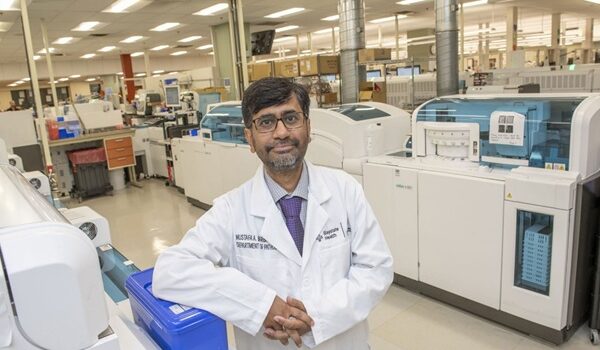
Hyderabad (Telangana) [India], July 1: Praveen Raju is opening Sagebrook International School in July 2026, his fourth and most ambitious school after nearly two decades of building some of India’s top-ranked academic institutions. The new IB PYP candidate school in Hyderabad’s Financial District, founded in partnership with Whitgift School in the United Kingdom, brings together everything he has learned across that journey.

Praveen’s path into education began in 2007 at Indus International School Hyderabad, where he served as Executive Director. He went on to become the Founding Chairman of Indus Early Years, the group’s early childhood arm. In 2011, he founded Suchitra Academy, the school that would put him on the national map. Today, all three institutions sit among India’s top ten in their respective categories.

“Every school I have built has started with the same question,” Praveen says. “What does this generation of Indian children actually need to thrive in the world they will inherit?”

At Suchitra Academy, the answer became one of India’s most distinctive school models. The K-12 institution serves over 2,200 students and has been ranked the number one multi-sport school in India by Education World. It is featured in Fortune Magazine’s Future 50 Schools, sits among Forbes’ Great Indian Schools and is certified as a Great Place to Work. Praveen also founded the Suchitra Badminton Academy in 2016, where he personally mentored Badminton World Champion PV Sindhu through her early competitive years and trained world-class athletes including Boxing World Champion Nikhat Zareen.

His contributions extend well beyond the schools he has built. The Economic Times honoured him as a Technology Trailblazer. Education World featured him among the 25 Leaders Reinventing K-12 Education. He served as Co-Chairman of FICCI ARISE through 2023 and is now President of ARISE, the country’s largest network of school leaders working to transform Indian school education. He was also a key contributor to India’s National Education Policy.

Sagebrook is the natural next chapter. The school brings together the IB Primary Years Programme framework, the academic legacy of Whitgift School in the United Kingdom and a research-led approach to early childhood development. Designed by internationally recognised school architect Prakash Nair, the campus is built around biophilic and neuro-inclusive principles. Praveen sees it as the most complete expression yet of his core conviction.

“Sagebrook is where knowledge meets kindness,” he says. “Where education becomes a lifelong journey of meaning.”

Sagebrook International School welcomes its first cohort from Beginnings through Grade 2 in July 2026. Admissions are open. Visit www.sagebrook.in.

Jamnagar, Gujarat, India – June 29, 2026: Cyberdome Consultancy Private Limited, which is a DPIIT recognised Indian Startup, recently launched CybAi™, an AI-powered cybersecurity assistant designed to help individuals identify and avoid online scams, phishing attacks, fake messages, malicious links, house arrest scams, investment scams, fraudulent images, suspicious documents, and other cyber threats—all through the familiarity and convenience of WhatsApp!

As cyber fraud continues to rise across India, millions of people receive suspicious messages every day through WhatsApp, SMS, email, social media platforms, and other digital channels. Many victims unknowingly share sensitive information or transfer money because they are unable to distinguish between genuine communication and sophisticated scams.

CybAi has been developed to make cybersecurity guidance simple, accessible, and available to everyone, regardless of their technical background.

Unlike traditional cybersecurity tools that require software installation or technical knowledge, users simply forward suspicious content to CybAi™ on WhatsApp and receive an AI-powered security assessment within moments. The assistant can analyse screenshots, images, voice messages, links, and other digital content to help users better understand potential cyber risks before taking action.

One of CybAi’s standout features is its ability to communicate in 10 Indian languages, making cybersecurity assistance accessible to users across the country. Whether someone is comfortable in Hindi, Bengali, Gujarati, Kannada, Malayalam, Marathi, Tamil, Telugu, and Urdu, or other officially recognized Indian languages, CybAi can provide guidance in their preferred language, helping bridge the cybersecurity awareness gap that often exists due to language barriers.

Recognizing that cybersecurity should not be limited to paying customers, Cyberdome Consultancy has introduced a generous Free Tier that allows every user to perform up to five AI-powered security analyses every day at no cost. This enables individuals and families to verify suspicious communications before responding, reducing the likelihood of becoming victims of online fraud.

“CybAi was created with a simple mission—to make trusted cybersecurity advice available to every Indian in a language they understand,” said the spokesperson for Cyberdome Consultancy Private Limited. “Cybercriminals do not discriminate based on age, profession, or location. By combining artificial intelligence with the simplicity of WhatsApp, we hope to empower millions of people to verify before they trust.”

CybAi has been designed to assist users in identifying a wide range of cyber threats, including:

  • Phishing and fake banking messages
  • UPI and payment fraud
  • Digital arrest scams
  • Job and investment scams
  • Fake customer care numbers
  • QR code fraud
  • Malicious links and websites
  • Fake government notices
  • AI-generated misinformation
  • Suspicious email attachments
  • Fraudulent social media messages
  • Identity theft attempts

In addition to analysing suspicious content, CybAi™ also educates users by explaining why a message appears risky using its proprietary “framework” and what precautions should be taken. This educational approach helps users build long-term cyber awareness instead of relying solely on automated decisions.

The platform leverages advanced artificial intelligence models trained to evaluate multiple forms of communication while continuously improving its ability to recognize emerging cybercrime patterns. As digital fraud techniques evolve, CybAi™ aims to remain an adaptive security companion for individuals, families, students, senior citizens, professionals, and small businesses. It has recorded 94% accuracy in identifying frauds when complete screenshots of suspicious SMS, WhatsApp, telegram, email, etc are shared by the users.

Cyberdome Consultancy believes that cybersecurity should be proactive rather than reactive. Instead of discovering fraud after financial loss has occurred, users can verify suspicious content before clicking links, sharing personal information, downloading files, or making payments.

They have also introduced premium SaaS products using same AI engine for email verification, deepfake media verification and voice analysis, further strengthening its mission of making cybersecurity accessible through artificial intelligence.

Users can begin using CybAi immediately by starting a conversation on WhatsApp and sending any suspicious message, screenshot, image, or link for analysis. Notably, this SaaS product is also actively used by Cyber Cell Police in Jamnagar, Gujarat. The company further plans to introduce this service nationwide with help of all cyber cell across different states in India.

WhatsApp: +91 87996 20696

Every registered user receives 5 free AI-powered security analyses every day, making CybAi one of the most accessible cybersecurity assistants available in India.

For more information, visit www.cybai.in / www.cyberdome.academy

About Cyberdome Consultancy Private Limited

Cyberdome Consultancy Private Limited is an Indian cybersecurity company focused on making digital safety accessible through artificial intelligence, cybersecurity awareness, and innovative technology solutions. The company develops AI-powered products and educational initiatives that help individuals and organizations recognize, understand, and defend against evolving cyber threats. Its flagship product, CybAi™, combines the power of artificial intelligence with the convenience of WhatsApp to deliver cybersecurity guidance that is simple, multilingual, and available whenever users need it.

Users need to wait for ~60s for a reply by CybAi

Jamnagar, Gujarat, India – June 29, 2026: Cyberdome Consultancy Private Limited, which is a DPIIT recognised Indian Startup, recently launched CybAi™, an AI-powered cybersecurity assistant designed to help individuals identify and avoid online scams, phishing attacks, fake messages, malicious links, house arrest scams, investment scams, fraudulent images, suspicious documents, and other cyber threats—all through the familiarity and convenience of WhatsApp!

As cyber fraud continues to rise across India, millions of people receive suspicious messages every day through WhatsApp, SMS, email, social media platforms, and other digital channels. Many victims unknowingly share sensitive information or transfer money because they are unable to distinguish between genuine communication and sophisticated scams.

CybAi has been developed to make cybersecurity guidance simple, accessible, and available to everyone, regardless of their technical background.

Unlike traditional cybersecurity tools that require software installation or technical knowledge, users simply forward suspicious content to CybAi™ on WhatsApp and receive an AI-powered security assessment within moments. The assistant can analyse screenshots, images, voice messages, links, and other digital content to help users better understand potential cyber risks before taking action.

One of CybAi’s standout features is its ability to communicate in 10 Indian languages, making cybersecurity assistance accessible to users across the country. Whether someone is comfortable in Hindi, Bengali, Gujarati, Kannada, Malayalam, Marathi, Tamil, Telugu, and Urdu, or other officially recognized Indian languages, CybAi can provide guidance in their preferred language, helping bridge the cybersecurity awareness gap that often exists due to language barriers.

Recognizing that cybersecurity should not be limited to paying customers, Cyberdome Consultancy has introduced a generous Free Tier that allows every user to perform up to five AI-powered security analyses every day at no cost. This enables individuals and families to verify suspicious communications before responding, reducing the likelihood of becoming victims of online fraud.

“CybAi was created with a simple mission—to make trusted cybersecurity advice available to every Indian in a language they understand,” said the spokesperson for Cyberdome Consultancy Private Limited. “Cybercriminals do not discriminate based on age, profession, or location. By combining artificial intelligence with the simplicity of WhatsApp, we hope to empower millions of people to verify before they trust.”

CybAi has been designed to assist users in identifying a wide range of cyber threats, including:

  • Phishing and fake banking messages
  • UPI and payment fraud
  • Digital arrest scams
  • Job and investment scams
  • Fake customer care numbers
  • QR code fraud
  • Malicious links and websites
  • Fake government notices
  • AI-generated misinformation
  • Suspicious email attachments
  • Fraudulent social media messages
  • Identity theft attempts

In addition to analysing suspicious content, CybAi™ also educates users by explaining why a message appears risky using its proprietary “framework” and what precautions should be taken. This educational approach helps users build long-term cyber awareness instead of relying solely on automated decisions.

The platform leverages advanced artificial intelligence models trained to evaluate multiple forms of communication while continuously improving its ability to recognize emerging cybercrime patterns. As digital fraud techniques evolve, CybAi™ aims to remain an adaptive security companion for individuals, families, students, senior citizens, professionals, and small businesses. It has recorded 94% accuracy in identifying frauds when complete screenshots of suspicious SMS, WhatsApp, telegram, email, etc are shared by the users.

Cyberdome Consultancy believes that cybersecurity should be proactive rather than reactive. Instead of discovering fraud after financial loss has occurred, users can verify suspicious content before clicking links, sharing personal information, downloading files, or making payments.

They have also introduced premium SaaS products using same AI engine for email verification, deepfake media verification and voice analysis, further strengthening its mission of making cybersecurity accessible through artificial intelligence.

Users can begin using CybAi immediately by starting a conversation on WhatsApp and sending any suspicious message, screenshot, image, or link for analysis. Notably, this SaaS product is also actively used by Cyber Cell Police in Jamnagar, Gujarat. The company further plans to introduce this service nationwide with help of all cyber cell across different states in India.

WhatsApp: +91 87996 20696

Every registered user receives 5 free AI-powered security analyses every day, making CybAi one of the most accessible cybersecurity assistants available in India.

For more information, visit www.cybai.in / www.cyberdome.academy

About Cyberdome Consultancy Private Limited

Cyberdome Consultancy Private Limited is an Indian cybersecurity company focused on making digital safety accessible through artificial intelligence, cybersecurity awareness, and innovative technology solutions. The company develops AI-powered products and educational initiatives that help individuals and organizations recognize, understand, and defend against evolving cyber threats. Its flagship product, CybAi™, combines the power of artificial intelligence with the convenience of WhatsApp to deliver cybersecurity guidance that is simple, multilingual, and available whenever users need it.

Users need to wait for ~60s for a reply by CybAi

Pune (Maharashtra) [India], June 30: Actor, singer, and live performer Kaleem Pasha captivated a packed audience at Symbiosis Ishanya Auditorium, Pune, with a breathtaking musical tribute to the legendary ghazal maestro Pankaj Udhas.

The evening was a heartfelt celebration of timeless melodies, where Kaleem Pasha’s rich, velvety voice beautifully recreated the emotion, elegance, and soul that made Pankaj Udhas one of India’s most cherished musical legends. Blending soulful renditions, heartfelt shayari, humour, and engaging storytelling, he created an unforgettable experience that resonated deeply with music lovers across generations.

The audience responded with standing ovations, thunderous applause, and repeated requests for encores, making the concert one of Pune’s most memorable musical evenings.

During the event, Kaleem Pasha was conferred with the prestigious “Maharashtra Gaurav Samman Award” in recognition of his outstanding contribution to music, performing arts, and his dedication to preserving India’s timeless musical heritage.

Speaking after receiving the honour, Kaleem Pasha said:

“Receiving the Maharashtra Gaurav Samman Award in the land of Maharashtra while paying tribute to the legendary Pankaj Udhas Ji is one of the greatest honours of my life. This recognition belongs to my family, my mentors, my musicians, my team, and every member of the audience whose love and blessings made this evening truly unforgettable. I dedicate this award to the timeless legacy of Pankaj Udhas Ji, whose music continues to inspire millions.”

Kaleem Pasha has established himself as a versatile actor, singer, and live performer whose ability to connect with audiences transcends languages, cultures, and generations. His passion for music, combined with his powerful stage presence, continues to earn him admiration wherever he performs.

The Pune concert was not merely a tribute–it was a celebration of memories, emotions, and the enduring legacy of Indian ghazals. Through this remarkable performance, Kaleem Pasha once again reaffirmed his place among the country’s most passionate and accomplished live performers.

“Some voices sing songs. Rare voices awaken memories. Kaleem Pasha’s performance did exactly that.”

New Delhi [India], June 30: The 5th NAREDCO Mahi Real Estate Convention 2026 was held at Yashobhoomi, New Delhi, on June 20, in association with Bharat Buildcon 2026, bringing together women leaders, developers, entrepreneurs, policymakers and industry stakeholders to celebrate five years of NAREDCO Mahi’s journey in advancing women’s participation and leadership in the real estate sector. Held under the theme, “Breaking the Perception Ceiling: Women Shaping the Nation for Viksit Bharat 2047”, the convention highlighted the critical role of women in driving economic growth, sustainable development and nation-building.

The convention commenced with a ceremonial lamp-lighting ceremony graced by Shri Mansukh Mandaviya, Hon’ble Minister of Labour & Employment, Govt of India; Hon’ble Shri Rana Suryawanshi, Founder of Rana Shipping Company and a distinguished businessman, philanthropist, and social activist known for his contributions across shipping, healthcare, wellness, and education; Her Excellency Ms Jacquline Mukanagira, High Commissioner of Rwanda to India; Dr. Hina Shafi Bhat, Former Chairperson, Khadi Village Industries Board (J&K), Govt. of India; Smt. Smita Patil, President, NAREDCO Mahi; Shri Parveen Jain, President, NAREDCO; Shri Rajan Bandelkar, Former Vice Chairman, NAREDCO; Dr. Ananta Raghuvanshi, Chairperson, NAREDCO Mahi, and Smt. Chitra S. Jain, President-Elect, NAREDCO Mahi; along with other eminent dignitaries.

The ceremony symbolized the collective commitment of industry leaders towards fostering greater inclusion, empowering women leaders, and creating meaningful opportunities for women in the real estate sector, while advancing the vision of a more equitable and progressive industry.

Addressing the gathering, Shri Mansukh Mandaviya, Hon’ble Minister of Labour & Employment, Govt of India, said that “women are not merely stakeholders in India’s growth story but architects of the nation’s future. He stated that the vision of Viksit Bharat 2047 cannot be achieved without the full participation, leadership and economic contribution of women across sectors, including real estate. Women are not just stakeholders in India’s growth story; they are the architects of it.”

The convention also witnessed the presence of former Union Minister Smt. Smriti Irani, who addressed the gathering and spoke about the importance of women empowerment and the need for greater participation of women in leadership, entrepreneurship and decision-making roles. Her address encouraged delegates to continue breaking barriers and creating pathways for future generations of women professionals and entrepreneurs.

Welcoming the delegates, Smt. Smita Patil, President, NAREDCO Mahi, reflected on the organisation’s five-year journey from an initiative to a nationwide movement of women leaders in real estate. She highlighted NAREDCO Mahi’s focus on skill development, mentorship, sustainability, entrepreneurship and social impact, emphasizing that empowering women through confidence and leadership creates lasting transformation.”

A key highlight of the convention was the fireside chat, “Power of Possibilities: Breaking Barriers, Building Viksit Bharat 2047”, featuring former Union Minister Smt. Smriti Irani and Smt. Smita Patil, President, NAREDCO Mahi. The discussion focused on the transformative role of women in leadership, business and social development, while emphasising the need to create greater opportunities for women to contribute meaningfully to India’s growth story and nation-building efforts.

In another fireside chat titled “Empowerment or Expectation? Rethinking Gender Equality in Modern Society,” celebrated wrestler Smt. Geeta Phogat said that women must recognize their inherent strengths, break free from self-imposed limitations, and seize every opportunity with confidence. Sharing her personal journey of overcoming societal barriers, she said that determination, discipline, and self-belief are the key drivers of success. Underscoring the importance of gender equality and inclusive growth, Captain Shivani Kalra, Pilot, Etihad Airways who became the poster girl after successful completion of Operation Ganga, said that women must actively support and uplift one another to create a stronger ecosystem of leadership and opportunity. She stressed that societal perceptions need to evolve, adding that women are capable of excelling in every profession and leadership role when provided equal opportunities and encouragement.

The convention hosted a thought-provoking panel on “Global Pathways to Sustainable Social Development and Self-Sufficient Cities,” focusing on fostering international collaborations and building future-ready urban ecosystems. The discussion featured Shri Durga Shanker Mishra, IAS (Retd.), Former Secretary, Ministry of Housing and Urban Affairs; Shri Nitin Khade, IAS, Joint Secretary, Department of Land Resources, Ministry of Rural Development; and Dr. Ananta S. Raghuvanshi, Chairperson, NAREDCO Mahi, with Mr. A. Shankar, India Head – Government Advisory & Infrastructure Solutions, JLL India, moderating the discussion. The panel deliberated on sustainable urbanisation, resilient infrastructure, international partnerships and inclusive growth as key drivers of future-ready cities. Addressing the gathering, Shri Nitin Khade called for exploring alternative development models that strengthen rural economies while supporting sustainable urbanisation.

A panel discussion on “Skilling and Sustainability: Building a Future-Ready Workforce for Real Estate” focused on empowering talent with future-focused skills and sustainable practices to transform the real estate sector. Another panel discussion on “Her Legacy, His Foundation: Redefining Leadership in Family Real Estate” explored the evolving dynamics of leadership, succession and innovation in family-run businesses, highlighting the synergy between tradition and modern business practices in shaping enduring real estate legacies.

The convention also marked the launch of the skilling initiative, “SkillHER by NAREDCO Mahi,” aimed at empowering women through capacity building and professional development. The initiative was launched by Smt. Smriti Irani, Former Union Minister; Smt. Geeta Phogat, Professional Wrestler; Her Excellency Ms. Jacquline Mukanagira, High Commissioner of Rwanda to India; Dr. Hina Shafi Bhat, Former Chairperson, Khadi Village Industries Board (J&K), Government of India; and Smt. Shilpa Sukumar, Vice President (South), NAREDCO Mahi. The convention also celebrated the spirit of women leadership by honouring the “Mahi Sheroes” for their exemplary contributions across diverse fields, with the awards presented by Smt. Smriti Irani, recognizing women whose achievements and leadership continue to inspire and drive positive change.

The convention was organised with the support of the Ministry of Housing and Urban Affairs, Government of India. Adani Cement was the Presenting Sponsor, Rana Shipping Company the Title Sponsor, and TECHNOCRAFT the Powered by Sponsor. Signature Global and NBCC were the Gold and Silver Sponsors, respectively, while Saint-Gobain was the Lunch & High Tea Sponsor. ARQONZ.COM, Craft Group, Infracorp, MNB, PROPCHK, SPJ, and Square Yards joined as Supporting Partners, with BRICS as the Association Partner, JLL as the Knowledge Partner, and Magicbricks as the Communication Partner.

The convention concluded with a renewed commitment to advancing women’s leadership and fostering greater participation of women in decision-making across industries. Reinforcing the vision of an inclusive and sustainable India, the event underscored NAREDCO Mahi’s unwavering dedication to empowering women, nurturing future leaders, and creating meaningful opportunities that will contribute to the realization of Viksit Bharat 2047.

From overcoming childhood adversity to leading a grassroots movement, Dr. Nirmal Singh is helping farmers, empowering women, inspiring rural youth and promoting climate-smart agriculture.

Success is often measured by wealth, titles or professional achievements. Dr. Nirmal Singh believes it should instead be measured by the number of lives improved. As the Founder of Anmol Sewa Foundation, he has dedicated his journey to creating sustainable opportunities for rural communities through agriculture, education and social development.

Early Life and Foundations of Leadership

Growing up in a village after losing his father at an early age, Dr. Singh experienced the realities of rural hardship firsthand. Daily responsibilities such as farming, caring for livestock and walking long distances for education shaped his character and strengthened his resolve. Rather than allowing those challenges to define his future, he transformed them into the foundation of his leadership.

Education became a powerful tool for change. While remaining deeply connected to his farming roots, Dr. Singh pursued higher studies and developed expertise in education, communication and rural development. Instead of leaving village life behind, he chose to bring his knowledge back to the communities that had shaped him.

Strategic Collaborations for Climate-Smart Agriculture

Since 2005, Dr. Nirmal Singh has maintained a close professional association with Dr. M. L. Jat and has worked in collaboration with the Indian Council of Agricultural Research (ICAR), CIMMYT (International Maize and Wheat Improvement Center) and the International Rice Research Institute (IRRI). These long-standing collaborations have strengthened the promotion of climate-smart agriculture, water conservation, crop residue management and advanced farm mechanisation at the grassroots level.

For over two decades, Dr. Singh has promoted environmentally responsible farming. His commitment to avoiding stubble burning, conserving water and adopting modern agricultural technologies demonstrates that productivity and environmental protection can go hand in hand. His work with national and international agricultural institutions has helped introduce innovative farming practices that benefit both farmers and the environment.

Core Pillars of Impact

Today, Anmol Sewa Foundation combines practical field experience with long-term community engagement to create measurable and lasting impact across several key domains:

  • Sustainable Agriculture: Promoting modern farm mechanisation, water conservation, and crop residue management to stop stubble burning.
  • Women Empowerment: Encouraging financial independence through Self-Help Groups (SHGs) and livelihood training.
  • Youth Development: Motivating rural youth to pursue productive livelihoods and steer away from substance
  • Disaster Response: Actively engaging in emergencies from flood relief and rescue operations to rebuilding damaged homes and restoring community dignity.

Amplifying the Grassroots Movement

The Foundation was co-founded with renowned Punjabi singer Resham Singh Anmol, who also serves as its Brand Ambassador. His strong public connect and commitment to social causes help amplify awareness around sustainable agriculture, rural development, youth empowerment and community welfare, enabling the Foundation to reach wider audiences across India and the global Punjabi diaspora.

Unlike many development initiatives that remain limited to planning, the Foundation focuses entirely on implementation at the grassroots level, turning strategic frameworks into real-world change.

A Credible CSR Implementation Partner

As India places increasing emphasis on sustainable development and responsible corporate citizenship, Anmol Sewa Foundation has emerged as a highly credible implementation partner for Corporate Social Responsibility (CSR) initiatives. The Trust holds valid 12A, 80G, and CSR1 registrations, backed by robust audited financials. Its programmes align closely with Schedule VII priorities, offering companies transparent, community-driven projects in agriculture, livelihoods, environmental sustainability, women empowerment and rural development.

Anmol Sewa Foundation is a Registered Trust (Est. 21/10/2022).

Founder: Dr. Nirmal Singh (MA, M.Ed, M.Phil, PhD).

Co-founder & Brand Ambassador: Renowned Punjabi Singer, Mr. Resham Singh Anmol.

New Delhi [India], June 29: Built without venture capital, powered by indigenous engineering and validated through two successful rocket launches, Chennai-based Space Zone India is emerging as one of India’s most promising private aerospace companies.

While much of India’s startup ecosystem has been driven by venture capital and rapid scaling, Space Zone India (SZI) has followed a distinctly different path–one centred on engineering excellence, sustained research and technological validation before seeking external investment.

Founded in 2018 by aerospace technologist Anand Megalingam, the company has remained entirely bootstrapped, reinvesting revenue generated through engineering services, technology programmes and space education initiatives into research and development. Over the past seven years, this disciplined approach has enabled the company to develop indigenous hybrid rocket technologies, establish advanced research infrastructure and build a strong portfolio of intellectual property–all without diluting equity or relying on institutional funding.

Today, Space Zone India stands at a pivotal stage in its journey. Having successfully demonstrated its capabilities through two hybrid rocket missions and built an integrated aerospace research ecosystem, the company has entered formal discussions with investors to accelerate manufacturing, expand commercial launch capabilities and scale its next generation of indigenous space technologies.

International Recognition

The company’s recent momentum follows an important international milestone.

Founder and Chief Executive Officer Anand Megalingam was selected by the Department of State, United States for the prestigious International Visitor Leadership Program (IVLP), one of the U.S. Government’s flagship professional exchange programmes.

During the month-long programme, with all expenses borne by the U.S. Government, Megalingam interacted with scientists, researchers and senior officials from NASA, the U.S. Space Force, the U.S. Navy, the U.S. Air Force, national laboratories and leading aerospace organisations. The programme provided first-hand exposure to advanced propulsion systems, commercial launch infrastructure, aerospace innovation ecosystems and emerging defence technologies.

Following the visit, he returned to India to continue expanding the company’s indigenous technology programmes while preparing for its next phase of commercial operations and for our nation.

Building Technology Before Raising Capital

What distinguishes Space Zone India is its philosophy of proving technology before pursuing investment.

Rather than raising capital during its formative years, the company concentrated on building engineering capability, validating hardware and developing indigenous intellectual property. Every profitable project funded the next phase of research, enabling the organisation to establish laboratories, recruit specialised engineers and develop advanced testing infrastructure.

Today, the organisation employs more than 30 engineers and researchers working across propulsion systems, avionics, embedded electronics, structural engineering, satellite technology, software development, systems integration and launch operations.

According to Anand Megalingam, the strategy has always been simple:

“From day one, every rupee we spent went into building and proving the technology–not into fundraising. We wanted to own the proof before inviting investors into the conversation.”

Why Hybrid Propulsion?

At the heart of the company’s technology is its indigenous hybrid propulsion system, which combines operational simplicity with lower lifecycle costs.

Unlike liquid propulsion systems that require expensive turbomachinery and complex cryogenic infrastructure, hybrid propulsion eliminates many of those cost drivers. Compared with solid propulsion, it offers improved operational flexibility without many of the regulatory constraints associated with pyrotechnic systems.

“Our oxidiser is semi-cryogenic, which significantly simplifies ground operations,” explains Anand Megalingam.

“More importantly, the vehicle is designed for recovery, refurbishment and reuse. After the first flight, subsequent missions require refurbishment rather than building an entirely new rocket.”

This approach has the potential to improve mission economics by reducing recurring launch costs while increasing operational efficiency.

Research Infrastructure

A visit to the company’s facility reveals an engineering ecosystem rarely seen in a young private aerospace organisation.

The campus houses dedicated laboratories for hybrid propulsion, avionics, embedded electronics, satellite integration, guidance and navigation systems, software development and systems engineering.

Alongside these laboratories are assembly facilities where propulsion hardware, structural components and flight systems are integrated.

One of the facility’s most notable assets is its indigenous hybrid rocket static fire testing facility, where propulsion systems undergo extensive qualification before flight.

Engineers conduct combustion analysis, injector optimisation, thrust characterisation and propulsion validation through repeated static-fire campaigns before integrating motors into flight vehicles.

Industry experts note that developing such testing infrastructure independently represents a significant achievement for a privately funded aerospace company.

Learning Through Engineering

The journey, however, was far from straightforward. Early development presented numerous technical challenges, including combustion pressure anomalies, injector redesigns, recovery-system optimisation and avionics refinement.

Rather than viewing setbacks as failures, the engineering team treated them as essential components of the development process.

“We redesigned injector heads multiple times, refined combustion performance and extensively tested recovery systems before committing to flight,” says Anand Megalingam.

“Every anomaly was identified during ground testing, documented and resolved before flight.”

The result was a disciplined engineering programme that evolved steadily from laboratory research to successful launch demonstrations.

Two Successful Rocket Missions

Years of engineering culminated in two successful hybrid rocket launches from the Chennai coast.

The company’s first milestone came with the AKSLV (Dr. APJ Abdul Kalam Satellite Launch Vehicle), recognised as India’s first privately developed hybrid rocket.

This was followed by RHUMI-1, India’s first reusable hybrid rocket launched from a mobile hydraulic platform.

The mission successfully demonstrated indigenous hybrid propulsion, reusable recovery technology, mobile launch capability and atmospheric research payload deployment. Together, the two missions validated years of propulsion research and established the technological foundation for future launch vehicles.

Guided by India’s Scientific Leaders

The organisation receives guidance from several distinguished scientists and strategic advisors, including Padma Shri Dr. Mylswamy Annadurai, former DRDO Chairman Dr. G. Satheesh Reddy, former Police DGP. Shri A.S.Rajan IPS and senior engineering experts and experienced public-sector administrators.

According to company officials, this advisory network has played an important role in strengthening both technological development and organisational governance.

Your hybrid rocket technology is vertically launched, similar in some respects to missile systems. Does this technology have potential applications in the defence sector?

Responding to the question, Dr. Anand Megalingam said:

Our current focus is on advancing and maturing our hybrid propulsion technology for space applications. As we continue to improve the propulsion system, its performance and reliability, we will gain a clearer understanding of the broader applications that the technology may support in the future.

It would be premature to rule out future opportunities. Propulsion technology is a foundational capability with applications across multiple sectors. As our technology evolves, we will evaluate suitable opportunities based on technical feasibility, regulatory requirements and national priorities.

At present, we are progressing along two strategic verticals–space technology and advanced engineering. We will continue strengthening both areas and pursue future applications where our indigenous technology can create meaningful value.

Entering a Trillion-Dollar Opportunity

The global space economy is projected to exceed US$1.8 trillion by 2035, driven by growing demand for satellite launches, reusable launch systems, Earth observation and national security applications. India’s commercial space sector, currently valued at approximately US$8.4 billion, is expected to expand rapidly as private participation continues to increase.

Space Zone India is focused on developing indigenous launch systems capable of supporting missions of up to 700 kilometres, addressing opportunities in small satellite launches, atmospheric research and commercial space services.

Building on the global exposure gained through the U.S. Department of State’s International Visitor Leadership Program (IVLP), Founder and CEO Anand Megalingam aims to implement international best practices in propulsion, launch systems and advanced engineering. In addition to the commercial space market, the company sees long-term opportunities in strategic aerospace and defence technologies, subject to regulatory approvals and national priorities.

Investment Phase

Having completed its research phase and demonstrated flight-proven technology, the company has now entered formal investment discussions.

Unlike many early-stage aerospace ventures, the proposed funding is intended to scale an already validated platform rather than finance basic technology development.

“We now have two successful flight demonstrations, indigenous intellectual property and an engineering team that has spent seven years building this platform,” says Anand Megalingam.

The R&D phase is complete. Investment now enables final testing and manufacturing expansion, increased launch cadence, development of Game Changing Propulsion Technology towards orbital capability and growth into advanced defence technologies. Investors entering today are not funding a hypothesis–they are funding expansion.

A Different Startup Story

As a interviewer, what stands out about Space Zone India is not simply that it has launched rockets.

It is the manner in which the company has reached this stage.

In an ecosystem where startup success is often measured by funding rounds and valuations, this Chennai-based organisation has spent years quietly building laboratories, testing facilities, propulsion systems and launch vehicles before seeking institutional capital.

Space Zone India now aims to become one of India’s leading commercial launch providers in the coming years. Yet its journey–from a bootstrapped engineering venture to a company preparing to participate in one of the world’s fastest-growing technology sectors–illustrates how indigenous innovation, disciplined engineering and long-term technological commitment can create a foundation for global competitiveness.

New Delhi [India], June 26: India’s 7.4 crore-plus MSMEs registered on the Udyam and Udyam Assist platforms form the backbone of the economy, generating employment for over 32 crore people and contributing around 31% of GDP, 35.4% of manufacturing output and nearly half of the country’s exports. For these businesses — manufacturers, traders, retailers, service firms and millions of micro-entrepreneurs — procurement of raw materials, inventory, packaging, IT and office supplies remains one of the largest operating expenses and a critical daily activity.

– Key drivers for rising adoption of digital procurement are wide selection of products, ease of comparison across suppliers, centralised spend visibility and GST compliant invoicing

– 8 in 10 Indian MSMEs surveyed expect increased use of B2B digital marketplaces in the next 2 years

– Over 16,000 MSMEs across 137 districts of India share detailed insights on how they procure and are adopting digital procurement

For decades, MSME procurement has been overwhelmingly offline and relationship driven, carrying persistent friction — limited price discovery, missing or non-GST-compliant invoices and long cycles. With challenges like managing multiple suppliers, non-compliant invoices, payment/credit constraints and price volatility, it has been a difficult journey for the majority. That is changing fast. The Indian B2B e-commerce opportunity is widely regarded as one of the country’s largest digital commerce segments, estimated at around USD 200 billion by 2030. Public digital rails have made the shift viable down to the smallest business: GST collections touched a record INR2.43 lakh crore in April 2026, the Government e-Marketplace (GeM) has crossed INR18.4 lakh crore in cumulative procurement, ONDC clocked around 218 million transactions in FY26, and Union Budget 2026-27 backs the sector with a dedicated INR10,000 crore SME Growth Fund.

The World MSME Day, observed every year on June 27th is a day that was designated by the United Nations General Assembly in 2017 to raise awareness of the contribution that micro, small and medium enterprises make to sustainable, inclusive economic growth, decent work and the UN Sustainable Development Goals. It is in this context that LocalCircles conducted this national study, with responses from over 16,000 MSMEs across 137 districts. The findings show the MSME procurement landscape, the challenges associated and how an increasing number of MSMEs are taking to digital procurement.

7 in 10 MSME businesses surveyed have 10 or less employees

The survey first asked MSME respondents, “What is the size of your business?” Of the 4,540 respondents, 34% said they are a “one-person business”; 35% reported “2-10 employees”; 18% “11-50 employees”; 7% “51-200 employees”; and 6% “200+ employees”. To sum up, 7 in 10 MSMEs surveyed have 10 or fewer employees, confirming that the bulk of India’s MSME base is made up of micro businesses with very lean teams — precisely the segment for which friction-free, low-minimum digital procurement is most consequential.

6 in 10 MSME businesses in the survey were represented by Founders/Co-Founders/Owners

To gauge how close respondents are to procurement decisions, the survey asked, “What is your role in the business?” Of the 4,620 respondents, 46% identified as “Owner/Founder”; 13% as “Partner/Co-founder”; 21% as “Procurement/Purchase Manager”; 7% as “Office/Operations Manager”; and 13% selected “Other”. To sum up, 6 in 10 MSMEs in the survey were represented by Founders, Co-Founders or Owners, which means the views captured here largely reflect the people who actually sign off on procurement spend, not intermediaries.

Manufacturing, Business Services, Retail & Trading/Wholesale constitute 70% of MSMEs in India

The survey next asked, “Which sector does your business operate in?” Of the 4,619 respondents, 28% were in “Business Services (technology, financial, creative services etc.)”; 21% in “Manufacturing”; 21% in “Retail & Trading/Wholesale”; 8% each in “Hospitality & Restaurants”, “Education” and “Automotive”; 7% in “Healthcare”; and the balance in “Real Estate & Construction” and “Others”. To sum up, Business Services, Manufacturing and Retail & Trading/Wholesale together constitute roughly 70% of MSMEs in India, in line with the Udyam-registered base. Given their combined weight, this release presents dedicated sector cuts for Business Services and Manufacturing.

7 in 10 MSMEs regularly procure IT equipment, office stationery & supplies, packaging materials for their business

Moving to procurement itself, the survey asked, “In what all categories do you primarily procure for your business?” Some of the 4,465 respondents chose more than one option. 49% indicated “Electronics/IT equipment”; 40% “Office supplies”; 40% “Packaging materials”; 30% each “Industrial supplies”, “Housekeeping supplies” and “Others”; and 9% each “Pantry items” and “Office furniture & decor”. In addition, if we look at sectoral data, we find that the Manufacturing MSMEs buy more tools and industrial supplies while the MSMEs operating in Business Services sector buy more housekeeping supplies. To sum up, 7 in 10 MSMEs regularly procure IT equipment, office stationery and supplies, packaging, pantry and housekeeping items.

Over 3 in 10 MSMEs surveyed are spending over INR 2 lakhs in monthly procurement; 1 in 10 of them spend over INR 10 lakhs monthly

On ticket size, the survey asked, “What is your average monthly procurement spend in the above categories?” Of the 4,605 respondents, 44% reported spending “< INR 50,000” a month; 15% “INR 50,000 – 2 lakh”; 24% “INR 2 lakh – 10 lakh”; 9% “INR 10 lakh+”; and 8% could not say. To sum up, over 3 in 10 MSMEs are spending over INR 2 lakhs a month on procurement and roughly 1 in 10 over INR 10 lakhs — a meaningful spend pool whose routing, offline or digital, becomes the next critical theme of the study.

Managing multiple suppliers, non-compliant invoices, payment/credit constraints and price volatility are challenges over 5 in 10 MSMEs regularly face

The survey next asked, “What are all the challenges your business faces in procurement today?” Some of the 4,877 respondents chose more than one option. 67% indicated “Managing multiple suppliers”; 56% each “Non-compliant invoices”, “Price volatility” and “Payment/credit constraints”; 44% each “Limited product availability” and “Difficulty in comparing options”; 33% each “Poor spend visibility”, “Poor quality of goods” and “Delayed delivery”; and only 11% reported “No major challenges”. To sum up, over 5 in 10 MSMEs regularly face these frictions — precisely the kind that digital procurement marketplaces are now built to reduce — and only about 1 in 10 report no major challenges at all, confirming that procurement friction is near-universal.

7 in 10 MSMEs surveyed who use B2B digital marketplaces say their reliance on them has increased in the last 2 years

The survey then probed whether their reliance on digital procurement marketplaces has increased in recent years, asking, “Over the past 2 years, how has your reliance on B2B digital marketplaces changed?” Of the 4,822 respondents, 10% said their reliance “Increased by 300% or more”; 20% “Increased by 200-300%”; 30% “Increased by 100-200%”; 10% “Increased by 50-100%”; 20% “Decreased”; and 10% could not say. To sum up, 7 in 10 MSMEs who use digital procurement marketplaces say their reliance has materially increased over the last 2 years, with a meaningful 1 in 10 saying their usage has more than tripled.

8 in 10 MSMEs who use B2B digital marketplaces say they use them for wide selection of products and ease of comparison across suppliers; GST compliant invoicing and centralised spend visibility also key reasons for usage

Asked, “What are the key reasons for your business choosing B2B digital marketplaces?”, some of the 5,117 respondents chose more than one option. 88% indicated “Wider selection of products”; 76% each “Better pricing/discounts”, “Convenience (ease of ordering/delivery)” and “Ease of supplier comparison”; 62% “GST-compliant invoicing”; 50% “Faster delivery”; 38% “Spend reports/dashboards”; and 12% “Other reasons”. To sum up, 8 in 10 MSMEs cite wider selection of products, ease of comparison, better discounts and convenience of ordering/delivery for using B2B digital marketplaces; Sizeable number of MSMEs also cite GST compliant invoicing and centralised spend visibility as some of the key reasons for their usage.

8 in 10 MSMEs using B2B digital marketplace channels close their procurement cycle within a week, against only 6 in 10 MSMEs using traditional channels

To quantify the speed gap, the survey first asked about traditional channels: “On average, how long does your procurement cycle take when using traditional procurement channels?” Of the 5,365 respondents, 20% reported “<1 day”; 20% “1-3 days”; 21% “3-7 days”; 9% “1-2 weeks”; and 30% “Over 2 weeks”. To sum up, 6 in 10 MSMEs complete their traditional procurement cycle within a week, while for 4 in 10 it takes over a week — and for 3 in 10 it stretches beyond two weeks, a long lead time that directly affects working capital, inventory holding and the ability to respond to customer demand. The mirror question was put to MSMEs using digital marketplaces: “On average, how long does your procurement cycle take when using digital marketplaces?” Of the 5,243 respondents, 28% reported “<1 day”; 19% “1-3 days”; 36% “3-7 days”; 9% “1-2 weeks”; and 8% could not say — notably, no respondent reported a digital cycle of over 2 weeks. To sum up, 8 in 10 MSMEs using digital marketplace channels close their procurement cycle within a week, against only 6 in 10 using traditional procurement channels, indicating that digital adoption compresses procurement cycles.

All MSMEs surveyed that use a B2B digital marketplace say GST-compliant invoices are most critical; over 7 in 10 say downloadable invoice history is also critical

The survey next asked MSMEs using B2B digital marketplaces, “What all invoicing features in a B2B digital marketplace are critical for your business?”, some of the 5,363 respondents chose more than one option. 100% indicated “GST-compliant invoices”; 74% “Downloadable invoice history”; 55% “Integration with accounting tools”; 45% “Credit notes”; 34% “Bulk invoicing”; and 11% “Other features”. To sum up, all MSMEs using a B2B digital marketplace say GST-compliant invoices are most critical for their business, and over 7 in 10 say downloadable invoice history is critical too — a clear signal that compliance and audit-readiness are now central to marketplace choice. 7 in 10 MSMEs in a related question which received 4,478 responses also said that the availability of GST compliant invoicing influences their choice of the marketplace.

8 in 10 MSMEs surveyed expect increased use of B2B digital marketplaces over the next 1-2 years; 6 in 10 expect increased usage of AI tools/agents

Finally, the survey looked ahead, asking, “What all changes do you expect in your business procurement over the next 1-2 years?” Some of the 4,379 respondents chose more than one option. 81% indicated “Increased use of digital marketplaces”; 61% each “AI tools/agents” and “Increased automation/integration with software”; 50% “More supplier diversification”; 31% “Greater use of credit/pay-later options”; and 21% “No major changes expected”. To sum up, 8 in 10 MSMEs expect increased use of digital procurement marketplaces over the next 1-2 years, with AI tools and deeper automation/software integration emerging as the next clear vectors of change.

MSME ratings of B2B digital marketplaces

Beyond how MSMEs use B2B digital marketplaces, LocalCircles conducted a separate rating exercise to capture how satisfied they actually are with the marketplaces they use. Eight of the most-used marketplaces — OfBusiness, IndiaMART, Amazon Business, Flipkart Wholesale, Udaan, Moglix, Zoffco and Industrybuying.com — were rated by MSMEs on a 1-5 scale across eight service categories: Selection, Convenience, Ease of Business Compliance, Features & Additional Services, Customer Service, Ease of Usage, Value and Delivery Speed, where a higher rating indicates higher satisfaction. An average score was then computed across all eight categories for each marketplace.

On overall average, Amazon Business emerged as the top-rated B2B digital marketplace for MSMEs with 4.38 out of 5, followed by OfBusiness (3.63), Flipkart Wholesale (3.50), Udaan (3.38), Zoffco (3.19), Moglix (3.06), IndiaMART (2.94) and Industrybuying.com (2.88). Amazon Business led on Selection (a perfect 5.0), Convenience, Ease of Business Compliance, Ease of Usage and Delivery Speed, while OfBusiness led on Value.

Across every marketplace, Customer Service and Delivery Speed were the lowest-rated categories. Customer Service comprises of ability of customers to register a grievance, receive acknowledgement, get timely resolution of return and refund requests, get supplier information in case of dispute and have the ability to speak to someone if necessary. Delivery Times comprises of ability to deliver products fast, an area that is seeing transformation with the arrival of Quick Commerce. Improvement in both these areas by B2B digital marketplaces will drive up retention, adoption and volume growth over the next 1-2 years.

Summary

The study reveals that digital procurement is increasingly moving from the margins to the mainstream of how Indian MSMEs buy. With 7 in 10 MSMEs surveyed having 10 or fewer employees and 6 in 10 represented by their Founders, Co-Founders or Owners, the findings reflect the real, on-the-ground views of small-business decision-makers across business services, manufacturing and retail/trading — sectors that together make up roughly 70% of India’s MSME base. These businesses procure meaningful volumes: 7 in 10 regularly buy IT equipment, office supplies, packaging, pantry and housekeeping items with different sectors having some categories where they buy more like Manufacturing MSMEs in the tools and industrial supplies category. Over 3 in 10 MSMEs now spend over INR 2 lakhs a month, with roughly 1 in 10 spending over INR 10 lakhs monthly. This is no longer pin-money procurement; it is a serious cost line that deserves serious tooling. However, frictions remain — over 5 in 10 MSMEs still wrestle with managing multiple suppliers, non-compliant invoices, price volatility and payment/credit constraints.

7 in 10 MSMEs say their reliance on digital procurement has increased over the last 2 years — and the drivers are converging: 8 in 10 cite wider selection of products, ease of comparison across suppliers, better discounts and convenience of ordering/delivery for using B2B digital marketplaces; Sizeable number of MSMEs also cite GST compliant invoicing and centralised spend visibility as some of the key reasons for their usage.

The contrast in cycle times is equally telling: 8 in 10 MSMEs using digital channels close their procurement cycle within a week against 6 in 10 MSMEs on traditional channels, with not a single MSME with a digital cycle reported cycle closure time beyond two weeks.

Compliance is no longer optional for MSMEs, with all business digital marketplace users calling GST-compliant invoices critical and nearly 7 in 10 saying it shapes which marketplace they choose. Looking ahead, 8 in 10 MSMEs expect their use of digital procurement marketplaces to rise further over the next 1-2 years, with AI tools and deeper integration/automation emerging as the next vectors of change. The macro backdrop is firmly supportive: manufacturing PMI held at 55.0 in May 2026, GST collections are close to ₹2 lakh crore a month, GeM cumulative procurement has crossed ₹18.4 lakh crore (with micro and small enterprises making up 73% of active sellers and 68% of orders), and the Union Budget 2026-27 backs the sector with a dedicated ₹10,000 crore SME Growth Fund. With the country’s B2B e-commerce opportunity pegged at around USD 200 billion by 2030, the marketplaces that win MSMEs will be the ones that pair breadth of selection with rock-solid GST-compliant invoicing, transparent pricing, flexible credit and intelligent, AI-assisted automation — delivered as easily as a consumer app.

These findings land at a fitting moment. As the world marks World MSME Day 2026 on June 27th, this study shows that digital procurement has become a core part of the transformation underway across India’s small businesses — compressing procurement cycles, embedding GST-compliant invoicing and audit-readiness into everyday buying, and giving even one-person and sub-ten-employee businesses access to selection, pricing and credit once reserved for far larger buyers. Public digital rails — GST, UPI, GeM, ONDC and the MSME-TEAM onboarding push — have made this shift viable down to the smallest enterprises and the smaller districts, even as customer service, delivery speed and last-mile coverage in Tier 2-5 markets are areas where a lot still needs to happen. The message from India’s small businesses is clear: digital procurement is fast becoming mainstream, and the next phase will be about depth, intelligence and trust as much as adoption.

LocalCircles Study Demographics and Methodology

Over 62,000 responses were received from over 16,000 MSMEs located in 137 districts of India. 42% of the respondents were from metro or tier 1 districts, 33% from tier 2 districts and 25% were from tier 3, 4 and 5 districts. This study was conducted using the proprietary LocalCircles stratified sampling methodology. With a minimum target of 25% participation from three location groups (Tier 1, Tier 2 and Tier 3-5 districts) on each poll, all polls were run until they achieved a steady state, after which the LocalCircles system used the bootstrapping technique to draw additional samples and test for the margin of error. All polls were found to have a margin of error under 4% and a confidence level of over 96%. In addition, LocalCircles conducted a separate digital procurement marketplace rating exercise among over 9,000 unique MSMEs between May 1 and June 5, 2026, with at least 500 ratings received for each of the eight marketplaces covered.

About LocalCircles

LocalCircles, India’s leading Community Social Media platform, enables citizens and small businesses to escalate issues for policy and enforcement interventions and enables the Government to make policies that are citizen and small business centric. LocalCircles is also India’s #1 pollster on issues of governance, public and consumer interest.

More about LocalCircles can be found on http://www.localcircles.com

To access the detailed report or subscribe to LocalCircles consumer and sectoral insights, please contact via Email: info@localcircles.com, Mobile: +91-8585909866

New Delhi [India], June 26: The alarm goes off. Eight hours have passed, give or take. You lie there for a moment, not reluctant exactly, just taking stock, and realise with the quiet resignation of someone who has done this many mornings in a row that the sleep did not reach wherever the tiredness lives.

This is not burnout in the dramatic sense. No emergency meetings, no sudden breakdown at the desk. It is something flatter and harder to name: a steady attrition of fuel. Sunday evenings feel like Monday mornings now. The two-week holiday helped for exactly as long as it lasted, and then quietly didn’t.

Most people reading this have tried things. The sleep tracker. The supplements on the kitchen counter. The structured morning routine that lasted six weeks. The problem is not motivation or discipline. Something more fundamental has gone thin.

What if the issue is not what you are doing, but what has quietly run out?

Classical Ayurveda has a word for what is missing. It is called Ojas, not a vitamin, not a hormone, though it relates to both. Ojas is described in the foundational Ayurvedic texts as the body’s most refined biological product: the concentrated essence produced after food has been fully transformed through every layer of human tissue. It is what the body is understood to generate when metabolic function is working as it should. Think of it as the body’s savings account. When the system is functioning well, it earns a small daily deposit. When it isn’t, every demand becomes a withdrawal.

The mechanism of depletion, as Ayurveda maps it, is precise. Five hours of sleep does not give the body a night off from its tissue maintenance work. It attempts to complete that cycle anyway, on shorter time, with fewer resources. A high-stakes deadline triggers the same physiological stress response as a physical threat. The nervous system responds to both in kind. Skipped meals, late-night screens, sustained cognitive pressure, trivial in isolation. The compounding, over months and years, is not.

Under sustained pressure, Vata, the governing nervous energy in Ayurvedic physiology, is understood to become aggravated. Aggravated Vata is said to destabilise Agni, the metabolic function that drives tissue transformation. When Agni is disrupted, the body cannot complete its processing cycle fully. Instead it may produce Ama: untransformed metabolic residue that is understood to accumulate in the body’s channels, impede the flow of nutrients, and contribute to a systemic heaviness that rest alone may not resolve.

“Comfort is not medicine. Understanding what has broken down and supporting the body’s own capacity to restore it, that is something else entirely.” – Dr. E. Shaji Raj, Chief Physician, Aearath Ayurveda

Most people who arrive at Aearath Ayurveda have already tried the available options. They are not looking for wellness. They are looking for answers. What they encounter is a clinical method refined across four generations of physician practice, beginning in 1869, carried forward today by Dr. E. Shaji Raj in his thirty-third year of practice.

Assessment begins with Nadi Pariksha, pulse diagnosis. Not an algorithm. A physician’s fingers on the wrist, reading the constitutional and metabolic state of the body through a sensitivity developed over three decades of daily practice. What most people do not realise is the depth of what Nadi Pariksha may reveal in trained hands. Classical Ayurvedic texts describe it as organ-specific: capable of indicating not just systemic imbalance but which organ may be under strain, how it is functioning, and at what stage a disruption has developed. The pulse is understood to carry this information. Reading it accurately takes years to develop and a lifetime to refine. It is the diagnostic foundation on which assessment at Aearath Ayurveda is built.

Swaasthya, a classical approach to metabolic restoration, is focused on supporting the body’s own restoration processes: assisting the clearance of metabolic residue, supporting nervous system resilience, and working toward the stabilisation of Agni. Every formulation is prepared in-house, under direct physician oversight, from plant to patient.

The usual approaches to exhaustion address what is visible. Sleep hygiene, nutrition, movement, all genuinely worthwhile, but they are inputs going into a system that, if depletion has gone deep enough, may have reduced capacity to fully process them. This is why the morning routine works until it doesn’t. Why the holiday fades. Why you can do everything right on paper and still feel, somewhere below the surface, that something has not quite returned.

A person operating from a depleted physiological baseline is not operating at their actual capacity. Every decision, every sustained effort, shaped by what remains after the deficit. What Aearath works toward is not enhancement. It is support for the restoration of a foundation that, in classical Ayurvedic understanding, was always there, before the account ran dry.

This is educational writing about a traditional system of medicine, not medical advice. Please continue any existing treatment under the care of your physician.

Aearath Ayurveda | Chennai, Tamil Nadu | +91 95000 01177 | aearathayurveda.com

Ahmedabad (Gujarat) [India], June 26: Crenny, an AI-powered digital commerce company, has raised ₹5 crore in funding at an undisclosed valuation from prominent High Net Worth Individuals (HNIs) of Ahmedabad and Gujarat. The investment will accelerate the company’s vision of building digital commerce infrastructure that enables retail and regional businesses to embrace AI, conversational commerce, and modern customer engagement.

Founded by Rachit Dave and Raj Kothari, Crenny is building technology that simplifies how businesses sell, engage, and grow across digital channels. The platform combines AI-powered ordering, conversational commerce, customer engagement, and commerce operations into a unified ecosystem, enabling businesses to build richer digital experiences while improving operational efficiency.

As customer behaviour rapidly evolves from traditional websites and apps towards conversational experiences, businesses increasingly need infrastructure that allows them to interact with customers naturally across messaging platforms. Crenny is investing in AI-driven commerce experiences that help businesses leverage channels such as WhatsApp to automate customer engagement, assist buying journeys, improve customer retention, and unlock new revenue opportunities through intelligent conversations.

Unlike traditional commerce software that focuses only on transactions, Crenny aims to build a long-term infrastructure layer that powers customer acquisition, ordering, engagement, CRM, and AI-enabled commerce for modern businesses. The company believes the future of commerce will be driven by intelligent, conversational experiences where businesses can build lasting customer relationships beyond a single purchase.

Built on Crenny’s technology infrastructure, Crenny Delights – https://www.crennydelights.com (its own flagship marketplace created out of Crenny’s own infra) connects consumers with authentic regional food brands from across India. Rather than functioning as a conventional marketplace, Crenny Delights demonstrates how digital infrastructure can help preserve regional businesses while dramatically expanding their customer reach.

Interestingly, Crenny Delights has already started receiving orders from more than 50 cities and towns across India, including several smaller and remote locations where access to authentic regional brands has traditionally been limited. The early traction validates Crenny’s belief that curated commerce can unlock long-tail demand by aggregating niche regional brands onto a common digital platform and making them discoverable to customers nationwide.

“Regional brands ki reach local nahi rehni chahiye. Technology unhe poore India tak le ja sakti hai.” That’s what Raj & Rachit believe.

Prior to founding Crenny, the founders successfully built and sold a SaaS company MyClassCampus in a multi million dollar deal to a VC-backed technology firm of Bangalore, bringing significant experience in building scalable software platforms for businesses. That entrepreneurial journey has shaped Crenny’s product-first approach towards solving complex commerce challenges through technology.

Commenting on the fundraise, Rachit Dave, Co-founder of Crenny, said:

“Commerce is rapidly becoming conversational. Businesses no longer need isolated tools for ordering, engagement, marketing, and customer relationships. Our vision is to build the digital infrastructure that brings these experiences together through AI, enabling businesses to grow more intelligently while delivering better experiences to their customers.”

With the fresh capital, Mr. Kothari said, Crenny plans to further strengthen its AI capabilities, expand conversational commerce products, invest in merchant growth, and continue building technology that powers India’s evolving retail economy.

Learn more about Crenny at https://www.crenny.com and explore Crenny Delights at https://www.crennydelights.com.

Contact us

@Crenny

Email: hello@crenny.com

Website: https://www.crenny.com

Insta: https://www.instagram.com/crennydelights/