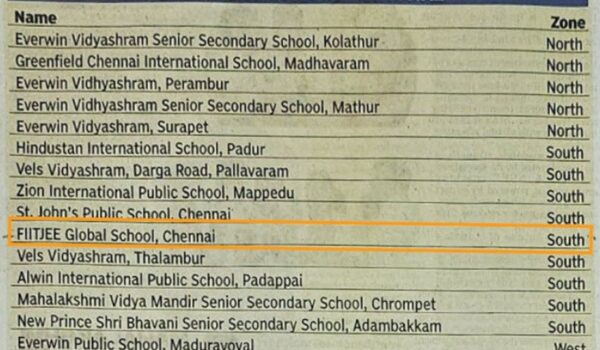
Chennai, Tamil Nadu (February 02, 2026) FIITJEE Global School Chennai has been recognised as an Excellent School (National) in the South Zone at the Times Education Icons 2025-26, Chennai Schools, Pre Schools and Education Institutions Survey.

This recognition comes at a time when the school has demonstrated consistent academic results and a structured approach to preparing students for both board examinations and national competitive exams.

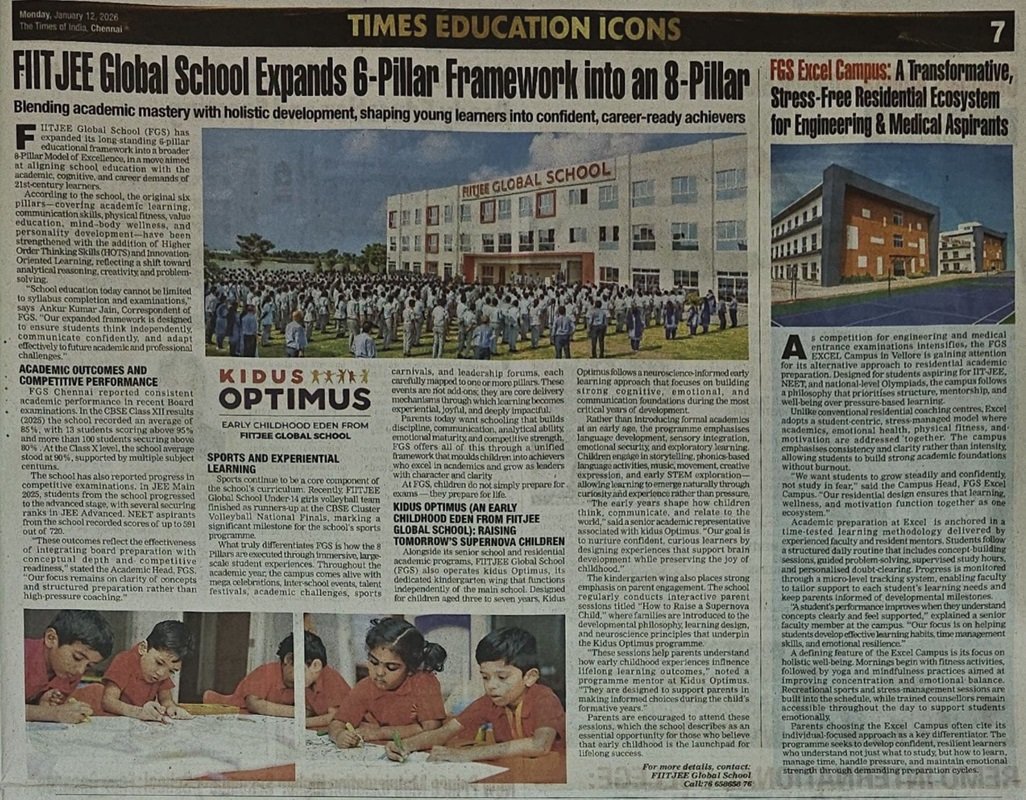
In the CBSE Class XII results 2025, the school recorded an average of 85 percent. Thirteen students scored above 95 percent. More than 100 students secured above 80 percent. In Class X, the school average stood at 90 percent with multiple subject centums.

Students from the school progressed to JEE Advanced and recorded strong NEET scores, including results up to 591 out of 720.

These outcomes are supported by FIITJEE Global School’s expanded 8-Pillar Model of Excellence, where academic learning is combined with communication skills, fitness, values, wellness, personality development, higher order thinking, and innovation-driven learning.

“School education must prepare students to think independently and adapt to future challenges. Our framework is designed with that clarity,” said senior academic representative from FIITJEE Global School.

The school’s learning environment goes beyond classrooms. Large-scale student events, inter-school competitions, sports tournaments, academic challenges, and leadership forums are part of the academic calendar. These are mapped directly to the school’s pillars of development.

Sports also remain an active focus. The Under-14 girls volleyball team recently finished as runners-up at the CBSE Cluster Volleyball National Finals, reflecting the school’s emphasis on physical fitness alongside academics.

This award acknowledges FIITJEE Global School’s ability to create a balanced ecosystem where academic discipline, experiential learning, and competitive readiness work together.

Students here are not only trained to score well. They are trained to think clearly, communicate confidently, and carry themselves with maturity. That is what makes the recognition meaningful.

About FIITJEE Global School

FIITJEE Global School (FGS) is a Chennai-based CBSE institution recognised for combining academic strength, competitive exam readiness, and holistic student development within a well-structured learning environment. The school follows its distinctive 8-Pillar Model of Excellence that integrates academics with communication skills, fitness, values, wellness, higher order thinking, and innovation-led learning.

FGS campuses are built with world-class infrastructure designed to support better learning outcomes. Spacious, well-ventilated classrooms, well-equipped laboratories, stocked libraries, large playgrounds, safe assembly areas, and ergonomically designed furniture create a comfortable and focused learning space for students. Technology-enabled systems, high safety standards, and well-maintained sanitation facilities are an integral part of the school environment.

With specialised spaces such as the Excel Residential Campus for JEE and NEET aspirants and Kidus Optimus for early learners, FGS provides age-appropriate and purpose-driven learning ecosystems for every stage of a child’s growth.

FGS believes schooling should prepare children not only for exams, but for life.

For more information, visit https://fiitjeeglobalschool.com or call +91 8791999199.

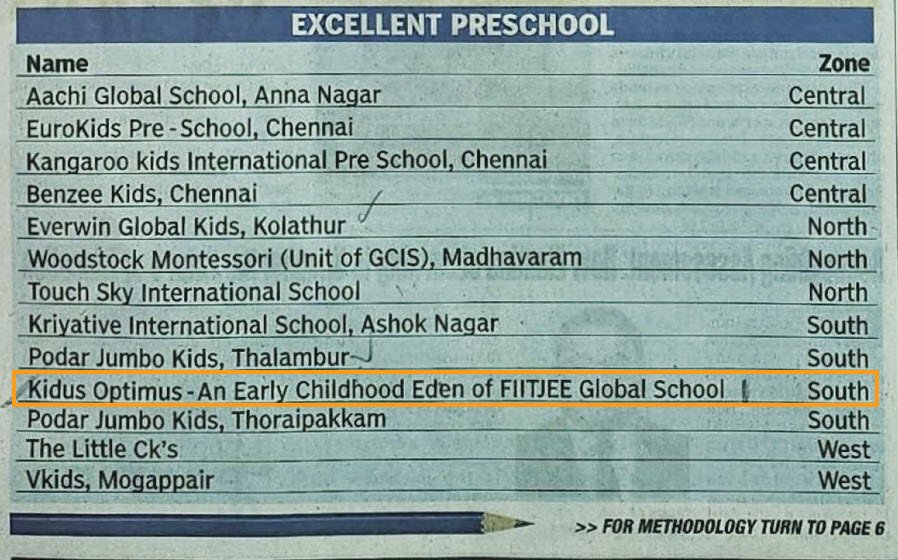
Chennai, Tamil Nadu (February 02, 2026) Kidus Optimus, the early childhood learning wing of FIITJEE Global School, has been recognised as an Excellent Preschool at the Times Education Icons 2025-26, Chennai Schools, Pre Schools and Education Institutions Survey.

This recognition brings attention to something often overlooked. The importance of the first seven years of a child’s life.

Kidus Optimus was built on a simple belief. Early childhood is not the time for academic pressure. It is the time to build how a child thinks, feels, speaks, and relates to the world.

Designed for children between three and seven years, the preschool follows a neuroscience-informed approach that focuses on cognitive growth, emotional security, language development, and sensory learning.

Children here do not sit through long academic sessions. They learn through storytelling, phonics activities, music, movement, creative play, and early STEM exposure. Curiosity is encouraged. Exploration is natural. Learning happens without fear.

“The early years shape how children think and communicate for the rest of their lives. Our goal is to protect the joy of childhood while building strong foundations,” said a senior academic representative from Kidus Optimus.

The preschool environment is carefully designed to make children feel safe, expressive, and confident. Teachers focus on observation and gentle guidance rather than instruction and correction.

Kidus Optimus also places strong emphasis on parent involvement. The school conducts regular interactive sessions titled “How to Raise a Supernova Child,” where parents understand how early experiences influence long-term learning outcomes.

These sessions help families see why emotional stability, communication skills, and sensory development matter more than early academics.

This award recognises Kidus Optimus as a preschool that respects childhood, understands brain development, and prepares children for schooling in the right way.

It also reflects FIITJEE Global School’s larger philosophy that education must begin with strong foundations before moving towards academic achievement.

By the time children move from Kidus Optimus into formal schooling, they carry confidence, curiosity, communication ability, and emotional maturity with them. That is the real success of early learning.

About FIITJEE Global School

FIITJEE Global School (FGS) is a Chennai-based CBSE institution recognised for combining academic strength, competitive exam readiness, and holistic student development within a well-structured learning environment. The school follows its distinctive 8-Pillar Model of Excellence that integrates academics with communication skills, fitness, values, wellness, higher order thinking, and innovation-led learning.

FGS campuses are built with world-class infrastructure designed to support better learning outcomes. Spacious, well-ventilated classrooms, well-equipped laboratories, stocked libraries, large playgrounds, safe assembly areas, and ergonomically designed furniture create a comfortable and focused learning space for students. Technology-enabled systems, high safety standards, and well-maintained sanitation facilities are an integral part of the school environment.

With specialised spaces such as the Excel Residential Campus for JEE and NEET aspirants and Kidus Optimus for early learners, FGS provides age-appropriate and purpose-driven learning ecosystems for every stage of a child’s growth.

FGS believes schooling should prepare children not only for exams, but for life.

For more information, visit https://fiitjeeglobalschool.com or call +91 7665865876.


Moscow [Russia], February 2: Humanity is experiencing a new phase of globalisation, one profoundly impacting migration and driving unprecedented urban density. This was the central thesis presented by global strategist, bestselling author, and founder and CEO of AlphaGeo, Dr. Parag Khanna, during the January Expert Dialogues at the National Centre RUSSIA.

“Today, Deputy Head of the Russian Presidential Executive Office Maksim Oreshkin spoke about how we are entering a new era. He shared compelling data related to developing nations, particularly the Global South, which is gaining greater weight in the global system than the traditional players who previously dominated globalisation,” noted Parag Khanna.

Scientific and technological breakthroughs are key drivers of this ongoing globalisation, the expert believes — a process that history shows cannot be stopped or controlled. The emergence of the Silk Road, maritime voyages, colonial conquests, the Industrial Revolution, satellites, and the internet represent successive phases of global connectivity. Today, with over eight billion people on the planet, about 70% live in major Asian cities, a trend Khanna links to the pursuit of better jobs and improved quality of life.

“We will see the formation of clusters of large cities — potentially about 40 megacities that will collectively shape the global economy. We live in a world of 200 sovereign states. But no empire can survive without strong urban ‘anchors.’ Cairo, Istanbul — people have lived there for thousands of years. It’s no surprise we’ve reached a point where practically everyone lives in a city,” stated Dr. Parag Khanna.

He observed that large cities increasingly interact, forming powerful trade and transport linkages. A key question now emerging is which of these urban hubs will define the future and what factors will drive their influence.

The January Expert Dialogues, part of the “Open Dialogue: The Future of the World. A New Platform for Global Growth,” featured a keynote address by Maksim Oreshkin, who outlined five megatrends determining the trajectory of global development. These include sovereignty as an economic factor, platformisation and new levels of automation, digital currencies as the core of financial architecture transformation, global demographic imbalance, and human transformation in a new technological era.

The January Expert Dialogues were initiated by the National Centre RUSSIA in partnership with the Centre for Cross-Industry Expertise “The Third Rome,” with the support of the Russian Presidential Executive Office.

The Open Dialogue forum, first held in April 2025 at the National Centre RUSSIA, has brought together over 3,000 experts from dozens of countries. By decision of Russian President Vladimir Putin, the Open Dialogue is set to be held annually.

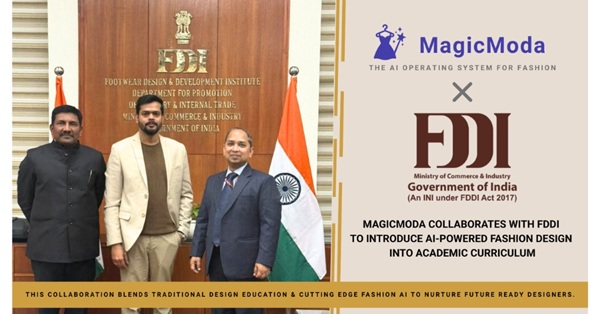
New Delhi, India | Feb 02, 2026:  MagicModa, an AI-powered fashion technology platform, has announced a strategic academic collaboration with the Footwear Design & Development Institute (FDDI), an institution under the Ministry of Commerce & Industry, Government of India, to integrate AI-powered fashion design and technology into formal design education.

This collaboration represents a significant step toward modernizing fashion, footwear, and accessories education by combining traditional design pedagogy with advanced artificial intelligence. Through this initiative, FDDI students will gain hands-on exposure to industry-aligned AI workflows that reflect the evolving demands of the global fashion ecosystem.

Under the collaboration, MagicModa will be introduced as an AI-powered fashion ecosystem, extending far beyond creative assistance to support the entire design-to-production lifecycle. In addition to AI-enabled design ideation, visualization, moodboarding, trend analysis, color exploration, technical illustrations, CAD-to-render workflows, and design variations, the platform also enables AI-powered design thinking frameworks, Tech Pack creation, intelligent Bills of Materials (BOM), eCommerce cataloging, and pattern intelligence, bringing both creative and technical capabilities onto a single, integrated platform.

The initiative empowers students to explore smarter, structured creative processes, enhance visualization and presentation capabilities, and develop technical fluency required in today’s AI-augmented fashion industry.

Why This Matters for India’s Fashion Ecosystem

As India’s fashion and footwear industry rapidly advances toward digitization, speed-to-market, and global competitiveness, the need for professionals who can operate across both creative and technical domains is increasing. By embedding AI deeply into formal design education, this collaboration helps bridge the gap between academia and industry – preparing students not only as designers, but as end-to-end fashion problem-solvers capable of contributing from concept development to commercialization in a technology-driven global market.

The initiative also aligns closely with national priorities such as Skill India, Make in India, and Digital India, by equipping students with future-ready, industry-relevant capabilities that strengthen India’s design-to-manufacturing value chain. By nurturing AI-literate designers at the academic level, the collaboration supports India’s ambition to become a global hub for design innovation, export-led fashion growth, and high-value creative employment.

Commenting on the collaboration, Mr. Vivek Sharma (IRS), Managing Director, FDDI, said:

“At Footwear Design & Development Institute (FDDI), we are committed to preparing students for a rapidly evolving, technology-driven design and manufacturing landscape. Our collaboration with MagicModa will integrate AI-powered fashion design into the academic curriculum, giving learners hands-on exposure to industry-aligned, end-to-end workflows across the design-to-production lifecycle. This initiative will help bridge academia and industry, build stronger technical fluency alongside creativity, and strengthen India’s design-to-manufacturing value chain and global competitiveness.”

Vibhu Srivastava, Founder, MagicModa, added:

“As India strengthens its position as a global hub for fashion, footwear, and design-led manufacturing, education must evolve in step with industry transformation. This collaboration with FDDI reflects a shared commitment to future-ready skill development, where creativity is complemented by technology, and students are trained not only to design, but to deliver at scale in an AI-enabled ecosystem.”

By embedding AI into the learning ecosystem, FDDI aims to nurture adaptive, innovative, and future-ready designers equipped to thrive across fashion, footwear, and accessories sectors.

This collaboration is not merely an upgrade of educational tools, but a meaningful evolution in how design is imagined, created, and experienced in the era of intelligent technology.

About MagicModa

MagicModa is an AI-powered fashion ecosystem designed to support the complete design-to-production lifecycle. Built for students, designers, and fashion brands, the platform integrates AI-driven creativity, technical workflows, and commerce capabilities to enable faster, smarter, and more scalable fashion creation.

About FDDI

Footwear Design & Development Institute (FDDI) is an academic institution under the Ministry of Commerce & Industry, Government of India, dedicated to developing skilled professionals for the footwear, fashion, and accessories industry through industry-aligned education and innovation.

New York, USA, January 29, 2026: New research featuring firsthand accounts from survivors of online sexual exploitation and abuse (OSEA) in the United States exposes critical gaps in legal protections and widespread failures by the criminal justice system, regulatory landscape, and major US-based tech companies to respond effectively.

A new report by Equality Now and the Sexual Violence Prevention Association (SVPA), Online sexual exploitation and abuse in the United States: An analysis of policy gaps, system response and prevention mechanisms through survivor-lived experiences, draws on survivor insights and expert legal analysis to identify harms arising from OSEA and provide evidence-based recommendations for legal and policy reform.

Survivors described navigating a confusing patchwork of federal and state laws that make access to justice and support difficult, while tech companies face minimal legal obligations to act decisively. Online platforms are often slow and ineffective in responding to requests to remove abusive content, leaving non-consensual sexual material to circulate indefinitely, causing ongoing harm and retraumatization.

Every survivor interviewed suffered repeated reposting of abusive material across multiple platforms, and none succeeded in having content removed entirely. No perpetrators were held fully to account, and for those who faced any consequences, these were limited to the initial posting of material, failing to reflect OSEA’s ongoing nature and revictimisation.

Gaps and inconsistencies in laws on online sexual exploitation and abuse

Legal protections against OSEA in the US are split between federal and state systems, each with its own laws, courts, and areas of authority. Federal laws on tech-facilitated abuse are not comprehensive, and while states provide additional protections, the jumble of laws across jurisdictions complicates cases and creates legal loopholes. Concerningly, there are virtually no laws spanning international borders that address OSEA involving adult victims.

State laws are often unclear and vary widely, resulting in inconsistent responses and protections that depend on where someone lives. Poor coordination and communication between states and across levels of government further undermine survivors’ access to timely, meaningful assistance.

OSEA often involves multiple platforms and offenders in different jurisdictions. This creates confusion about which laws apply and what authorities have the power to act, and survivors lack knowledge about how to report violations and preserve evidence.

Only 45 states have updated their laws to cover AI-generated child sexual abuse imagery (CSAM), while protections for adults lag even further behind. State-level coverage remains patchy with penalties for nonconsensual AI-generated or computer-edited sexually explicit materials – often called deepfakes – ranging from a misdemeanor to felony.

Existing data doesn’t capture OSEA’s rapid evolution and scale. With research and reporting focused primarily on CSAM, adult survivors remain largely invisible, contributing to inadequate responses from lawmakers. Better data collection and reporting are urgently needed to close research gaps and ensure legislation keeps pace with technological developments.

Holding tech companies accountable for OSEA on their platforms

No US statute expressly requires US-based tech companies to maintain user safety and transparency, and only limited duties are placed on them to prevent and protect against tech-facilitated abuse. Policies must be created and enacted to hold tech companies accountable for the nonconsensual publication and distribution of sexually explicit materials on their platforms.

The “Big Five” US-based corporations – Alphabet (Google), Amazon, Apple, Meta, and Microsoft – dominate global digital markets and control the primary platforms through which OSEA occurs. In 2020 alone, their combined market value reached $7.5 trillion, giving them unprecedented power to shape global standards for digital safety, content moderation, and transparency.

Survivors described multiple challenges when dealing with tech platforms. They found it difficult to locate reporting systems, responses were inconsistent and inadequate, and moderation or content removal erased critical evidence, undermining legal investigations.

Interviewees developed informal routines to monitor digital spaces and submit so-called “takedown requests.” These must often be filed repeatedly, sometimes daily, and survivors can wait months or even years for a response. In several cases, platforms eventually said no action could be taken.

One interviewee, Izzy, and her partner sent intimate images to each other via Snapchat. Her account was hacked, and her images, name, and address were sold to pornography websites. Izzy’s family was sent the content and threatened that it would be circulated further unless they paid. Izzy recalled Snapchat’s response, “Within their community guidelines, they say you’re not supposed to take any sexually explicit pictures of yourself, so if anything does happen to you, that’s your fault. It genuinely made me sick to my stomach how dismissive they were!”

Equality Now’s Anastasia Law explains, “US laws have failed to keep pace with the realities of tech-facilitated sexual abuse, and survivors are paying the price. With no US federal statute requiring tech companies to ensure user safety or transparent reporting systems, survivors must navigate outdated laws, inconsistent responses, and repeated obstacles when trying to take down abusive material or hold perpetrators accountable.”

“Lawmakers must act to strengthen state and federal laws, with clear policies governing consent and the online distribution of sexual material in an increasingly borderless digital world. US-based tech companies need to be held fully accountable for the non-consensual publication and spread of sexually explicit content on their platforms.”

Survivors face systemic failures when reporting tech-facilitated sexual abuse

Every survivor in the study who formally reported their abuse found the experience overwhelmingly negative. They had to educate themselves about complex legal systems, sort evidence, and coordinate between platforms and agencies. Survivors found law enforcement officials unclear and uncertain about “takedown request” procedures, handling digital evidence, and evidence-collection protocols, including obtaining warrants, issuing subpoenas, and determining admissibility of online materials.

This extended to prosecutors, attorneys, judges, and even victim advocates. Criminal justice professionals typically didn’t know the relevant statutes, with survivors often required to identify remedies and coordinate between the criminal and civil systems.

Survivors frequently encountered victim-blaming, and their experiences were often dismissed or minimised. Many were questioned about their consent and credibility, portrayed as overly emotional or unreliable, and excluded from key decisions affecting their cases.

Online sexual exploitation and abuse harm survivors in multiple ways

OSEA survivors face an increased risk of physical harm, including domestic abuse, sexual violence, and human trafficking. They often experience psychological problems associated with in-person sexual violence, such as shame, anger, social withdrawal, fatigue, anxiety, increased substance use, and engagement in risky behaviours. Research participants all experienced significant emotional harm, including hopelessness and depression, with four having suicidal thoughts.

Samantha had a video posted online of her being raped by a male police officer. She explained, “It’s one thing that the attack happened, but then, when it was shared to be rewatched over and over again, and I had no control over how far it was reaching, or how many people were viewing it, or who had access to it… It emotionally was just horrifying.”

Interviewees described living in constant fear about meeting people who’ve seen the abusive content, that more material could surface, or they or their families could be threatened. They also reported profound feelings of betrayal and trust issues with partners and others – of the 13 survivors interviewed, five were in committed, in-person relationships with the person who abused them.

Another burden was the financial cost. Many survivors paid for legal services, but for some, it was unaffordable, leaving them to navigate complex legal processes alone. Several spent thousands on mental health counseling, and some incurred costs from relocating due to safety concerns.

Three interviewees lost their jobs outright, while four others lost career advancement opportunities. Izzy was harassed on LinkedIn by people who’d seen her on pornographic sites, and she now pays $1,000 a month to a private company to find and remove OSEA content.

Katie Knick from SVPA concludes, “Online sexual exploitation and abuse is a form of systemic sexual violence rooted in misogyny, racism, and other intersecting oppressions. While technology shapes how the harm occurs, prevention depends on dismantling rape culture and reducing power imbalances through education, policy reform, and institutional accountability.”

“Our research underscores the need for survivor-centered systems, including free legal representation, trauma-informed mental health care, specialized professional training, and clear pathways for reporting and removal of abusive material. Sustainable prevention requires accountability and policies informed by the voices and leadership of survivors with lived experience.”

END

Notes to editors: For media enquiries, contact Tara Carey, Global Head of Media, Equality Now, Tcarey@equalitynow.org, T. +44 (0)7971556340 (available on WhatsApp and Signal)

This report on online sexual exploitation and abuse in the US is the third in a trilogy by Equality Now and its partners, documenting survivors’ experiences, identifying gaps in legal protections and barriers to justice, and setting out evidence-based recommendations for legal and policy reform. The other reports focus on India and Kenya:

About: Equality Now is a worldwide human rights organization dedicated to securing the legal and systemic change needed to end discrimination against all women and girls. Since its inception in 1992, it has played a role in reforming 120 discriminatory laws globally, positively impacting the lives of hundreds of millions of women and girls, their communities, and nations.

About: The Sexual Violence Prevention Association (SVPA) is a nonprofit dedicated to preventing sexual violence systemically. Our work spans legislative advocacy, research, public education, and institutional engagement. Led my marginalized survivors, SVPA believes that by challenging harmful behaviors, and advocating for policies that prioritize safety and respect, we can prevent sexual violence systemically and create a safer, more equitable society.


Goa [India], January 30: EP Biocomposites Limited (BSE: 543595) has received a work order on behalf of Goa Tourism Development Corporation Limited for the manufacture, supply, transportation, and installation of 1,000 units of Model IV Premium FRP / Cast Iron Benches.

The total value of the said work order is ₹2,15,00,000/- (Rupees Two Crores Fifteen Lakhs Only), exclusive of applicable taxes. The benches shall be supplied and installed at various designated locations across the State of Goa, in accordance with the terms and conditions of the work order. The project shall be executed within the timelines stipulated under the contract.

The proposed installation of the benches is intended to enhance public seating infrastructure, improve visitor convenience, and provide durable, long-term amenities at tourism and public locations across the State of Goa. The award of the project has been received in the ordinary course of business of the Company.

The Company has previously received and successfully executed similar orders for cast iron benches on behalf of Goa Tourism Development Corporation Limited, including the Manufacture, supply and installation of more than 1700 units pursuant to a work orders since October, 2021. These orders were executed in accordance with contractual specifications and within the stipulated timelines.

We are proud to have been receiving repeat orders & delivering one after the other in time bound fashion.

Commenting on the development, Mr. Rajkumar Kamat, Managing Director said, “the order reflects the Company’s continued involvement in public infrastructure projects and its capability to execute manufacturing, supply and installation assignments in a time-bound manner. The management further noted that the receipt of repeat orders demonstrates continued confidence in the Company’s manufacturing capabilities, execution standards, and operational reliability. The Company remains focused on delivering infrastructure products in accordance with contractual specifications while ensuring quality and timely execution.”

This press release is issued pursuant to the Company’s disclosure under Regulation 30 and other applicable provisions of the Securities and Exchange Board of India (Listing Obligations and Disclosure Requirements) Regulations, 2015, read with SEBI Circular No. SEBI/HO/CFD/CFD-PoD-1/P/CIR/2023/123 dated July 13, 2023, as filed with BSE Limited.

About EP Biocomposites Limited

EP Biocomposites Limited is a Goa-based public limited company engaged in the manufacture and supply of sustainable infrastructure and polymer-based products across India. The Company is part of the EP Kamat Group, which is committed to fostering a clean, green, and safe environment through innovative engineering solutions and environmentally responsible manufacturing practices.

EP Biocomposites’ core product portfolio includes a range of Fibre Reinforced Polymer (FRP) products such as door shutters, frames, laminated doors, biodigester tanks, bio toilets, fire doors, garden benches, fencing and allied FRP solutions for construction, industrial, and infrastructure applications. The Company also provides sanitation and wastewater solutions, including bio-digester toilets, sewage treatment plants (STP) and effluent treatment plants (ETP) that support efficient waste management and water reuse strategies for residential, commercial, institutional, and government projects.

Driven by quality standards and environmental responsibility, EP Biocomposites designs its products for durability, low maintenance, and reduced environmental impact, aligning with modern sustainability principles. The Company’s offerings contribute to enhanced public infrastructure, cleaner sanitation systems, and efficient water treatment solutions across diverse segments in India.

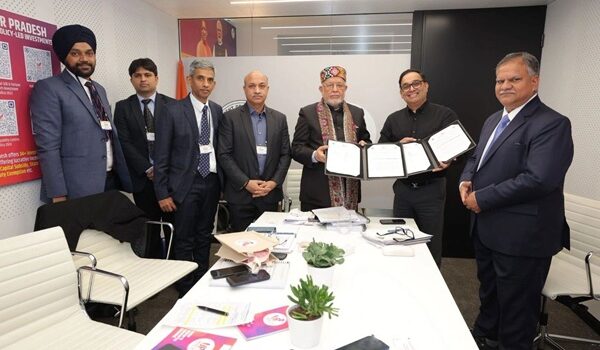
Pune (Maharashtra) [India], January 30: SA Technologies Inc., a global technology consulting and enterprise delivery firm, has entered a strategic partnership with the Government of Uttar Pradesh to drive the growth of Global Capability Centres (GCCs) in the state.

At the World Economic Forum in Davos, SA Technologies’ Founder and CEO, Manoj Joshi, met with the Uttar Pradesh delegation and formalized a ₹200 crore Memorandum of Understanding (MoU) with Invest UP. The agreement underscores a shared commitment to leveraging Uttar Pradesh’s progressive GCC policy to build an innovation-driven ecosystem for global enterprises.

The partnership is designed to attract large-scale IT and digital investments to the state, strengthen talent ecosystems, and enable global enterprises to deliver innovation at scale from India. By aligning SA Technologies’ global expertise with the state’s vision for GCC-led growth, the collaboration positions Uttar Pradesh as a preferred destination for technology-driven enterprise expansion.

Commenting on the MoU, Manoj Joshi said,

“Uttar Pradesh’s forward-looking GCC policy presents a significant opportunity to build high-impact, innovation-led ecosystems. This partnership will enable global enterprises to scale capabilities from India while fostering an environment where talent, technology, and enterprise innovation thrive together.”

The partnership with Invest UP marks a decisive step toward establishing future-ready GCCs and reinforces Uttar Pradesh’s emergence as a hub for technology-led enterprise growth and global innovation.

About SA Tech Software India Ltd.

Headquartered in San Jose, California, with its India headquarters in Pune and having offshore development centers in Pune, Bengaluru and Hyderabad, SA Tech Software India Ltd. is a trusted partner to leading global enterprises, helping them build, operate, and scale future-ready Global Development Centers, also known as Global Capability Centers, that drive innovation, efficiency, and transformation.

As an NSE Emerge-listed organization and a CMMI Level 5 certified company, SA Tech Software India Ltd. upholds the highest standards of operational excellence, governance, and delivery maturity.

Through its proven Build-Operate-Transfer (BOT) model and specialized GCC consulting services, the company empowers organizations to expand and optimize their offshore operations with confidence, speed, and scalability.

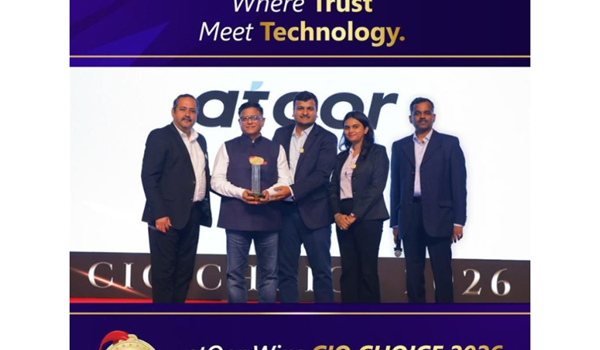
Mumbai, India – January 30, 2026: atQor, a long‑standing Microsoft Solutions Partner, Fabric Featured Database Partner and Azure Expert MSP, has been honoured with the CIO CHOICE 2026 Trust Seal in the category Emerging Technologies – Data Lakes. What makes this recognition special is that it comes directly from the CIO community voted and endorsed by enterprise technology leaders from across India.

Marking 14 successful years, CIO CHOICE continues to be India’s most credible barometer of ICT brand excellence. Produced by CORE Media with KPMG as the Knowledge Partner, the 14th Annual CIO CHOICE Red Carpet Night brought together 300+ CIOs and Digital Leaders across industries.

The “Gold Seal of Trust” is unique: winning brands are chosen solely by CIOs and IT decision makers through a pan‑India voting platform. The selection is based on real‑world experience, performance reliability, and top‑of‑mind recall guided by an advisory panel of distinguished CIOs and technology leaders including leaders from .

  • Aarti Singh, Enterprise CIO, Mahindra Group
  • Goutam Datta, CIDO, Bajaj Life
  • Jayant Goyal, CIO, Coforge
  • Prosenjit Sengupta, Group CDIO, ITC
  • Rajiv Arora, Global Head of IT Hubs (Regions) & Regional Countries, Siemens
  • Ravi Pichan, CIO and Head of Digital Banking, RBL Bank
  • Sampath Manickam, CTO, NSE India
  • Shiv Kumar Bhasin, Chief Transformation Officer, IndusInd Bank
  • Tapan Sahoo, Executive Officer – Digital Enterprise, Information & Cyber Security, Maruti Suzuki

“Being recognized with the CIO CHOICE 2026 Trust Seal underscores the confidence that India’s CIO community places in atQor,” said Anoop Mathur, Founder, CORE Media.

“This distinction reflects the brand’s ability to stay relevant, resilient, and responsive as enterprises navigate rapid business transformation.”

A Recognition Built on Data Excellence and Why atQor Won

CIOs across India voted for atQor because of one clear reason: our ability to translate complex data ecosystems into business‑ready intelligence.

atQor is among the very few global partners to hold:

  • Microsoft Fabric Featured Partner
  • Microsoft Fabric Database Partner
  • Azure Expert MSP – a distinction held by less than 1% of partners worldwide

Our Data & AI engineering strength has enabled enterprises to adopt Microsoft Fabric and modern Data Lakes with unmatched governance, speed, and reliability. This award reinforces our leadership in building AI‑ready data foundations on Microsoft Cloud.

Over the past year, atQor has delivered one of India’s strongest Microsoft Fabric adoption journeys, helping enterprises unify their data, simplify pipelines, activate analytics, and establish a single source of TRUTH.

What This Award Means for atQor’s Data & Fabric Story

This recognition highlights atQor’s proven excellence in:

Enterprise Data Capabilities

  • Modern Data Lakes for structured + unstructured data
  • Azure Synapse, ADF, Databricks, and Lakehouse architectures
  • Real‑time analytics and large‑scale data engineering

Microsoft Fabric Leadership

  • OneLake‑centric data unification
  • Real‑Time Analytics, Data Factory, and Warehouse workloads
  • End‑to‑end implementation across ingestion → modelling → insights

AI & Industry Solutions

  • Predictive and prescriptive intelligence for Manufacturing, Retail, BFSI, Pharma & CPG
  • Secure data modernization for regulated industries
  • Business accelerators that reduce time‑to‑value

These strengths are why CIOs considered atQor a trusted, dependable, future‑ready Data & AI partner.

Leadership Perspective

Pushkaraj Kale, CEO, atQor, commented:

“This recognition means a lot because it comes directly from CIOs, the people who see the business impact of technology every single day. Being chosen for CIO CHOICE 2026 reaffirms our commitment to helping enterprises build trustworthy, AI‑ready data foundations. We are deeply grateful to our customers, partners, and our team. This trust pushes us to keep raising the bar.”

Aligned with atQor’s 2026 Vision

The year 2026 marks atQor’s “Year of Kiln” a renewed focus on strengthening core engineering, expanding AI‑first data solutions, elevating delivery excellence, and deepening capabilities across Microsoft Fabric, Data Lakes, Azure Analytics, and Cloud Modernization.

About CORE Media

Founded in 2012, CORE Media (Centre of Recognition & Excellence) operates premier ICT leadership platforms, account‑based marketing programs, and digital properties focused on the CIO and Enterprise Technology ecosystem. Its initiatives connect with ~150,000 C‑suite ICT decision makers across sectors.

About atQor

atQor is a global Microsoft‑focused consulting and services organization specializing in Azure, Data & AI, Digital & App Innovation, Modern Work, Security, and Business Applications. With a 23‑year legacy, 200+ professionals, and 1600+ successful projects delivered, atQor continues to empower enterprises “At the Heart of Their Digital Journey.”

Contact Information:

Manager of Communications: marketing@atqor.com
USA: +1-844-294-5383
Canada: +1-289-290-4490
India: +91-7069043269

Chandigarh [India], January 29: HARLEY of LONDON India today announced the launch of a Global Centre of Excellence for Health, Wellness and Lifestyle in Chandigarh, created in collaboration with Porto Business School (Portugal) and Kongju National University (Republic of Korea). The Centre aims to strengthen leadership, workforce capability and applied innovation for India’s rapidly expanding wellness and preventive health economy.

The Centre will offer postgraduate and executive programs, short-form certifications and lifelong learning pathways for professionals across healthcare, wellness and adjacent industries. An Innovation Hub will support collaborative projects in life sciences, biosciences and AI-enabled healthcare and wellness solutions.

Programs to be offered

  • Healthcare & Wellness MBA (details to be announced)
  • Executive MBA in Health, Wellness & Lifestyle Leadership
  • AI in Healthcare & Wellness certification programs
  • Upskilling and reskilling pathways for working professionals
  • Lifelong learning for clinicians, creators, founders and wellness practitioners

Role of academic partners

  • Porto Business School will support curriculum design and delivery for management, leadership and executive education, including international benchmarking.
  • Kongju National University will collaborate on the Innovation Hub and applied research translation in life sciences, biosciences and AI-driven wellness innovation.

Sanjeev Kumar, Chief Visionary Officer, HARLEY of LONDON, said:

“India is facing a silent crisis. Lifestyle diseases are rising faster than our systems can respond, and we do not have enough trained professionals to support the well-being needs of 1.4 billion people. The lack of skilled health and wellness professionals is already causing real damage — India is projected to lose $4.8 trillion in economic output by 2030 due to lifestyle-related productivity loss and system strain. Alongside the shortage of clinicians, the country faces a severe deficit in healthcare management talent — a gap repeatedly highlighted by national programmes. India doesn’t just need more doctors — it needs skilled leaders who can build and run the systems that keep communities well.

This Centre of Excellence is built to close that gap. Instead of theory-heavy models, we are creating practical, industry-ready skills in health, wellness, and lifestyle — capabilities that translate directly into jobs in one of India’s fastest-growing sectors. We are building a world-class learning environment that equips young people with the skills to build meaningful careers and uplift the well-being of the communities they come from.”

Centre at a Glance

Located in Chandigarh, India, the HARLEY of LONDON India Centre of Excellence is being developed to advance learning, skilling and applied innovation in health, wellness and lifestyle. The Centre brings together postgraduate and executive education, short-form certifications and industry collaboration, supported by an Innovation Hub focused on life sciences, biosciences and responsible AI-enabled healthcare and wellness solutions.

Academic partnerships with Porto Business School (Portugal) and Kongju National University (Korea) strengthen the Centre’s global foundation, combining leadership development, management education, applied research and cross-border innovation.

About HARLEY of LONDON

HARLEY of LONDON is building an integrated platform spanning health, wellness, lifestyle and human development. Its initiatives combine education, technology and wellbeing experiences aimed at supporting how people live, learn and grow.

About Porto Business School:

Porto Business School is a Portugal-based business school focused on management education, executive education and applied research. In this partnership, Porto Business School is supporting the Centre’s leadership and management learning design and international benchmarking.

About Kongju National University

Kongju National University is a national university in the Republic of Korea with strengths in science, technology and applied research. In this partnership, the university will collaborate on the Innovation Hub agenda, supporting applied research translation and cross-border collaboration in life sciences, biosciences and AI-enabled healthcare and wellness innovation.

Media contact

HARLEY of LONDON India – Communications

Sanjeev KUMAR

Chief Visionary Officer

sanjeev@harleyoflondon.co.uk

Harley of London | Premium Healthcare Group | Luxury Preventive Medicine UK

Mumbai (Maharashtra) [India], January 29: BetterAlt, India’s premium wellness brand, announces the launch of its Plant Protein. Entering a rapidly growing market segment, the brand promises a thoughtfully made product to suit Indian dietary patterns, taste preferences and digestion needs.

Ashutosh Taparia, Managing Director & Board Member of BetterAlt, stated, “There’s a growing awareness for protein in India and for protein sources that are light on gut & for everyday use. We’ve worked hard to build a complete protein source that’s the first of its kind. This launch marks an important milestone for BetterAlt.”

Keeping Indian dietary needs in mind, where protein deficit and lactose sensitivity are common, BetterAlt’s Plant Protein has been formulated with Pea and Fermented Yeast Protein, consisting of a complete amino acid profile. The product shows all the 200+ quality and safety tests that the protein undergoes, before reaching consumers.

The product sets a new benchmark as the first plant protein to offer a chalk-free texture with superior taste, thus resolving the common complaints Indians have with the protein counterpart of whey.

BetterAlt’s Plant Protein is available in Coco Chocolate flavour in 1kg, 500g and Travel Pack (5 sachets). It is available for purchase on their website (https://betteralt.in/) and select retailers.

For media inquiries, please contact:

Dhiral Chinai, dhiral.chinai@oneguardian.in

About BetterAlt:

BetterAlt is a global wellness brand blending traditional herbal wisdom with modern science to develop health supplements for today’s fast-paced world. Their mission is to promote natural wellness with high-quality, pure, and effective products that enhance energy, vitality, and overall health.